



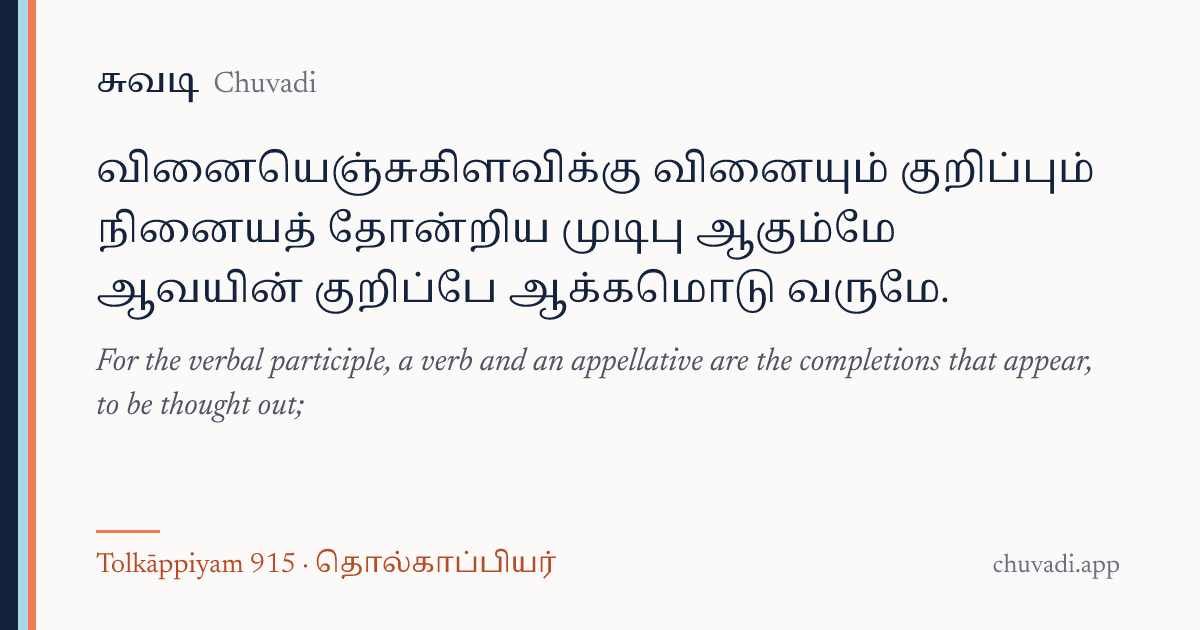
தொல்காப்பியம் 915 · சொல் 9.36
பாடல் · The poem
Tap a word to see where else it occurs.
பொருள் · Meaning in TamilAI
வினையெச்சத்துக்கு வினைச்சொல்லும் குறிப்புச்சொல்லும் முடிபாக வரும்; குறிப்புச்சொல் முடிபாக வரும் இடத்தில் அது ஆக்கச் சொல்லோடு கூடியே வரும். உண்டு வந்தான் என்பதில் வினை முடிபு; மருந்து உண்டு நல்லன் ஆயினான் என்பதில் நல்லன் என்னும் குறிப்பு ஆயினான் என்னும் ஆக்கத்தோடு வந்து முடிக்கிறது.
இளம்பூரணர்
இவர் வினையெச்சம் வினையாலும் குறிப்பாலும் முடியும் எனக் கொண்டு, குறிப்பு முடிபாக வரும் இடத்தில் அது ஆக்கச் சொல்லோடு கூடியே வரும் என உரைப்பார். இவர் தரும் எடுத்துக்காட்டுகள் இங்கு சரிபார்க்கப்படவில்லை.
நச்சினார்க்கினியர்
இவரும் குறிப்பு முடிபு ஆக்கத்தொடு வரும் என்பதை இவ்வாறே கொள்வார். இதில் இளம்பூரணரிடமிருந்து இவர் வேறுபடுவதாகத் தெரியவில்லை; இவர் காட்டும் மேற்கோள்கள் இங்கு சரிபார்க்கப்படவில்லை.
ஆக்கச்சொல் இல்லாமல் குறிப்புச்சொல் வினையெச்சத்தை ஏற்காது என்பதே இதன் கருத்து என உரையாசிரியர்கள் விளக்குவர்.
ஆங்கிலம் · English translationAI
Translation
- For the verbal participle, a verb and an appellative
- are the completions that appear, to be thought out;
- there, the appellative comes together with becoming.
What the poem says
The viṉaiyeccam, "verbal participle", such as uṇṭu "having eaten", is completed by a finite verb, as in uṇṭu vantāṉ "having eaten, he came", or by an appellative, a noun-based predicate. When it is completed by an appellative, the appellative comes with ākkam "becoming", that is, with a form of āku "become".
An illustration of the second case is maruntu uṇṭu nallaṉ āyiṉāṉ "having taken medicine, he became well": the appellative nallaṉ "he is well" needs āyiṉāṉ "he became" to take the participle. Without the verb of becoming, the participle would have nothing to attach to.