



தொல்காப்பியம் 916 · சொல் 9.37
பாடல் · The poem
Tap a word to see where else it occurs.
பொருள் · Meaning in TamilAI
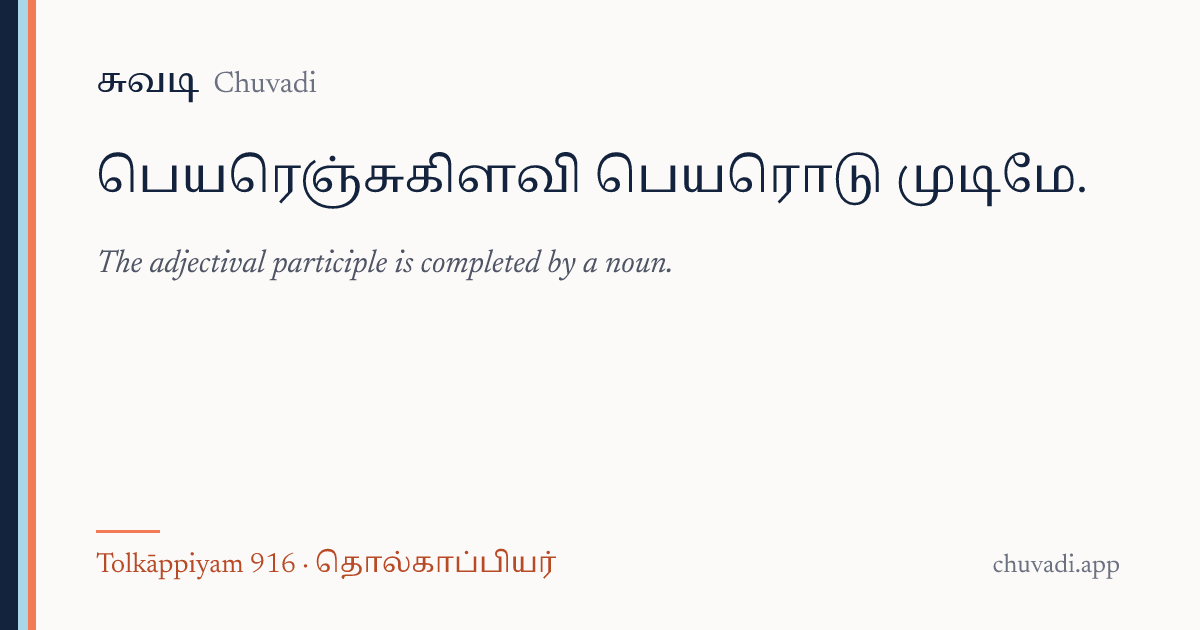
பெயரெச்சம் பெயரோடு முடியும். உண்ட சாத்தன், வந்த பையன் என்பவற்றில் உண்ட, வந்த என்னும் பெயரெச்சங்கள் சாத்தன், பையன் என்னும் பெயர்களால் முடிகின்றன.
இளம்பூரணர்
இவர் பெயரெச்சம் பெயரோடு முடியும் என நேரே பொருள் கொள்வார். இவர் தரும் எடுத்துக்காட்டுகள் இங்கு சரிபார்க்கப்படவில்லை.
நச்சினார்க்கினியர்
இவரும் பெயரெச்சம் பெயரால் முடியும் என்றே கொள்வார். இதில் இளம்பூரணரிடமிருந்து இவர் வேறுபடுவதாகத் தெரியவில்லை; இவர் காட்டும் மேற்கோள்கள் இங்கு சரிபார்க்கப்படவில்லை.
வினையெச்சம் வினையால் முடிவது போல, பெயரெச்சம் பெயரால் முடியும்; அப்பெயர் வினை செய்பவன், பொருள், இடம், காலம், கருவி, வினை எனப் பலவகையாக இருக்கலாம் என்பதை வினையியல் கூறுகிறது.
ஆங்கிலம் · English translationAI
Translation
- The adjectival participle is completed by a noun.
What the poem says
The peyareccam, "adjectival participle", such as uṇṭa "who ate" or varum "who will come", always finds its completion in a noun: uṇṭa cāttaṉ "Cāttaṉ who ate", vanta paiyaṉ "the boy who came".
The rule is the counterpart of the previous one: the verbal participle looks forward to a verb, the adjectival participle to a noun. As the chapter on verbs sets out, the noun may be of several kinds: the doer, the object, the place, the time, the instrument or the act itself.