



அகநானூறு Invocation
பாடல் · The poem
Tap a word to see where else it occurs.
பொருள் · Meaning in TamilAI
மழைக்காலத்தில் மலரும் பொன்னைப் போன்ற புதிய கொன்றை மலர்களை அவன் மார்பில் தாராகவும், மாலையாகவும், தலையில் சூடிய கண்ணியாகவும் அணிந்திருக்கிறான். அவன் மார்பில் குற்றமற்ற நுண்ணிய பூணூல் இருக்கிறது. நெற்றியில் இமைக்காத கண் இருக்கிறது. பகையை அழித்த அவன் கையில் கணிச்சியும் மழுவும் உள்ளன; தோல்வி அறியாத அவனுக்கு மூன்று முனைகளுடைய வேலும் உண்டு. அவன் ஏறிச் செல்வது காளை; அவனோடு சேர்ந்திருப்பவள் உமை. அவன் மேனி செவ்வானம் போன்றது; அந்த வானில் ஒளிரும் பிறையைப் போல வளைந்த வெண்மையான கூர்மையான பற்கள் அவனுக்கு உள்ளன. நெருப்புக் கொழுந்து விட்டதுபோல ஒளிரும் முறுக்கிய சடையும், இளம்பிறையோடு சுடரும் தலையும் உடையவன். மூப்பில்லாத தேவர்களும் முனிவர்களும் மற்றவர்களும் யாருமே அவனுடைய பழமையான மரபை அறிய மாட்டார்கள். வரிகள் உடைய வலிய புலியின் தோலை உடுத்தியிருக்கிறான். யாழிசை நிறைந்த நீலமணி போன்ற கழுத்தை உடைய அந்த அந்தணனின் குற்றமற்ற திருவடி நிழலில் உலகம் தங்கி வாழ்கிறது.
இது நூலின் தொடக்கத்தில் வைக்கப்பட்ட கடவுள் வாழ்த்து; அகப்பாடல் அன்று, ஆகவே திணையும் கூற்றும் இல்லை. பெயர் சொல்லப்படாவிட்டாலும் கொன்றை, நெற்றிக்கண், காளை, உமை, பிறை, புலித்தோல், நீலமிடறு ஆகிய அடையாளங்களால் போற்றப்படுபவன் சிவன் என்பது தெளிவு. ஒன்பதாம் அடியில் பிறையோடு ஒப்பிடப்படுவது பற்களா வேறு ஏதேனுமா என்பது உறுதியாகத் தெரியவில்லை; கணிச்சி என்னும் படைக்கருவியின் வடிவமும் தெளிவாகத் தெரியவில்லை.
ஆங்கிலம் · English translationAI
Translation
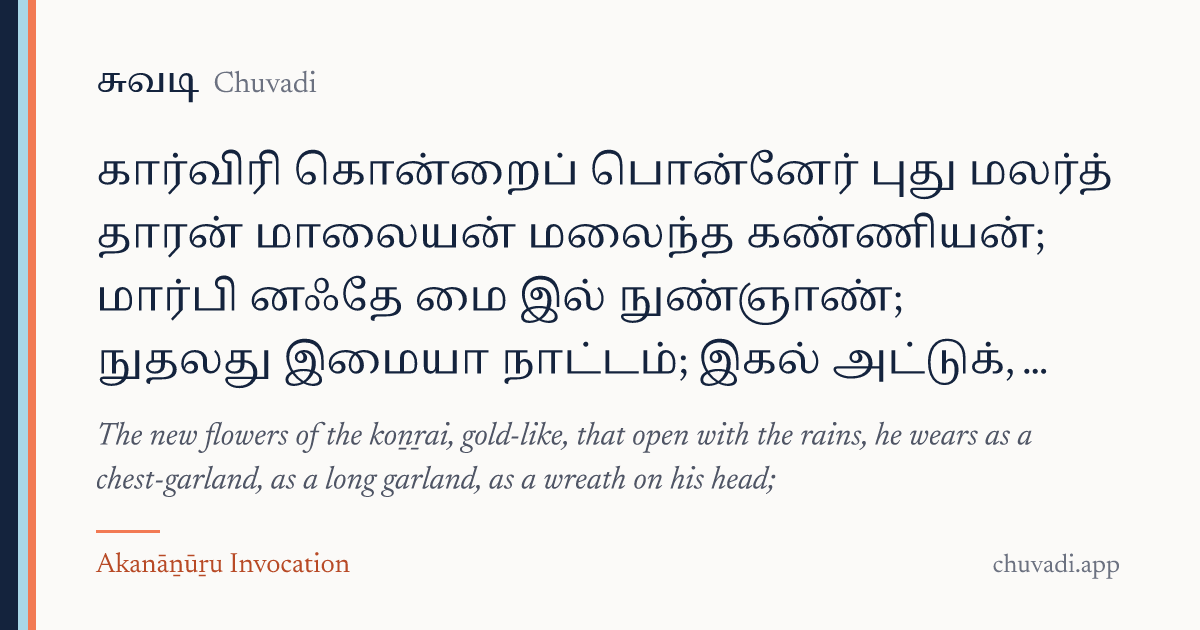
- The new flowers of the koṉṟai, gold-like, that open with the rains,
- he wears as a chest-garland, as a long garland, as a wreath on his head;
- on his chest lies the fine, flawless sacred thread;
- on his brow, an eye that never blinks; having crushed all enmity,
- in his hand he holds the kaṇicci and the battle-axe; a three-pointed
- spear too belongs to him, the one who is never defeated;
- what he rides is the bull; she who is joined to him is Umā;
- his body is like the red sky; like the bright
- crescent shining in that sky are his curving white sharp teeth;
- his twisted matted locks gleam and shine like flaring fire;
- his head glows with the young, unripened moon;
- the ageless immortals, the sages and all the others,
- none of them knows his ancient line and its order;
- he has wrapped himself in the hide of a striped, mighty tiger;
- his throat, dark as sapphire, is rich with the music of the yāḻ; in the shade
- of that holy one's faultless feet the whole world rests.
What the poem says
This is the invocation (kaṭavuḷ vāḻttu) placed at the head of Akanāṉūṟu. It is a hymn, not a love poem, so it has no tiṇai and no speaker; this edition names no poet.
The god is Śiva, though the poem never uses that name. He is built up from his familiar marks one after another: the golden koṉṟai flowers of the rainy season worn three ways, as chest-garland, long garland and head-wreath; the sacred thread; the third eye on the forehead that never closes; the kaṇicci (a hooked weapon or goad) and the axe; the trident, here called a three-pointed spear; the bull he rides; Umā, who shares his body. His body is red like the evening sky, his matted hair glows like fire, and the young crescent moon shines on his head. The tiger's skin and the dark throat belong to the same picture, and the poem calls him antaṇaṉ, 'the holy one'.
Two points stand out. The poem stresses that his origin is beyond knowing: not even the deathless gods or the sages know his ancient lineage. And the last line gives the purpose of the whole list: the world lives in the shade of his feet.
Line 9 is not quite clear. It compares something curved, white and sharp to the bright crescent in the sky, and as divided here it reads as the god's teeth; that is an unusual detail, and the line may be meant differently. The kaṇicci is also a weapon whose exact shape is uncertain.