



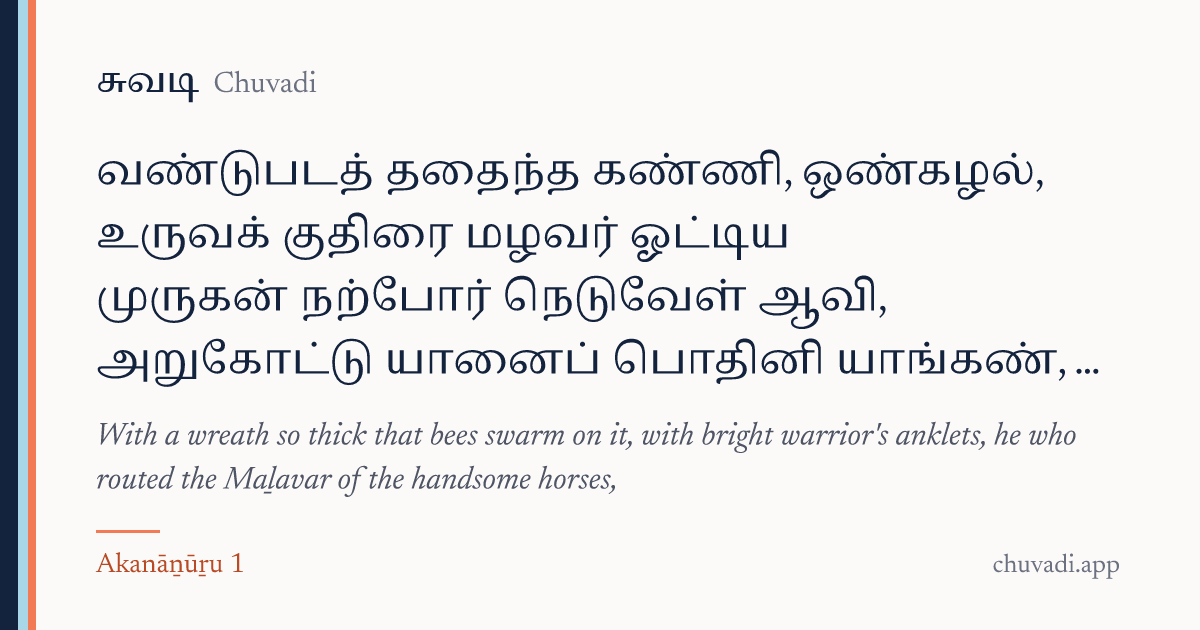

அகநானூறு 1
பாடல் · The poem
Tap a word to see where else it occurs.
பொருள் · Meaning in TamilAI
தேனீக்கள் மொய்க்கும்படி அடர்ந்த கண்ணியும், ஒளிரும் கழலும் உடையவன், அழகிய குதிரைகளை உடைய மழவரை ஓட்டியவன், போரில் முருகனைப் போன்றவன் நெடுவேள் ஆவி. அவனுடைய, வெட்டும் கொம்புகள் உடைய யானைகள் நிறைந்த பொதினி நகரில், எளிய காரோடன் அரக்கினால் இறுக்கிப் பொருத்திய கல்லைப் போல 'நாம் பிரிய மாட்டோம்' என்று அவர் சொன்னார். தோழி! அந்தச் சொல்லை அவர் மறந்துவிட்டாரோ? என் மூங்கில் போன்ற திரண்ட தோள்கள் மெலியும்படி, தொலைநாட்டிலிருந்து பொன்னணிகளாகிய செல்வத்தைக் கொண்டுவரச் சென்றாரே! அங்கே நிலம் பிளக்கும்படி நெருப்பைப் போன்ற வெயில் ஈரம் அறச் சுடுகிறது; மரங்கள் நிழல் இழந்து உலர்ந்து நிற்கின்றன; பாறைகள் காய்கின்றன; நீர் அற்ற பசுஞ்சுனைகள் ஈரமே இல்லாமல் வறண்டுவிட்டன; சிந்திய நெல் பொரியாகும் அளவுக்கு வெப்பம். அங்கே யாரும் நடமாடாததால் வழிப்பறி செய்வோரும் சோம்பிக் கிடக்கிறார்கள்; வழிகள் பொலிவிழந்து கிடக்கின்றன. அசையும் கிளைகளை உடைய முருங்கையின் வெண்மலர்களைச் சுழல்காற்று வாரி எடுத்துச் செல்ல, அவை உடையும் அலைகளின் நுரைத்துளி போலப் பொங்கி, கடல் போலத் தோன்றுகின்றன. அத்தகைய காட்டைக் கடந்து சென்றவர் அவர் சொன்னதை மறந்தாரோ?
இது பாலைத் திணை; பொருள் தேடப் பிரிந்த தலைவனை நினைந்து தலைவி தோழியிடம் கூறுவது. அரக்கால் பொருத்திய கல் என்பது பிரிக்க முடியாத உறுதியான பிணைப்பைக் குறிக்கிறது; அதனால் அவருடைய பிரிவு மேலும் கசப்பாகத் தெரிகிறது. வறண்ட காட்டில் பறக்கும் வெண்மலர்கள் கடல் போலத் தோன்றும் காட்சி, அவர் சென்ற வழியின் கொடுமையையும் தொலைவையும் காட்டுகிறது. 'அறுகோடு', 'நவிரல்' ஆகிய சொற்களின் பொருள் உறுதியாகத் தெரியவில்லை.
ஆங்கிலம் · English translationAI
Translation
- With a wreath so thick that bees swarm on it, with bright warrior's anklets,
- he who routed the Maḻavar of the handsome horses,
- a Murukaṉ in fine battle, Neṭuvēḷ Āvi —
- in his Potiṉi of elephants with cutting tusks,
- like the stone that the humble Kārōṭaṉ fixed fast with lac,
- 'Like that stone, we shall never part' — those words he spoke,
- has he forgotten them, friend? — so that my fine
- bamboo-like rounded shoulders grow thin, to bring from a far country
- wealth of golden ornaments — where, so that the ground cracks,
- the hot rays burn like fire until all freshness is gone;
- where the trees have lost their shade and withered; where the rocks grow hot
- and the green springs, their water cut off, dry to the last drop,
- so hot that spilled paddy pops like parched grain; where, since no one at all
- travels there, the robbers sit idle,
- the paths through the wasteland lie desolate; where the swaying branches
- of the fibreless murungai shed their white flowers in sprays
- that the fierce whirling wind lifts and carries rushing on,
- so that they rise up like the spray of breaking waves and, ahead,
- look like the sea — he who has crossed that forest?
What the poem says
The heroine speaks to her friend. Her husband or lover has gone on the long road through the dry country to earn wealth, and her shoulders, once rounded like bamboo, are growing thin with grief. She asks whether he has forgotten his own promise that they would never part.
The promise is given a striking image. He had said they would hold together like the stone that Kārōṭaṉ fixes with lac. A kārōṭaṉ appears to be a craftsman who sets or grinds stones, and lac or resin (payiṉ) is what binds the stone in place; the 'humble' or 'small' craftsman works in Potiṉi, the town of the chieftain Neṭuvēḷ Āvi. The opening lines praise Āvi only as the poem does: a warrior with a bee-covered wreath and anklets, who drove off the Maḻavar horsemen and fought like Murukaṉ himself. The bond of stone and lac was meant to be permanent, which makes the question bitter.
The rest of the poem is the pālai landscape he has entered: sun that splits the earth, trees stripped of shade, springs dried out, heat enough to pop spilled paddy. Even the robbers have nothing to do, since no one travels there. The closing picture turns the waste into its opposite: white murungai blossoms whipped up by the whirlwind rise like spray off breaking waves, so that the dry forest looks like the sea. The image of the sea in the desert sharpens the sense of how far away and how unreal his journey seems to her.
Some words are uncertain: 'aṟukōṭu' may mean tusks that cut, or tusks that have been sawn; 'naviral' (line 16) is obscure and is taken here as the sprays of flowers.