




அகநானூறு 105
பாடல் · The poem
Tap a word to see where else it occurs.
பொருள் · Meaning in TamilAI
அகன்ற பாறையின் மேல் மலர்ந்த, அரும்புகள் முதிர்ந்த வேங்கை மரத்தின் ஒளிரும் இலைகளால் மாலை தொடுத்து அணிவித்து, நல்ல மலைநாட்டுத் தலைவன் மெல்லத் தன்னைப் பாராட்ட, அவள் எப்படித்தான் தாங்குவாளோ! தேன் கலந்து மணிகள் பதித்த கிண்ணத்தில் இனிய பாலை ஏந்தி, அவளைப் பெறாத செவிலித் தாயர் ஊட்டினாலும் உண்ணாதவள்; நிழல் சூழ்ந்த குளம் போன்ற நீண்ட மாளிகையின் வளாகத்தில் உள்ள எங்கள் செல்வத்தையும் நினைக்காதவள்; பொய்யான சொற்களில் மயங்கிவிட்டாள். பந்தைத் தட்டுவது போன்ற தாளத்தோடு பல அடி வைக்கும் சிறு நடையுடைய குதிரைகளையும் பல வேல்களையும் உடைய எழினியின், அழிக்க முடியாத வலிமையுடைய வீரர்கள், தாங்கள் அனுப்பப்பட்ட பணியை முடிப்பதற்காக, கடுந்தீ பரவிச் சென்றதால் கற்கள் காயும் காட்டில், திறமையான அம்பும் சிறந்த வில்லாற்றலும் உடைய மறவர்கள், தேன்பிழிந்த நறுங்கள்ளால் மகிழ்ந்து, எல்லையைக் கடந்து, பருத்த மென்மையான மடியுடைய ஆநிரைகளைக் கவர்ந்து கொண்டுவரும், மொட்டுகள் நுனி திறந்த வேனிற்காலத்தில், பகைவர் நேருக்கு நேர் சந்திக்கும் பல வழிகளில் செல்லும் அந்தப் பயணத்தை அவள் எப்படித் தாங்குவாள்?
இது பாலைத் திணை; உடன்போக்குச் சென்ற மகளை நினைந்து செவிலியோ நற்றாயோ வருந்திக் கூறுவது. வீட்டில் பால் குடிக்கவும் மறுத்த செல்லமகளின் மென்மை, கொள்ளையர் திரியும் கொடிய வழியோடு முரண்பட வைக்கப்படுகிறது. எழினி அவனுடைய வீரர்களைச் சுட்டுவதற்கு மட்டுமே பெயரிடப்படுகிறான்; ஒன்பதாம், பதினொன்றாம் அடிகளின் பொருள் முழுமையாக உறுதியில்லை.
ஆங்கிலம் · English translationAI
Translation
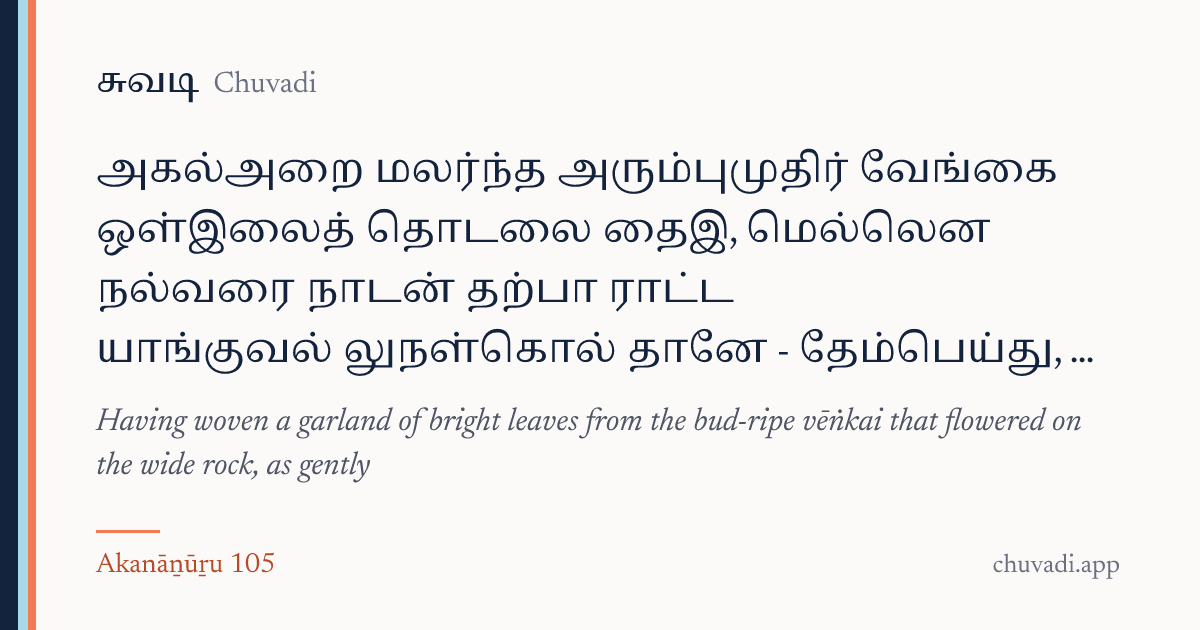
- Having woven a garland of bright leaves from the bud-ripe vēṅkai
- that flowered on the wide rock, as gently
- the lord of the good mountain country praises her,
- how will she be able, I wonder — she who, honey poured into it,
- from a gem-set bowl of sweet milk held up to her,
- would not drink even when the mothers who did not bear her fed her,
- who does not think of our wealth either, in the compound of the long mansion
- like a shaded pool — deceived by false words —
- with horses of light stride, their many steps beating like a ball bounced,
- of Eḻiṉi of many spears, of strength that cannot be undone,
- to finish the work they were sent for, in the forest where the blazing fire
- has passed and the stones are burning,
- fierce warriors, skilled with the arrow, superb at the draw,
- merry with fragrant toddy pressed from honey, cross the frontier
- and drive back herds with soft, swelling udders,
- in the summer when the buds have opened at their tips,
- the journey by many paths, where enemies come face to face?
What the poem says
The speaker is an older woman of the household, the foster-mother or the mother, after the girl has gone off with her lover from the hills. She cannot imagine how the girl will manage the journey.
The opening lines show the girl as the speaker imagines her now: the lover from the mountains has woven her a garland of bright vēṅkai leaves and gently praises her. That tenderness is set against what the girl has left behind. At home she was so pampered that she would not drink honeyed milk from a gem-set bowl even when her nurses (the 'mothers who did not bear her') coaxed her, and she does not give a thought to the family's wealth in its great house, cool as a shaded pool. Taken in by 'false words', as the speaker bitterly puts it, she has chosen the road.
The road is pālai at its fiercest. In the summer forest, burnt by fire until the very stones are hot, the warriors of Eḻiṉi, a chieftain known here for his many spears and his quick, dancing horses, go out on raids, drink toddy, cross the frontier and drive back herds of cattle. These are paths where enemies meet.
The poem names Eḻiṉi only for the warriors who serve him. Line 11 ('viṭutoḻil muṭimār', 'to finish the work they were sent for') and the description of the horses in line 9 are compressed, and their sense is partly uncertain.