



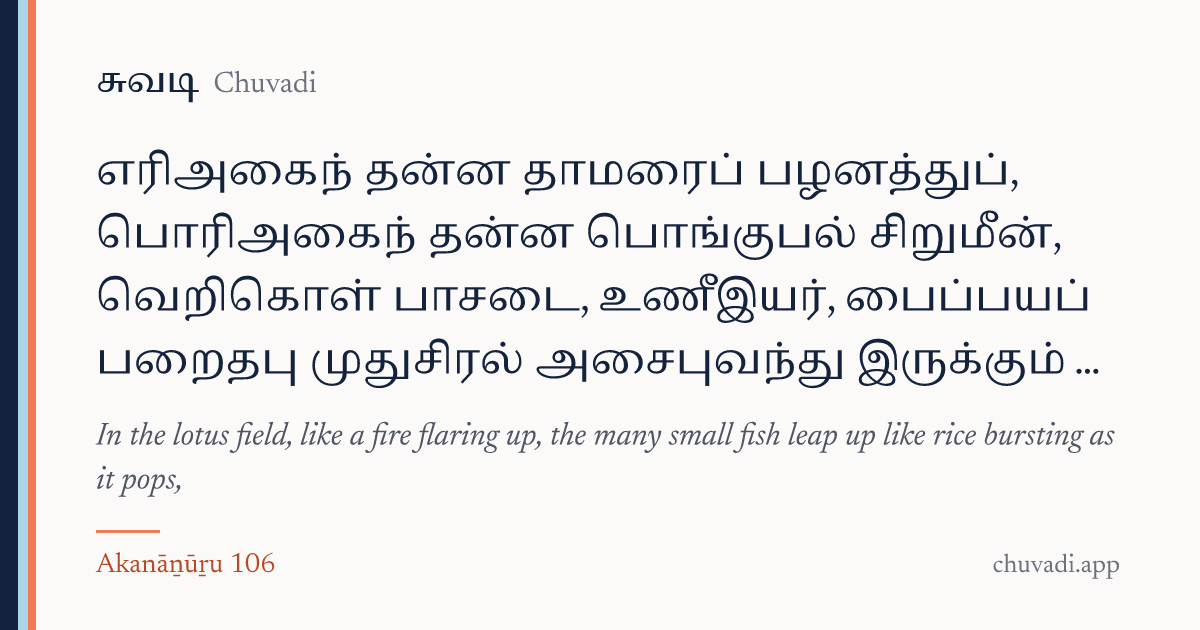

அகநானூறு 106
பாடல் · The poem
Tap a word to see where else it occurs.
பொருள் · Meaning in TamilAI
தீ சுடர்விட்டு எரிவது போன்ற தாமரைகள் நிறைந்த வயல்பொய்கையில், நெல் பொரிந்து வெடிப்பதைப் போலத் துள்ளும் பல சிறிய மீன்களை உண்பதற்காக, பறக்கும் ஆற்றல் குறைந்த முதிய சிரல் பறவை மெல்ல மெல்லச் சோர்ந்து வந்து மணமுள்ள பசிய இலைகளின் மேல் அமர்ந்திருக்கும் ஒளிரும் துறைகளையுடைய ஊரனின் மனைவி, நம் காரணமாகத் தன் கணவனோடு ஊடுகிறாள் என்று சொல்கிறார்கள். நாம் அப்படி எதுவும் செய்யவில்லை என்றாலும், பழியிலிருந்து தப்ப முடியாது என்பதால், செறிந்த வளையல்கள் ஒலிக்கும்படி கைகளை வீசிக்கொண்டு, அங்கே சிறிது நேரம் சுற்றித் திரிந்து வருவோம், வா தோழி! ஒளிரும் வாட்படையும் குற்றமற்ற கட்டுப்பாடும் உடைய வெற்றிச் செழியன் நெருங்கிய போரில் வெல்லும்தோறும் யானைகளைப் பரிசாகப் பெறும் பாணன் அடிக்கும் தண்ணுமைப் பறையின் முகத்தைப் போல, அவள் தன் வயிற்றில் அடித்துக்கொள்ளட்டும்!
இது மருதத் திணை; தலைவனின் மனைவி தன்னால் ஊடுகிறாள் என்று கேட்ட பரத்தை தன் தோழியிடம் எள்ளலாகக் கூறுவது. பறக்க இயலாத முதிய சிரல் துள்ளும் சிறுமீனை உண்ண வருவது, உள்ளுறையாகத் தலைவனையோ தலைவியையோ நகைக்கும் குறிப்பாகக் கொள்ளலாம். செழியன் பாண்டிய மன்னனின் பெயர்; பாடல் அவனைப் பற்றி இதற்கு மேல் கூறவில்லை.
ஆங்கிலம் · English translationAI
Translation
- In the lotus field, like a fire flaring up,
- the many small fish leap up like rice bursting as it pops,
- and, to eat them, on the fragrant green leaves, slowly, slowly,
- the old kingfisher whose wings have failed comes, tired, and sits:
- the wife of the lord of the town of such bright ghats, with her husband,
- they say, quarrels because of us; though we
- have done nothing of the sort, since we cannot escape the blame,
- swinging our arms so that our close-set bangles jingle, a little while there
- let us go and wander about and come back — my friend! —
- so that, like the drum whose face the bard beats,
- the bard whose reward is elephants, each time the victorious Ceḻiyaṉ
- of the army with shining swords, of flawless discipline, wins the crowded battle,
- she may beat her own belly!
What the poem says
This is one of the poems spoken by the other woman (parattai), the hero's mistress, to her own friend. The edition gives no speaker, but the words make it plain: she has heard that the hero's wife is quarrelling with him on her account. Since she will be blamed anyway, she says, let the two of them go and parade past the wife's house, swinging their arms and jingling their bangles, so that the wife will beat her belly in rage like a bard beating a drum.
The comparison is grand and mocking. The drum is the taṇṇumai of a bard who is rewarded with elephants every time the Pāṇṭiya king Ceḻiyaṉ, with his army of shining swords and his flawless discipline, wins a battle. The poem says no more of the king than these epithets.
The opening scene of the marutam pond carries a sting (uḷḷuṟai). Small fish leap among the flaming red lotuses, and an old kingfisher that can no longer fly well comes slowly to sit on the lotus leaves to catch them. The tired old bird, still trying to feed on lively young fish, may hint at the hero, or at the ageing wife who watches; in either case the mistress is laughing at the household she has disturbed.
'Veḷiṟu il kaṟpu' (line 11) may mean 'flawless learning' or 'flawless steadiness'; the sense of the whole is clear.