




அகநானூறு 107
பாடல் · The poem
Tap a word to see where else it occurs.
பொருள் · Meaning in TamilAI
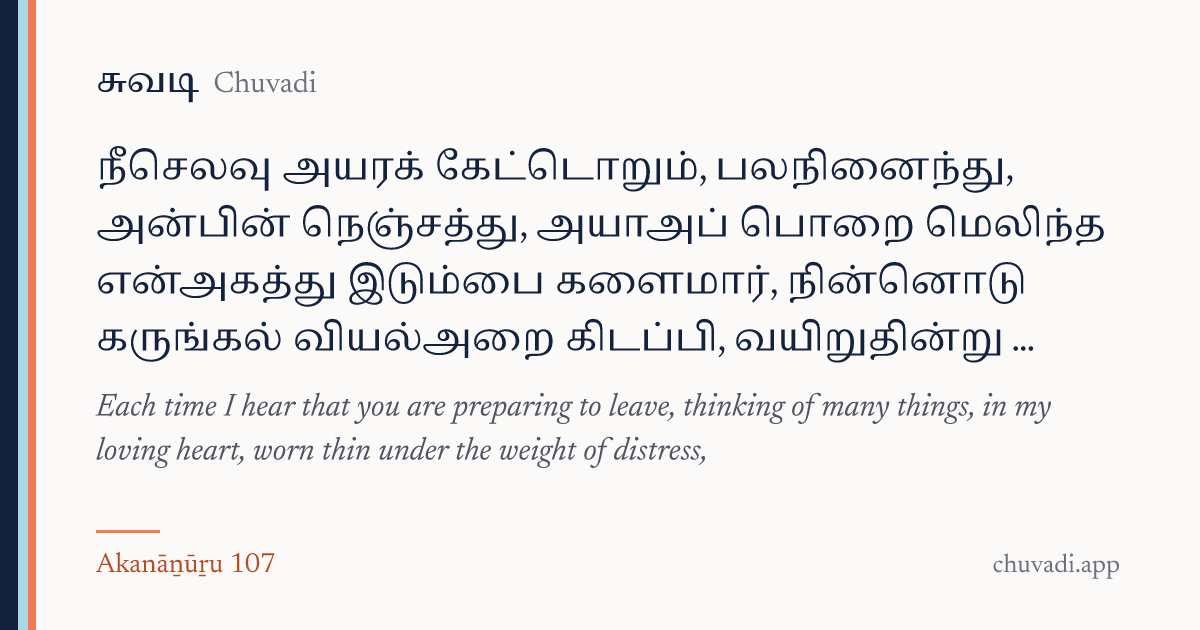
நீ பிரிந்து செல்ல ஏற்பாடு செய்வதைக் கேட்கும்தோறும், பலவற்றை நினைத்து, அன்புடைய என் நெஞ்சம் துயரச் சுமையால் மெலிகிறது. என் உள்ளத்தில் உள்ள அந்தத் துன்பத்தைப் போக்குவதற்காக, உன்னோடு — கரிய பாறையின் அகன்ற பரப்பில் கலைமானைக் கிடத்தி அதன் வயிற்றைத் தின்றுவிட்டுப் பெரிய புலி விட்டுச்சென்ற உலர்ந்த இறைச்சியை வழிச்செல்லும் பயணிகள் மகிழ்ந்து எடுத்துக்கொள்ளும் இடத்தில், ஒலிக்கும் மூங்கிலின் நெல்லரிசியோடு சேர்த்து, ஆநிரை தங்கும் பாடியில் குழி தோண்டிச் சமைத்த, வெண்கொழுப்பை உருக்கிச் சேர்த்த தூய வெண்சோற்றை, புள்ளிகளுடைய அடிமரமுள்ள தேக்கின் அகன்ற இலையில் உண்ணும், சினமுள்ள நாய்களையும் திருந்தாத நீண்ட மொழியையும் உடைய வடுகரின் வலிய வீரர்கள் நிறைந்த அரிய எல்லையைக் கடந்து, வருந்தி, சரியும் மண்ணுக்கு அஞ்சும் ஒற்றையடிப் பாதையின் கொடிய ஏற்றத்தில் வழுக்கி, கால் முடமாகி, தனியாகக் கைவிடப்பட்ட வலிமையுடைய எருதுக்கு, பிடரிமயிர் போன்ற குடுமியுடைய சிறுவர்கள் வில்லால் மான்களை விரட்டிவிட்டு, அழகிய இலையுடைய இலுப்பையின் உள்துளையுடைய வெண்மலர்களை ஊட்டும் மலைச் சிற்றூரில், அது அவர்களுக்கு மாலையில் இனிய துணையாகிறது. காலையில் புதிய அரும்புகளின் நறுமலர்கள் பருக்கைக் கற்களைப் போல உதிர, மணவீட்டைப் போல மணக்கும் காட்டு வழியில், இணையான மென்கூந்தலுடைய என் தோழியும் உன்னோடு வருவாள்!
இது பாலைத் திணை; பிரிந்து செல்லப் போகும் தலைவனிடம், தலைவியையும் உடன் அழைத்துச் செல்லுமாறு தோழி கூறுவது. கைவிடப்பட்ட எருதைச் சிறுவர்கள் பேணுவது, தலைவியைத் தனியே விட்டுச் செல்லலாகாது என்பதை இறைச்சியாக உணர்த்துகிறது; மணவீடு போல மணக்கும் காடு, உடன்போக்கே மணமாக அமையும் என்று குறிக்கிறது. வடுகரின் உணவு பற்றிய சில விவரங்களின் பொருள் உறுதியில்லை.
ஆங்கிலம் · English translationAI
Translation
- Each time I hear that you are preparing to leave, thinking of many things,
- in my loving heart, worn thin under the weight of distress,
- there is grief within me; to clear it away, with you —
- where on the wide black rock it laid the stag and ate its belly,
- and the great tiger left the drying flesh,
- and the travellers on the path were glad of it; there,
- together with the rice of the rustling bamboo's grain,
- in a camp at the cattle-pen, cooking it in a pit,
- the bright white rice in which white fat has been melted
- they gulp from the broad leaves of the spotted-trunked teak,
- the Vaṭukar of fierce dogs and long, uncouth speech:
- crossing their hard frontier of strong men, struggling,
- on the narrow path of a single foot's width, fearing the crumbling earth,
- on the cruel climb it slipped, went lame,
- and the strong, sturdy bullock was left behind alone;
- the hollow, white, tubular flowers of the iruppai with lovely leaves,
- the boys with tufted hair, driving off the deer with their bows,
- feed to it, in the small village among the hills,
- and it becomes their sweet companion at evening; in the morning
- fresh-budded fragrant flowers drop like coarse pebbles,
- and the forest smells sweet as a wedding house —
- my friend, with her soft, twin-braided hair, will come too!
What the poem says
The heroine's friend speaks to the hero, who is preparing to leave on a journey. Each time she hears of it, she says, her own heart grows heavy; and to remove that grief she makes a bold proposal at the very end of the poem: her friend, the heroine, will come with him.
The long middle describes the road, and it is not only frightening. A tiger has left a half-eaten stag on a rock and passing travellers gladly take the meat. The Vaṭukar, a people the poems place on the northern frontier and describe as speaking a strange, 'uncouth' tongue and keeping fierce dogs, camp by their cattle pens and eat rice cooked with bamboo grain and melted fat off broad teak leaves. On a narrow mountain path a bullock from some caravan has slipped, gone lame and been left behind; the village boys look after it, chase deer away with their bows and feed it iruppai flowers, and it becomes their pet.
That small episode of kindness to an abandoned creature is the heart of the poem's argument (iṟaicci): if strangers in the hills care for a beast left alone, how can he leave the girl behind? And the forest itself, in the morning, drops its flowers and smells like a house prepared for a wedding, a clear hint that the journey could become their marriage.
The friend's proposal is uṭaṉpōkku, elopement with the lover. Line 13 ('orukāl paṭṭam', a path the width of a single foot) is rendered literally; the reading of some details of the Vaṭukar's meal is not certain.