




அகநானூறு 115
பாடல் · The poem
Tap a word to see where else it occurs.
பொருள் · Meaning in TamilAI
அழியாத விழாக்களையுடைய அச்சம் தரும் பழைய ஊரில், நாம் பழியற்றவர்களாக இருந்தாலும், பலரும் நம் பின்னால் பேசும் அம்பல் நிகழ்வதாக; கொடிய சொல்லுடைய சேரிப் பெண்கள் எள்ளி நகைத்தாலும் நகைக்கட்டும்; நுண்ணிய அணிகலன்களையுடைய எருமையின் குடநாட்டைப் போன்ற என் சிறந்த அழகு அழிந்தாலும் அழியட்டும்; நம் காதலர் மட்டும் எப்போதும் நோயின்றி வாழட்டும்! தவறாத வாளுடைய எவ்வி போரில் வீழ்ந்தபோது, பாணர்கள் கைகூப்பித் தொழும் மரபின்படி, முன்பே பிய்த்து எடுத்துக் கீழே வைத்துப் போற்றிய, வளமான இசையுடைய யாழ்களின் வளைந்த தண்டுகளைப் போல, ஒளிரும் கொத்துகளையுடைய சுடர்விடும் கொன்றைப் பூவின் முதிர்ந்து விளைந்த நெற்றுகள் பாறைகளின் மேல் பரவிக் கிடக்கும் நீண்ட பாலைவழியில், பிறை போன்ற வெண்கொம்புகளையுடைய பெருமிதமான யானை, மிகுந்த சினமும் வலிமையும் இருந்தும், பாய்ந்து வரும் விலங்குக்கு அஞ்சித் தன் இனத்தோடு ஒளிந்துகொள்ளும் அச்சம் தரும் கிளைவழிகளைக் கடந்து, நம் நல்ல சிறந்த அழகு அழியும்படி, தொலைவான நாட்டில் நம்மை விட்டுத் தங்கியிருக்கிறார்; அவரைப் பிணிக்கும் பொருள் இன்னும் கைகூடாததால் இவ்வளவு காலம் நீட்டித்துவிட்டார்!
இது பாலைத் திணை; குறித்த காலம் கடந்தும் திரும்பாத தலைவனைப் பற்றித் தலைவி தோழியிடம் கூறுவது. ஊர்ப்பழியையும் அழகின் அழிவையும் பொருட்படுத்தாமல் அவன் நலத்தை மட்டுமே வேண்டுவது அவளுடைய அன்பின் ஆழத்தைக் காட்டுகிறது. எவ்வி வீழ்ந்தபோது பாணர் யாழை ஒடித்த செய்தியைப் பாடல் உவமையாக மட்டுமே கூறுகிறது; 'எருமை' என்பது ஒரு தலைவனின் பெயரா என்பது உறுதியில்லை.
ஆங்கிலம் · English translationAI
Translation
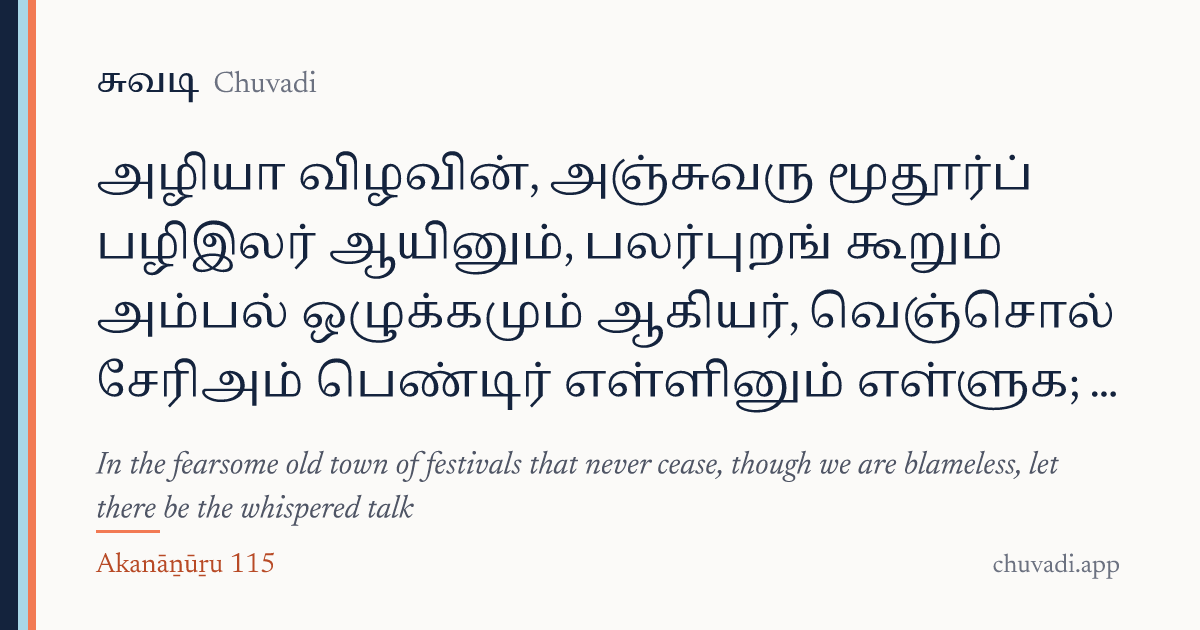
- In the fearsome old town of festivals that never cease,
- though we are blameless, let there be the whispered talk
- that many speak behind our backs; the harsh-tongued
- women of the lovely street, if they mock, let them mock;
- like the Kuṭa country of Erumai of fine ornaments,
- my chosen beauty, if it is lost, let it be lost; only, for ever
- may he be free of harm, our lover! — Where Evvi
- of the unfailing sword fell in battle, the bards,
- by the custom of worship with joined hands, first tore off and laid down, praising him,
- the curved necks of their rich-voiced lutes: like those, from bright clusters,
- the shining-flowered koṉṟai's ripe, seasoned pods
- lie scattered on the rocks along the long desert way,
- where a lordly elephant with white tusks like the crescent moon,
- of fierce anger and strength, fearing the leaping beast,
- hides with its herd, at the fearful forks of the road;
- so that our fine, chosen beauty wastes, in a far country,
- leaving us, he stays; because the wealth that binds him
- has not yet come to hand, he has delayed so long!
What the poem says
The heroine speaks to her friend while the hero is away earning wealth and has stayed longer than he promised. She lets everything go: let the gossip in this festive old town go on, though she has done nothing wrong; let the harsh women of the street mock her; let her beauty, once as rich as the western land of Erumai, wither. She asks only one thing: that he should always be safe.
The road he took is described with a memorable comparison. The long curved pods of the koṉṟai lie scattered over the rocks like the curved necks of the lutes that the bards, by custom, tore apart and laid down in mourning when Evvi, a chieftain 'of the unfailing sword', fell in battle. The poem records this act of grief and says nothing more about Evvi or the battle. Then a great elephant with tusks like the crescent moon, fierce as it is, hides with its herd in fear of a 'leaping beast', most likely a tiger.
The mourning bards and the frightened elephant colour the landscape with loss and fear, which is exactly what the heroine feels. The last lines explain his delay without accusing him: he stays in a far country because the wealth that holds him has not yet been gathered, and her beauty wastes away meanwhile.
'Erumai' in line 5 may be the name of a chieftain of the Kuṭa country or simply 'buffalo' (a land of finely adorned buffaloes); the reading as a name is tentative. 'Kūṭāmaiyiṉ' in line 18 is taken as 'because it has not come together'.