



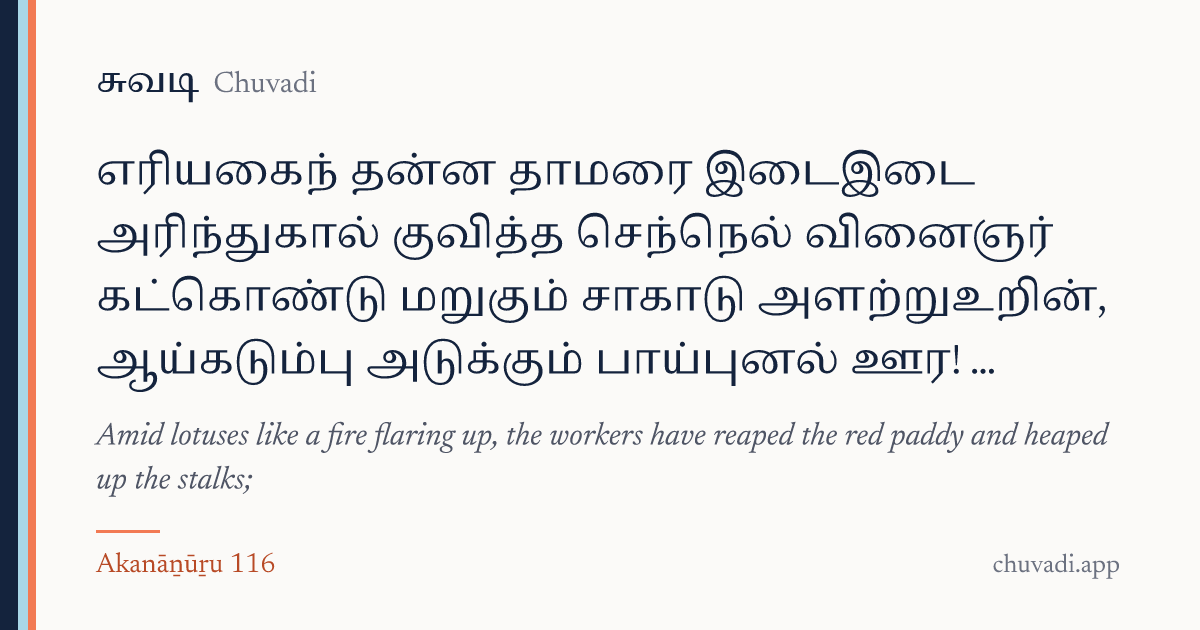

அகநானூறு 116
பாடல் · The poem
Tap a word to see where else it occurs.
பொருள் · Meaning in TamilAI
தீ சுடர்விட்டு எரிவது போன்ற தாமரைகளுக்கு இடையிடையே செந்நெல்லை அறுத்துத் தாள்களைக் குவித்த உழவர்கள் கள்ளுண்டு திரியும்போது ஓட்டிச்செல்லும் வண்டி சேற்றில் புதைந்தால், சிறந்த கடும்பை அதன் கீழ் அடுக்கும், பாய்ந்தோடும் நீருடைய ஊரனே! உனக்குப் பெரிதாக நாணமே இல்லை, உறுதியாக! 'பொரியைப் போலப் புன்கமலர்கள் அவிழ்ந்து அகன்ற நீர்த்துறையைப் பொலிவுறச் செய்ய, ஒளிரும் நெற்றியும், நறுமலர்களால் அழகுபெறும் குட்டையான பல பின்னல்களுடைய கூந்தலும், மான் போன்ற பார்வையும், உறுதியான அழகிய முலைகளும், வேல் போலக் கூர்மையான அழகும் உடைய ஒருத்தியோடு, நேற்று நீ ஆற்றுநீரில் விளையாடினாய்' என்று சொல்கிறார்கள். அந்தச் செய்தியை நாங்கள் பொய்யால் மூடி மறைத்தாலும், அது எங்கள் கையை மீறி அலராகிவிட்டது. மலர்மாலையும், மை அணிந்த யானைகளும், வீரப்போரும் உடைய செழியன், பொய்க்காத விழாக்களையுடைய கூடல் நகரத்துப் போர்க்களத்தில், ஒன்றுசேர்ந்து எழுந்த இரு பெருவேந்தர்களின் கடல் போன்ற பெரும்படை கலங்கும்படி தாக்கி, ஒலிக்கும் முரசுகளை விட்டுவிட்டு அவர்கள் சிதறி ஓடிய முதுகைக் கண்ட அந்நாளில், வெற்றிகொண்ட அகன்ற களத்தில் எழுந்த ஆரவாரத்தைவிடப் பெரியது அந்த அலர்!
இது மருதத் திணை; பரத்தையோடு நீராடிய தலைவனிடம் தோழியோ தலைவியோ கடிந்து கூறுவது. சேற்றில் புதைந்த வண்டியை மீட்க முயலும் கள்மயக்கமுடைய உழவர், தலைவனின் நிலையை உள்ளுறையாகக் காட்டலாம். 'ஆய்கடும்பு அடுக்கும்' என்ற தொடரின் பொருள் உறுதியாகத் தெரியவில்லை; தோற்ற இரு வேந்தர் யார் என்று பாடல் கூறவில்லை.
ஆங்கிலம் · English translationAI
Translation
- Amid lotuses like a fire flaring up,
- the workers have reaped the red paddy and heaped up the stalks;
- when the cart they drive about, drunk on toddy, sinks into the mud,
- they heap up choice kaṭumpu — lord of the town of rushing waters!
- You have no shame at all, surely! Like popped rice
- the puṉku opens, making the wide ghat splendid; with one of bright brow,
- her short, many braids made lovely by fragrant flowers,
- with a doe-like look, firm, beautiful breasts,
- a beauty sharp as a spear — with such a woman, yesterday,
- you played in the stream, they say; that news,
- though we wrapped it in lies and hid it, has slipped from our hands
- and become gossip of itself; it is — with his flowering garland,
- his kohl-decked elephants and fierce wars, Ceḻiyaṉ,
- at the battlefield of Kūṭal of unfailing festivals,
- when, against the two great kings who rose together in alliance,
- he struck till their sea-like great army was thrown into confusion,
- and, abandoning their resounding drums, scattering,
- they showed him their fleeing backs on that day —
- louder than the roar on that wide field of victory!
What the poem says
The heroine's friend, or the heroine herself, speaks to the hero, addressed as 'lord of the town of rushing waters', the marutam title for a husband who strays. He was seen yesterday bathing and playing in the river with another woman, beautiful, flower-braided, doe-eyed, with a beauty 'sharp as a spear'. 'We tried to cover it with lies,' she says, 'but it has got out of hand and become gossip.'
The opening scene sets the tone (uḷḷuṟai). In the red-lotus fields the farm workers have harvested and stacked the paddy, and when their cart, driven drunkenly, sticks in the mud, they heap something under it to free it. A careless driver stuck in the mire is a pointed picture of the hero's situation; the friend implies that his wife's household is left to dig him out.
The closing comparison is on a grand scale. The gossip is louder than the shouting on the field of Kūṭal, the Pāṇṭiya city, on the day Ceḻiyaṉ routed the vast army of 'the two great kings' who had joined forces against him, so that they fled leaving their drums behind. The poem does not name the two kings, and they should not be supplied.
The phrase 'āy kaṭumpu aṭukkum' (line 4) is uncertain. Kaṭumpu may be a plant or bundle laid under the wheel, or the word may mean 'kinsfolk', the workers calling their whole crew to lift the cart; the rendering keeps the word.