



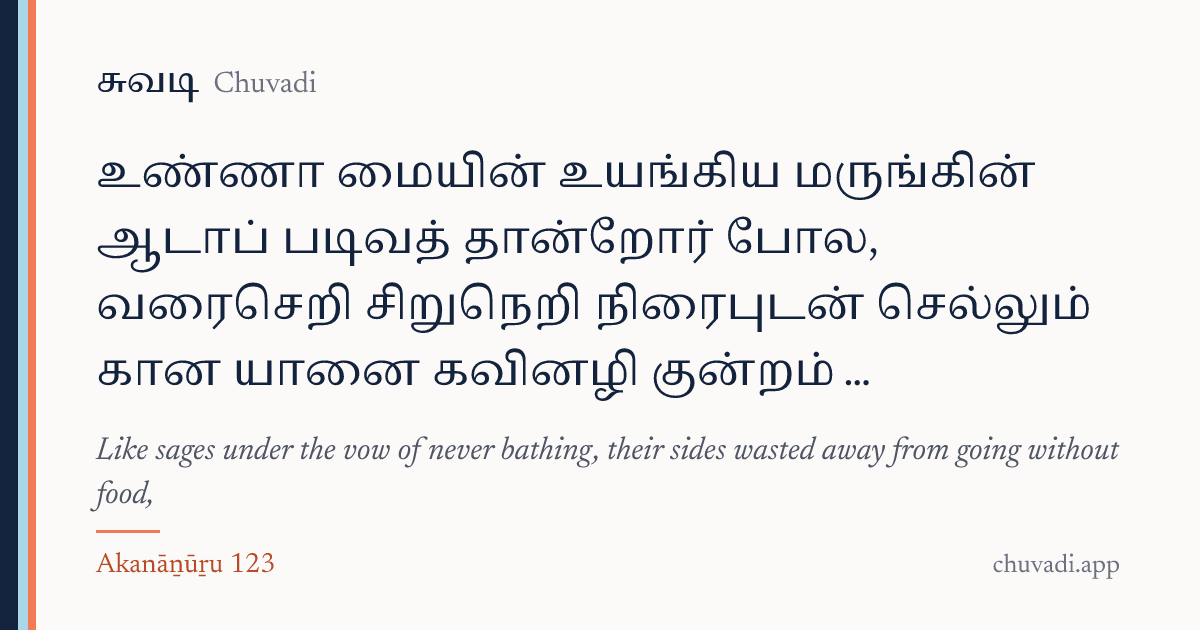

அகநானூறு 123
பாடல் · The poem
Tap a word to see where else it occurs.
பொருள் · Meaning in TamilAI
உண்ணாமல் இருந்ததால் வாடிய விலாப்பக்கங்களையுடைய, நீராடாத நோன்பு கொண்ட துறவியரைப் போல, மலைகள் நெருக்கிய சிறுவழியில் வரிசையாகச் சேர்ந்து செல்லும் காட்டுயானைகள் அழகிழந்து காணப்படும் குன்றைக் கடந்து பொருள் கொண்டுவர உனக்கு வலிமையில்லை. சிறந்த, சிலவாகிய அழகிய கூந்தலையுடையவளின் நல்ல மார்பைத் தழுவி இங்கேயே தங்கிவிட்டால், வறுமைக்கு அஞ்சுகிறாய். ஆகவே, நெஞ்சே! நீ வாழ்க; இப்படியே வருந்திக்கொண்டிரு. நிலவைப் போல ஒளிவீசும், நெய் தோய்ந்த நீண்ட வேலின் இரும்பு இலையையும், மேகம் போன்ற பல கேடயங்களையும் உடைய, பெருங்கொடை வழங்கும் சோழர்களின், மூங்கில் கோலும் மூழ்கும் ஆழமுள்ள காவிரி கடலில் கலக்கும் பெரிய துறைமுகத்தில், இறால் மீன்களோடு வந்து மாலைகளோடு திரும்பிப் போகும் பெருங்கடலின் அலையைப் போல, சென்று கொண்டுவர வேண்டிய பொருளைப் பற்றி நீ ஒரு முடிவிலும் நிலைக்கவில்லை.
இது பாலைத் திணை; பொருள் தேடிப் பிரிவதா, தலைவியுடன் தங்குவதா என்று முடிவெடுக்க முடியாத தலைவன் தன் நெஞ்சிடம் கூறுவது. வந்தும் போயும் இருக்கும் கடல் அலை, இருமனப்பட்ட நெஞ்சின் நிலையைக் காட்டுகிறது. யானைகளுக்கு உவமையாகும் துறவியர் எந்த நெறியினர் என்பதைப் பாடல் சொல்லவில்லை.
ஆங்கிலம் · English translationAI
Translation
- Like sages under the vow of never bathing,
- their sides wasted away from going without food,
- moving in a line together along the narrow path hemmed in by rock,
- the forest elephants pass, their beauty ruined; that hill
- you cannot cross to bring back wealth; yet if, close to her lovely breast,
- to her few fine tresses, lying beside her,
- you stay, you are afraid of poverty. Then be miserable,
- go on, and long may you live, my heart! Like moonlight
- the steel blade of the long oil-soaked spear gleams
- of the Cōḻas, of great gifts, with their many shields like clouds;
- at the great port where the Kāviri, deep enough to drown the bamboo pole, runs into the sea,
- coming in with prawns and going back with garlands,
- like the tide of the great ocean,
- you never hold to one thing, about the wealth that going would bring.
What the poem says
The hero speaks to his heart, torn between going away to earn wealth and staying with the heroine. This is pālai, but the separation has not happened; the poem is about indecision itself.
The heart cannot face the hills where forest elephants file along a narrow rocky path, wasted and dull, like sages under a vow never to bathe and gaunt from fasting. The comparison is to ascetics of some severe order; the poem does not say which, and it is best left at that. Yet when the heart thinks of staying in the heroine's embrace, it fears poverty. So the hero tells it, half in irony, to go on being wretched.
The closing simile is the poem's centre. At the great port where the Kāviri enters the sea, in the land of the Cōḻas, generous kings whose oiled spears shine like moonlight and whose shields crowd like clouds, the tide comes in bringing prawns and goes out carrying off garlands. The heart is like that tide, flowing in and out, never settling on one course. The tide that leaves garlands behind may also hint at pleasure and wealth pulling in opposite directions.
'Deep enough to drown the bamboo pole' (kaḻai māy) is a stock phrase for the depth of the Kāviri, where a boatman's pole cannot reach bottom.