




அகநானூறு 124
பாடல் · The poem
Tap a word to see where else it occurs.
பொருள் · Meaning in TamilAI
'பகைவர்கள் யானைகளோடு நல்ல அணிகலன்களையும் ஏந்தி வந்து திறை செலுத்தி, வணங்கி, பணிவான சொற்களைச் சொல்லி, "இனிப் போவீராக" என்று கேட்கிறார்கள்' என்றால், வேந்தனும் நிலம் தாங்க முடியாத அளவு திரண்ட படையோடு இன்றே நகருக்குள் புகுவது உறுதி. நல்லது; மாடங்கள் உடைய சிறந்த மாளிகையில், மென்மையாக அமைந்த படுக்கையில் இருக்கும், ஊடல் கொள்ளாத இயல்புடைய நம் காதலி மகிழவும், பாசறையில் பட்ட துன்பம் நீங்கவும், நீயும் மின்னல் எழுந்தது போல் ஒளிரும் பொன்வேலைப்பாடுடைய அணிகளையும், கொய்த பிடரிமயிரையும், கைக்குறிப்புக்கு விரைந்து ஓடும் சிறந்த நடையையும் உடைய குதிரைகளை, மிகுந்த மழையால் மலர்ந்த பசுங்கொடி முல்லைப் பூக்கள் மணக்கும் நீண்ட வழியில், அங்கு ஊதும் வண்டுகள் சிதறி ஓடும்படி, காலையில் சேரும்படி செலுத்துவாயாக. மாலை அந்திப்பொழுதில் காவலர் அடிக்கும் அழகிய முரசின் ஒலி மேல்மாடங்களின் அகன்ற இடங்களில் எதிரொலிக்கும், வரிசையான ஞாயில்களையுடைய நெடிய மதில் சூழ்ந்த நம் ஊருக்கு விரைந்து செல்வோம்.
இது முல்லைத் திணை; போர் முடிந்து திரும்பும் தலைவன் தேர்ப்பாகனிடம் விரைந்து தேரைச் செலுத்துமாறு கூறுவது. மழையும் மலர்ந்த முல்லையும் அவன் திரும்புவதாகச் சொன்ன பருவம் வந்ததைக் காட்டுகின்றன. வேந்தனின் பெயரோ போரின் விவரமோ பாடலில் இல்லை.
ஆங்கிலம் · English translationAI
Translation
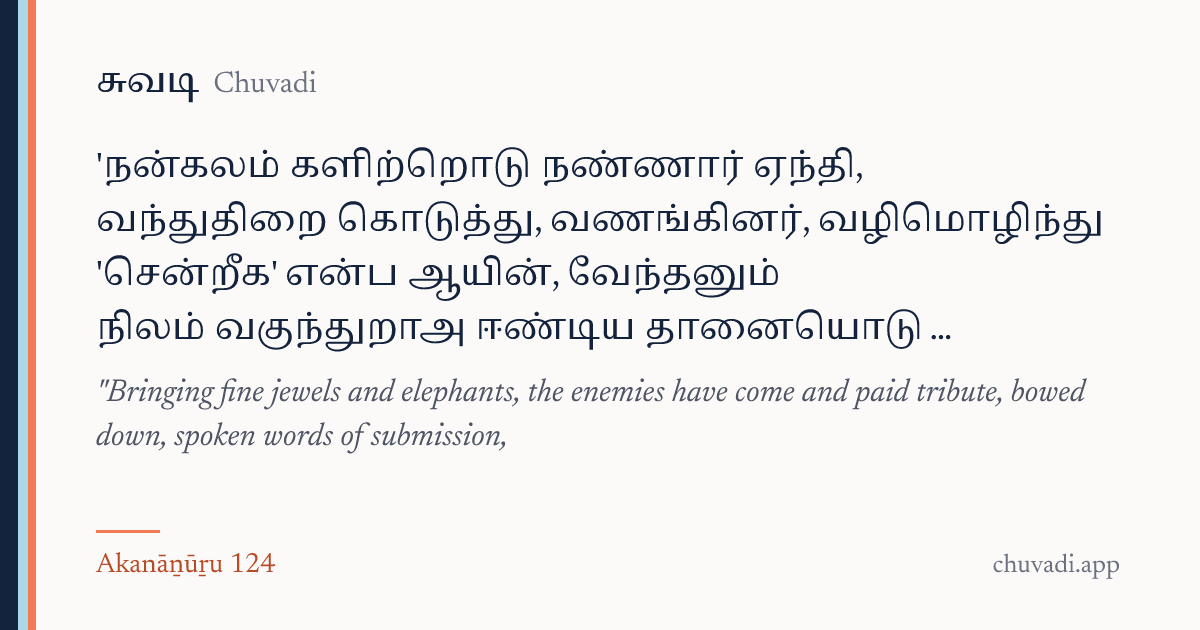
- "Bringing fine jewels and elephants, the enemies
- have come and paid tribute, bowed down, spoken words of submission,
- and they say, 'Now go.'" If that is so, the king too,
- with his army massed so thick the land cannot hold it,
- will surely enter the city today. Good;
- in the fine house with its towers, on her softly made bed,
- so that our beloved, whose way is to bear no grudge, may be glad,
- and so that the hardship of the war camp may end, you too,
- with harness of worked gold that flashes like lightning,
- the horses with clipped manes, quick to the hand, splendid in pace,
- on the long road fragrant with green-vined mullai opened by the generous rain,
- so that the bees that hum there scatter away,
- drive them, so that we arrive by morning, where in the evening
- the loud sound of the twilight guards' lovely drums
- echoes through the wide halls of the upper storeys,
- to the town with its long walls and rows of battlements.
What the poem says
The hero, a commander in the king's army, speaks to his charioteer. The war is over: the enemies have come with jewels and elephants as tribute, bowed down and asked the king to leave. So the king's army will march back into the city today. This is mullai, and the waiting heroine is at the other end of the road.
The hero tells the charioteer to drive fast. He wants to reach his 'beloved, whose way is to bear no grudge' in her fine mansion, on her soft bed, and to put the hardships of the war camp behind him. The horses with their clipped manes and flashing gold harness are to race along a road fragrant with mullai vines opened by the rains, so fast that the bees fly up from the flowers. Rain and flowering mullai mark the season when the hero had promised to return.
The poem ends with the town as it will be at evening: guards beating drums at twilight, the sound echoing through the upper storeys, the tall walls and battlements. It is a picture of safety and homecoming after the camp.
Lines 1 to 3 seem to be the report the hero has received, or his own forecast; the poem gives no further detail of the war or the king, who is not named.