




அகநானூறு 125
பாடல் · The poem
Tap a word to see where else it occurs.
பொருள் · Meaning in TamilAI
அரத்தால் அறுத்துச் செய்த அழகிய வளையல்கள் தோளிலிருந்து நெகிழ்ந்து விழ, நிறைவில்லாத வாழ்க்கையை நான் ஏற்க வேண்டியதாயிற்று. ஈரமான மணிகளைப் போல முதிர்ந்த அரும்புகளையுடைய ஈங்கை, ஆலங்கட்டி போன்ற வெண்மலர்களைப் பரப்ப, கூரிய வாலுடைய ஓந்தியின் கரிய கழுத்தைப் போலத் தாது நிறைந்த குவளை அரும்புகள் வளைந்து மலர, இமைக்காத பசிய கண்ணும் அகன்ற அடியும் பெரிய வாயும் உடைய, மதம் நீங்கிய யானையைப் போல, மழை பெய்து வறிதான பொங்கி நகரும் மேகம் இருண்ட வானத்தின் திசைகளெங்கும் திரிகிறது. பனி மிகுந்து நிற்கும் நள்ளிரவில், தனித்திருப்பவளின் வலிமையை எண்ணிப் பார்க்காமல், குளிர்ச்சியோடு, நான் எதிர்க்க வலிமையில்லாத நேரத்தில் நீ என்னை வருத்தும்படி அலைக்கிறாய். கைகூப்பித் தொழும் மரபுடைய தெய்வத்துக்கு ஒப்பான சிறந்த செயலை முடிக்கச் சென்றவர் விரைந்து வந்துவிட்டால், விரிந்த தலையாட்டம் அணிந்த நல்ல குதிரைகளையும் அச்சம் தரும் படையையும் கொண்டு தான் விரும்பிய நிலத்தில் தங்கிய பெருவளமுடைய கரிகாலனை எதிர்த்து நிற்க முடியாமல், வாகைப் பறந்தலையில் வெற்றி மாலை சூடாமல் தோற்று, ஒன்பது குடைகளையும் நண்பகலிலேயே கைவிட்டு ஓடிய பெருமையற்ற மன்னர்களைப் போல, வாடையே! நீ என்னை விட்டு ஓடிவிடுவாய்.
இது பாலைத் திணை; தலைவன் பிரிந்திருக்கும் பனிக்காலத்தில் தலைவி வாடைக்காற்றை நோக்கிக் கூறுவது. தலைவன் வந்துவிட்டால் குளிர்காற்று தோற்ற மன்னர்போல் ஓடிவிடும் என்பது அவள் தனக்குத் தானே கூறும் ஆறுதல். இரண்டாம் அடியின் பொருள் உறுதியாகத் தெரியவில்லை; அது தலைவன் பொருள் தேடச் சென்ற நோக்கத்தைக் குறிப்பதாகவும் இருக்கலாம்.
ஆங்கிலம் · English translationAI
Translation
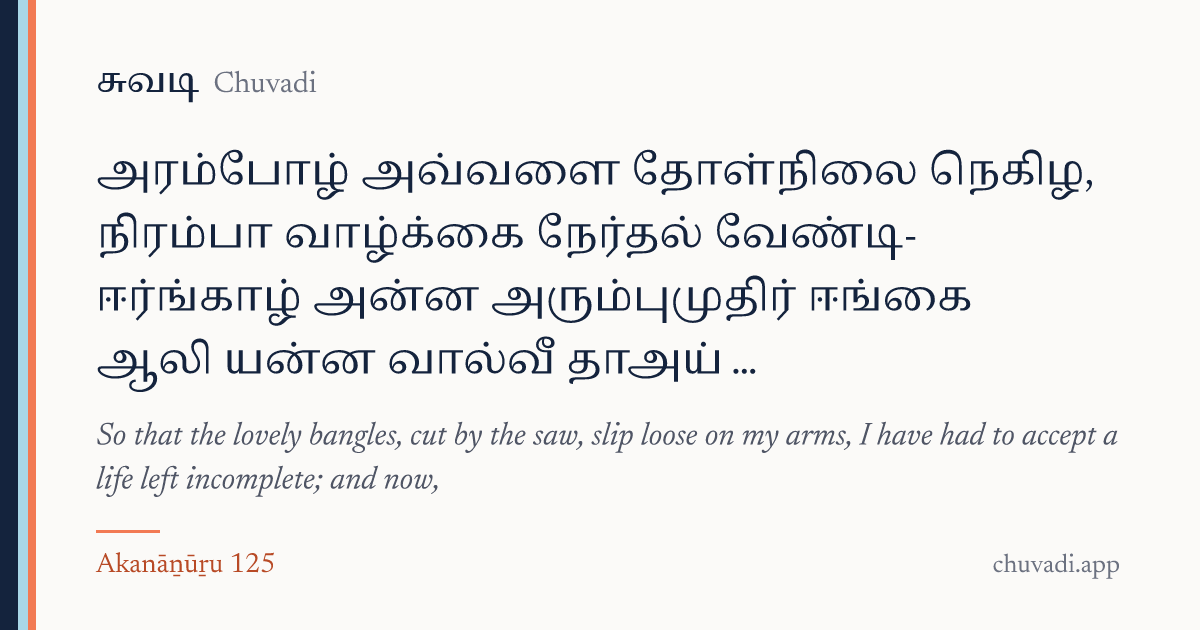
- So that the lovely bangles, cut by the saw, slip loose on my arms,
- I have had to accept a life left incomplete; and now,
- as the īṅkai, its buds ripened like moist beads,
- spreads its white flowers like hailstones,
- like the dark throat of the sharp-tailed lizard,
- the buds of the kuvaḷai, filled with pollen, bend and open,
- and like an elephant with green unclosing eyes, broad feet and wide mouth
- whose musth has ceased,
- the cloud that has rained and is emptied, swelling as it moves,
- roams to every quarter of the dark sky;
- in the midnight of the night that stands thick with cold,
- not weighing the strength of one alone, chill as you are,
- you buffet me till I am weary, now that I have no strength to resist.
- If the one who went for a task worthy of the gods
- whom custom worships with joined hands comes back quickly,
- then, like the kings who would not face
- Karikāl of great wealth, who with fine horses bright with spreading plumes
- and a fearsome army had camped in the land he chose,
- on the field of Vākai where they wore no victory flower, so that he won,
- and who abandoned their nine umbrellas at broad noon,
- like those kings with no glory left,
- you will surely run from me, north wind!
What the poem says
The heroine speaks, not to her friend but to the cold north wind (vāṭai) of the rainy and dewy season. Her lover has gone away on some task, and she is alone; this is pālai by its place, though the season and the waiting give it something of mullai.
The scene is midnight in the cold months. The īṅkai shrub has scattered its white flowers like hail, kuvaḷai buds open, and an emptied cloud drifts about the sky like an elephant whose musth has passed, its fury spent. The wind does not 'weigh the strength of one who is alone'; it buffets her when she has no power to resist. Line 2, nirampā vāḻkkai nērtal vēṇṭi, is not certain: I take it as her having had to accept a life left incomplete, but it may describe the hero's motive, to make good a life still lacking in wealth.
She then turns on the wind with a threat. If her lover, who went on a work so honourable that it is worthy of the gods, comes back quickly, the wind will run away like the kings who could not stand before Karikāl on the field of Vākai (Vākaip paṟantalai) and, losing, left behind their nine royal umbrellas at noon. The poem itself tells this: Karikāl with plumed horses and a fearsome army camped in the land he wanted, and the kings fled. The number nine and the place are the poem's; nothing more is added here.
The cool wind fleeing like beaten kings is the comfort she promises herself: in her lover's embrace the cold will no longer reach her.