




அகநானூறு 127
பாடல் · The poem
Tap a word to see where else it occurs.
பொருள் · Meaning in TamilAI
தோழி! ஒளிரும் வளையல்கள் நெகிழும்படி மெலிந்து, ஒவ்வொரு இரவும் கலக்கமும் துன்பமும் அடைந்து நாம் இங்கே தனித்திருக்க, அவர் சென்றிருக்கிறார். வெற்றி முரசுடைய சேரலாதன் கடலை ஓட்டி, கடம்ப மரத்தை வெட்டி, முன்னோரும் வியக்கும்படி இமயமலையில் வளைந்த வில்லைப் பொறித்தான். சிறந்த நகரமான மாந்தையின் முற்றத்தில் பகைவர் பணிந்து திறையாகத் தந்த பெருமை மிக்க நல்ல அணிகலன்களையும், பொன்னால் செய்த பாவைகளையும், வயிரங்களையும் எண்ணற்ற அளவில் வாய் நிறையக் குவித்து, அன்று அங்கே நிலம் உண்ணும்படி அவன் புதைத்து விட்டுச்சென்ற செல்வத்தைப் போன்ற பெருஞ்செல்வத்தை ஒரே நாளில், ஒரே பகலில் பெற்றாலும், மறுநாள் அவர் அங்கே தங்க மாட்டார். நீ வாழ்க! சிவந்த காம்பும் கரிய அடிமரமும் உடைய மரா மரத்தின் வெண்ணிற மென்மையான பூங்கொத்துகளைச் சுருண்டு வளைந்த தலைமயிரில் அழகாகச் சூடிக்கொண்டு, கல்லாத மழவர் தம் வில்லை அணைத்துக்கொண்டு, அச்சம் தரும் கவர்வழிகளில் வருவோரை எதிர்பார்த்திருக்கும், மொழி வேறுபட்ட நாட்டில் இருந்தாலும், பழியில்லாத என் காதலர் சென்ற நாடு அதுவே.
இது பாலைத் திணை; பொருள் தேடிச் சென்ற தலைவன் விரைந்து திரும்புவான் என்று தலைவி தோழியிடம் நம்பிக்கையோடு கூறுவது. சேரலாதனின் பெருஞ்செல்வம் கிடைத்தாலும் அவர் தங்கார் என்பது அவள் அவர்மேல் கொண்ட உறுதியைக் காட்டுகிறது. சேரலாதனின் செயல்களாகப் பாடல் சொல்வதற்கு மேல் இங்கு எதுவும் சேர்க்கப்படவில்லை.
ஆங்கிலம் · English translationAI
Translation
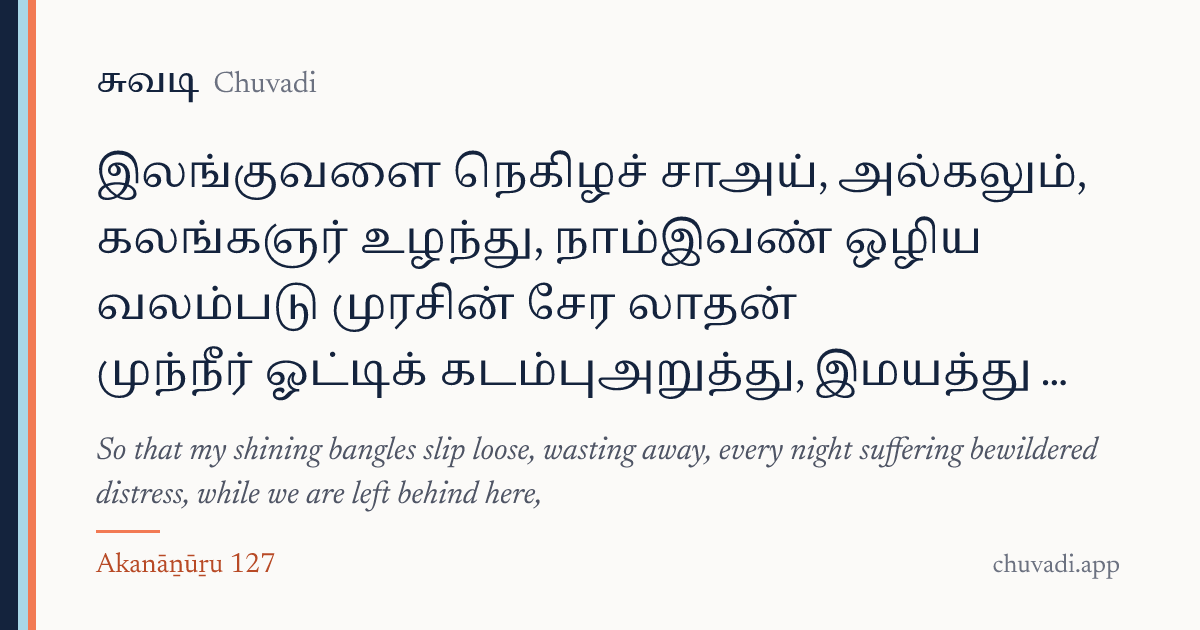
- So that my shining bangles slip loose, wasting away, every night
- suffering bewildered distress, while we are left behind here,
- like that of Cēralātaṉ, of the drum that brings victory,
- who drove back the sea, cut down the kaṭampu tree, and on the Himalaya,
- so that the ancients marvelled, carved the bent bow;
- in the courtyard of fine Māntai the enemies
- brought in submission tribute, great and splendid treasures,
- gold-worked images with diamonds, in vast numbers,
- heaped together till they brimmed over; and there, that day,
- like the treasure he left behind for the earth to eat,
- even if he could gain such wealth in one day, in one daylight, the next day
- he would not stay away; long live, my friend! With the red-stemmed
- black-trunked marām's soft white clusters
- worn handsomely in their curling, twisted hair,
- the unlettered Maḻavar, clasping their bows,
- watch for travellers at the fearsome forking paths;
- though they are in a land where the language changes,
- there, in the land where my blameless lover has gone.
What the poem says
The heroine speaks to her friend while her lover is away earning wealth. Night after night she wastes and her bangles slip, but she is confident he will not stay away a day longer than he must.
The middle of the poem is a grand comparison. Cēralātaṉ, a Cēra king of the victorious drum, is credited in the poem with driving back the sea, cutting down the kaṭampu tree, and carving his bow emblem on the Himalaya. At his city Māntai, defeated enemies heaped up tribute in the courtyard: gold images, diamonds, treasures beyond counting (āmpal, here a very large number). He left that hoard buried 'for the earth to eat'. Even if her lover could win such wealth in a single day, she says, he would not linger the next. Tradition makes the kaṭampu an enemy's guardian tree; the poem itself does not explain the deed.
The close turns to where he is: a country of 'changed speech' (moḻipeyar tēyam), beyond the Tamil land, where Maḻavar bowmen with marām flowers in their curly hair lie in wait for travellers at the forks of the paths. Her fear for him and her faith in him sit together. 'Blameless' (paḻitīr) is her answer to any suggestion that he would desert her.
'Unlettered' (kallā) is a stock word for these rough men, meaning untaught rather than illiterate in a modern sense.