



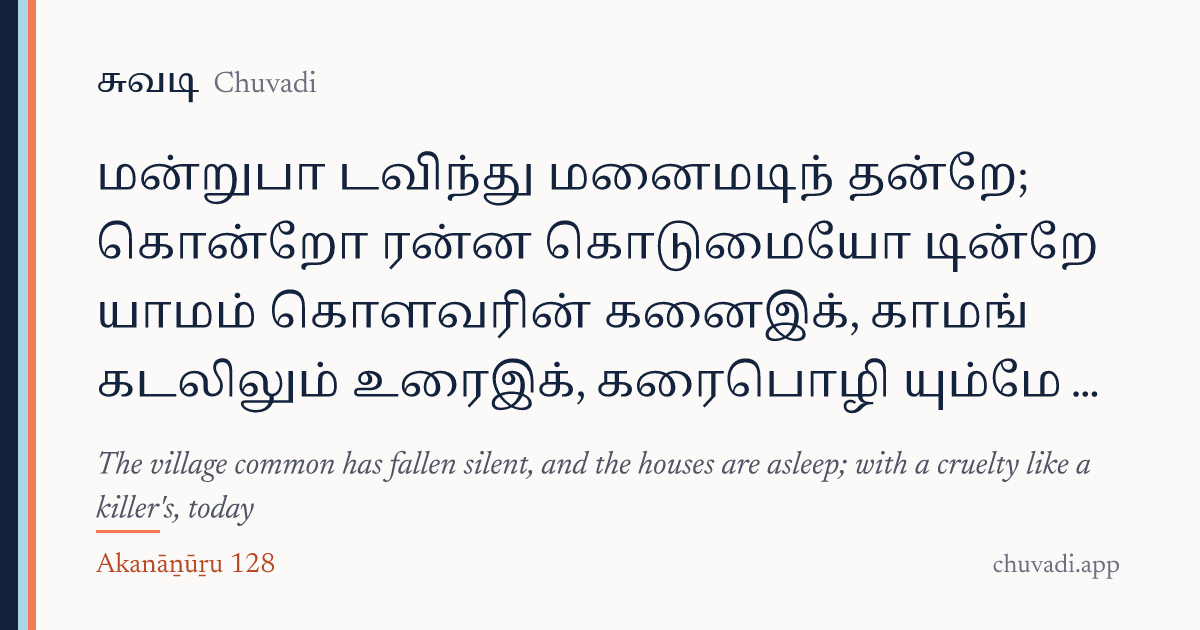

அகநானூறு 128
பாடல் · The poem
Tap a word to see where else it occurs.
பொருள் · Meaning in TamilAI
தோழி! நீ வாழ்க. ஊர்மன்றம் ஒலியடங்கி வீடுகள் எல்லாம் உறங்கிவிட்டன. கொலைசெய்பவன் போன்ற கொடுமையோடு, இன்று நள்ளிரவு வந்ததும் இந்தக் காமம் மிகுந்து, கடலைவிடவும் பரந்து, கரையை உடைத்துப் பெருகுகிறது. இப்படி நாம் மயங்கி இருக்கும்போது, என் நல்ல நெஞ்சம் என்னோடும் உன்னோடும் கலந்து ஆலோசிக்காமல், எல்லை மீறிச் சென்றுவிட்டது எதனால்? புதர்கள் அடர்ந்து இருண்ட, கடக்க அரிய மலைச்சரிவில், சிறிய சுனையில் பூத்த குவளை மலர்களை வண்டுகள் மொய்க்கச் சூடிக்கொண்டு காட்டுநாட்டுத் தலைவன் வருகிறான். யானையின் முதுகில் கயிறு பதித்த தடம் போன்ற, கற்களின் மேல் செல்லும் சிறுவழியில், மழைமேகம் பெய்து நீர் வழிந்தோட, வாய் தெரியாத குழிகள் நிறைந்த பாதையில், இருளில் அவர் கால் வைக்கும் இடத்தைப் பார்த்து, அவருடைய தளரும் அடிகளைத் தாங்குவதற்காக இன்றிரவு என் நெஞ்சம் அவரிடம் சென்றுவிட்டதோ?
இது குறிஞ்சித் திணை; இரவுக்குறியில் மழையில் வரும் தலைவனை நினைந்து தலைவி தோழியிடம் கூறுவது. நெஞ்சு தன்னை விட்டு அவருக்குத் துணையாகப் போனது என்ற கற்பனை அவளுடைய அன்பையும் அச்சத்தையும் காட்டுகிறது. கொடிய இரவு வழியைச் சொல்வது, தலைவன் மணம் செய்துகொள்ள வேண்டும் என்ற குறிப்பையும் தருகிறது.
ஆங்கிலம் · English translationAI
Translation
- The village common has fallen silent, and the houses are asleep;
- with a cruelty like a killer's, today
- as midnight comes on, it thickens, this desire,
- spreading wider even than the sea, and overflows its shore.
- How can it be, long live, my friend, that while we, bewildered,
- are in this state, my good heart,
- without consulting me or you, going beyond all bounds,
- on the slope, dark with thickets, so hard to pass,
- wearing kuvaḷai from the little spring with the bees on them,
- where the man of the forest land comes, like the rope-mark on an elephant's back,
- along the narrow path over the rocks,
- the rain-filled sky pouring, the water streaming,
- on the track with its pits, whose openings are hard to make out,
- watching for where he would set his foot in the dark, his
- faltering steps it has gone to steady, tonight?
What the poem says
The heroine speaks to her friend at midnight. Her lover is coming to a night meeting through the hills in the rain. This is kuṟiñci, and the poem is about her anxiety for him.
The village sleeps, but her desire does not: it grows 'with the cruelty of a killer', spreads wider than the sea and overflows its banks. Then comes the striking turn. While she and her friend lie here bewildered, her 'good heart' has left her without asking either of them and gone out to meet him.
The road he travels is pictured through the heart's eyes: a slope thick with dark undergrowth, a narrow path over rock like the mark a rope leaves on an elephant's back, pits filled with rain whose mouths are hard to see in the dark. He wears kuvaḷai from a little mountain spring. The heart has gone to watch where he puts his feet and to steady his faltering steps.
The poem gives a gentle reason for the heroine's absent-mindedness, and also, by its picture of the dangers, an implied plea that he should come by day or marry her rather than take this road at night. 'Like the rope-mark on an elephant's back' is a comparison for a thin worn track, and makes good sense in context.