




அகநானூறு 13
பாடல் · The poem
Tap a word to see where else it occurs.
பொருள் · Meaning in TamilAI
தன் கடலில் பிறந்த முத்தால் ஆன மாலையும், முட்டி மோதும் அலைகள் தரும் பவளமும், தன் மலையில் வாழும் அணுகுதற்கரிய கொடிய பழமரபுடைய கடவுளை வழிபடும் குறவர் கொண்டுவந்த சந்தனமும் ஆகிய இரண்டு பெரிய ஆரங்களையும் அழகுற அணிந்த, திருமகள் விரும்பும் மார்பை உடையவன் தென்னவனின் மறவன். குழியில் பிடித்த காட்டு யானையைச் சொல்லால் பழக்கும் சிறிது நேரம் தவிர, அளவில்லாமல் இரவலர்க்குக் கொடுப்பவன், கூரிய அம்புகளை உடைய கோடைப் பொருநன். அவன் செய்த பயன் நிறைந்த வேள்வியைவிடச் சிறந்த செல்வம் கிடைப்பதாக இருந்தாலும், தெற்கில் எழுந்த மேகங்கள் மழை பொழிந்து பருவம் வந்துவிட்ட இந்த நேரத்தில், மென்மையும் இனிமையும் உடைய இவளைப் பிரிந்து வாழ்ந்தால், ஈட்டும் பொருள் இன்றே நோயாக மாறட்டும்! அருகே, மாசில்லாத தூய ஆடை விரித்த படுக்கையில், அணைப்பின் இன்பம் இல்லாமலே இரவுகள் கழியட்டும்! வளமான வயலில் தீக்கொழுந்தின் நுனி போன்ற தாள்களை ஈன்ற நெல், கவைத்த அடியும் அசையும் கதிரும் கொண்டு, நிறைந்த அகன்ற பாத்திகளில் வரப்பைத் தொடாமல் அசைகிறது. தனிமைத் துயரோடு வரும் பருவத்து வாடைக்காற்று, பூத்த கரும்பின் அழகிய தண்டில் அமர்ந்த வெண்குருகு கத்தும்படி வீசுகிறது. இவை நுண்ணிய பல துளிகளை உடைய குளிர்ந்த பனிநாள்கள்!
இது பாலைத் திணை; பொருள் தேடப் பிரியத் தூண்டும் நெஞ்சுக்குத் தலைவன் மறுத்துக் கூறுவதாகக் கொள்ளலாம். கோடைப் பொருநனின் கொடைச் செல்வம் பொருளின் உச்ச அளவாகக் காட்டப்படுகிறது; வாடைக்காற்றும் பனியும் பிரிவு மிகக் கொடியதாகும் பருவத்தை உணர்த்துகின்றன. பதினோராம் அடியில் 'பண்ணி' என்பது வினையா பெயரா என்பதும், பதினைந்தாம் அடியின் பொருளும் உறுதியாகத் தெரியவில்லை.
ஆங்கிலம் · English translationAI
Translation
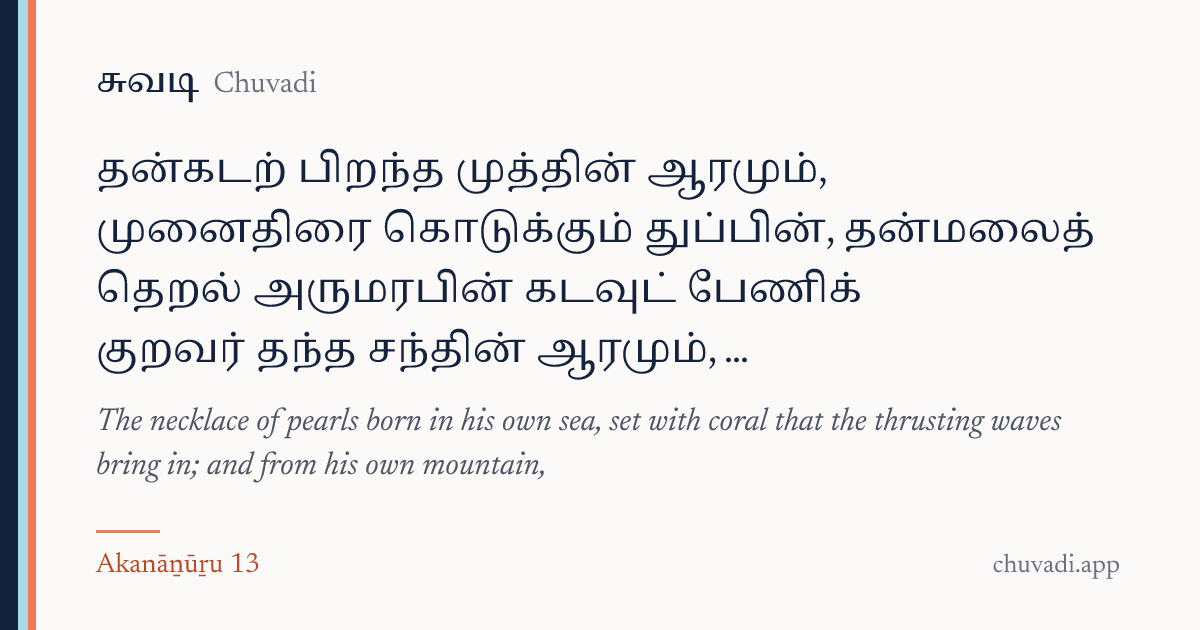
- The necklace of pearls born in his own sea,
- set with coral that the thrusting waves bring in; and from his own mountain,
- worshipping its god of ancient line, fierce and hard to approach,
- the hill-folk bring sandal for his chest:
- both these great adornments he wears for beauty
- on his chest where Fortune dwells — the warrior of the Teṉṉavaṉ,
- who, except for the short while in which a wild elephant caught in a pit
- is taught to understand commands by words,
- gives without any limit to those who come asking,
- the lord of Kōṭai with his keen-edged arrows —
- than the fruitful sacrifice he prepared and performed,
- though this be greater still — at the time when, rising in the south,
- the passing clouds have rained and the season has set in,
- if one lives parted from her, this sweet and gentle companion,
- then let the wealth one makes turn this day into sickness! Close at hand,
- on the bed spread with spotless, freshly washed cloth,
- let the nights go by without the joy of embrace! — when in the rich fields
- the paddy, which has put out blades like the tips of flame,
- its forked base and its swaying ears,
- sways in the full wide plots without reaching the ridges,
- and the season's north wind, coming with loneliness,
- makes the white heron cry, perched on the fine stalk of flowering cane,
- and blows
- in these cold dewy days of fine, scattered drops!
What the poem says
The hero speaks, most probably to his own heart, which is urging him to leave home to earn wealth. His answer is a refusal set in the season of the cold north wind (vāṭai), the early winter, when the paddy stands high in the fields.
The long opening is a measure of wealth. It describes a warrior of the Teṉṉavaṉ (the Pāṇṭiya king): the lord of Kōṭai, who wears two great 'āram', a necklace of pearls and coral from the sea and the sandal brought from the mountain by hill-folk who worship its fierce god. The poem plays on āram, which can mean both a necklace and sandal. This lord gives to suppliants without limit; the only pause is the short time needed to train a newly captured wild elephant to obey spoken commands before he gives it away. Even wealth greater than the gifts at his great sacrifice, the hero says, is not worth it.
Then the curse. If one lives apart from such a companion in this season, let the wealth one earns turn to sickness, and let the nights pass on a clean bed without embrace. The closing lines draw the season itself: tall paddy swaying in the flooded plots, a white heron crying on a stalk of flowering sugarcane, and the north wind 'that comes with loneliness' blowing fine cold spray. It is exactly the time when separation would be hardest.
Lines 11 and 14–17 are difficult. 'Paṇṇi' in line 11 may be a verb ('having prepared') or a name; it is taken here as a verb. The reading of line 15 ('turn this day into sickness') is one possible construction of a compressed phrase.