



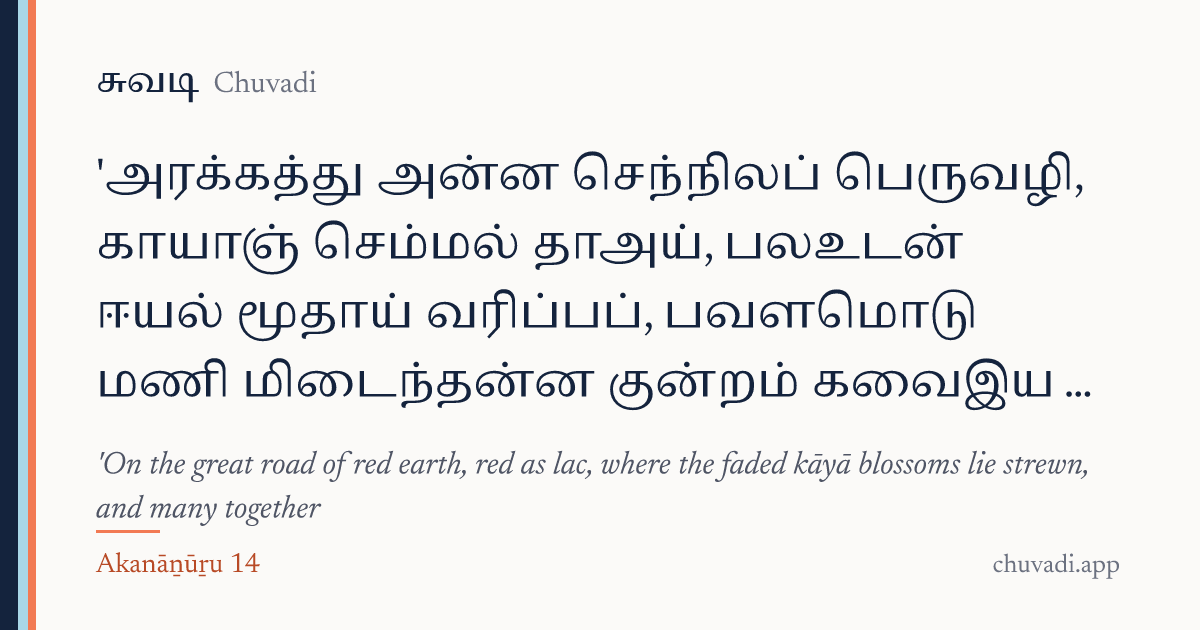

அகநானூறு 14
பாடல் · The poem
Tap a word to see where else it occurs.
பொருள் · Meaning in TamilAI
'அரக்கைப் போலச் சிவந்த செம்மண் பெருவழியில், வாடிய காயாம்பூக்கள் பரவிக் கிடக்கின்றன; பல ஈயல் மூதாய்கள் (தம்பலப் பூச்சிகள்) ஒன்றாக வரிவரியாகத் தோன்ற, அது நீலமணியோடு பவளம் கலந்து பதித்ததுபோல இருக்கிறது. குன்றுகளைச் சூழ்ந்த அழகிய காட்டின் அரிய வழிகளில், மடப்பம் உடைய பெண்மானைத் தழுவிக்கொண்டு முறுக்கிய கொம்புடைய ஆண்மான் புல்லைத் தின்று துள்ளுகிறது. இடையர்கள் அகன்ற முல்லை நிலத்தில் மந்தைகளைப் பரப்பி, சிறு குன்றுகளின் அருகே நறுமலர்களைச் சூடி மகிழ்கிறார்கள். அறுகம்புல்லை மேய்ந்த, செருக்கான நடையுடைய நல்ல பசுக்கள் நிறைந்த மடியிலிருந்து இனிய பால் சொட்ட, கன்றுகளை அழைத்துக் கதறியபடி ஊர்மன்றில் நிறைய வந்து புகுகின்றன. இந்த மாலையிலும் அவர் நம்மை நினைக்கவில்லை என்றால், காலையில் நாம் என்ன ஆவோமோ, பாணனே!' என்று மனைவி கேட்டாள். அவள் சொல்லுக்கு எதிர்ச்சொல் சொல்ல என்னால் இயலவில்லை. நல்ல யாழில் செவ்வழிப் பண்ணை இசைத்து, மெல்லக் கடவுளை வாழ்த்தி, துயரத்தில் உடலைத் தாங்கிக்கொண்டு அவர் இருக்கும் திசை நோக்கிச் சென்றேன். அப்போது நானே கண்டேன்: விரைந்து பாயும் குதிரைகள் வளைந்து ஓடி வேகம் கூட்ட, கற்களில் மோதி ஒலிக்கும் பல ஆரங்களுடைய சக்கரங்கள் கார்மேகத்தின் இடிமுழக்கம் போல ஒலிக்க, போர்முனையில் உள்ள நல்ல ஊரின் தலைவனுடைய அலங்கரித்த நெடிய தேர் வருவதை!
இது முல்லைத் திணை; தலைவியின் சொல்லையும் தான் கண்டதையும் பாணன் கூறுவது. மானும் பிணையும், கன்றை அழைக்கும் பசுக்களும் உள்ள மாலைக்காட்சி, எல்லாம் துணையோடு சேரும் நேரத்தில் தலைவி தனித்திருப்பதைக் கூர்மையாக்குகிறது. 'முனை நல் ஊரன்' என்பதால் தலைவன் போர்முனைக்குச் சென்றிருந்தான் எனக் கொள்ள இடமுண்டு. பதிப்பில் மேற்கோள் குறிகள் ஒன்றுக்கொன்று பொருந்தவில்லை; ஆயினும் தலைவியின் கூற்று முதல் அடியிலிருந்து 'பாண' என்பது வரை என்பது தெளிவு.
ஆங்கிலம் · English translationAI
Translation
- 'On the great road of red earth, red as lac,
- where the faded kāyā blossoms lie strewn, and many together
- the red velvet-mites streak it, as if coral
- were set among sapphires; in the lovely forest that wraps round the hills,
- on its hard paths, holding his gentle doe close,
- the stag with twisted horns grazes and leaps;
- the herdsmen have spread their herds over the wide mullai land,
- and by the low hills they deck themselves with fragrant flowers;
- the good cows of proud gait, having grazed on the grass,
- their full, fine udders dripping sweet milk,
- lowing to call their calves, crowd into the village common —
- if even at such an evening he does not remember us, by morning
- what will become of us, bard?' — so she said,
- the lady of the house; I could not answer her words;
- I played the cevvaḻi mode on my good yāḻ, and gently
- praising the god, holding my body steady in its sorrow,
- I set out towards him, and I saw it, I myself —
- its swift-loosed horses quickening their swerving stride,
- its many-spoked wheels clanging as they strike against stones,
- with a sound like the thunder of rain-clouds,
- the tall, adorned chariot of the lord of the good frontier town!
What the poem says
The speaker is a bard (pāṇaṉ), a member of the household's circle who carries messages between husband and wife. He reports what the wife said to him and what he then saw. He may be telling the wife herself, as news, or telling someone else; the poem does not say.
Her words fill the first thirteen lines, and they are a picture of the mullai evening. The red road is strewn with faded kāyā flowers and dotted with the tiny scarlet velvet-mites (īyal mūtāy) that appear after rain, like coral among sapphires. A stag grazes with his doe beside him; herdsmen deck themselves with flowers; the cows come home with dripping udders, lowing for their calves. Everything in the scene is returning or united. Evening in mullai is the hour of the deepest longing, and her question follows: if he does not think of us even now, what will become of us by morning?
The bard has no answer. He does what he can: plays the cevvaḻi, a melodic mode associated with evening and sorrow, prays to the god, steadies himself, and sets out to find the husband. And then he sees the chariot coming, horses racing, wheels thundering over stones like rain-clouds. The comparison with thunder fits mullai, whose promised season is the rains.
The hero is called 'ūraṉ of the good frontier (muṉai)', that is, lord of a town on a border or battle-front, which suggests he has been away at war. The quotation marks in the edition do not match (a single mark opens and a double closes), but the quoted speech clearly runs from line 1 to 'bard' in line 13.