




அகநானூறு 15
பாடல் · The poem
Tap a word to see where else it occurs.
பொருள் · Meaning in TamilAI
எங்கள் வெப்பமான ஆசை நிறைவேறுவதாக இருந்தால், உடல் நிறைய பெரிய அணிகலன்கள் அணிந்த பெருமிதம் உடைய கோசருடைய நாட்டைப் போல — உருண்டு திரண்ட பசுங்காய்கள் கொடிநுனியில் விளைந்த பாகலை, பறையின் கண் போன்ற கண்களுடைய தோகையுடைய மயில்கள் தின்னும் சோலைகள் நிறைந்த துளுநாட்டைப் போல — கையில் ஒன்றும் இல்லாமல் வரும் வழிப்போக்கரைத் தாங்கும் பண்புடைய, நெருங்கிய தெருக்களை உடைய சிறந்த பழைய ஊராக, அவளை அறிந்த மக்கள் வாழும் இடமாக அது ஆகட்டும்! தோழியரும் நானும் தனிமையில் வருந்தும்படி, முகபடாம் அணிந்த யானைகளும் ஒளிரும் அணிகலன்களும் உடைய நன்னனின் பாழியைப் போலக் காவல் மிகுந்த எங்கள் பெரிய வீட்டின் இறுக்கமான காவலைக் கடந்து, அவனோடு சென்றாள். வழியில் உள்ள இருப்பை மரத்தின் காம்பு கழன்ற புதிய பூக்களின் உள்ளே உள்ளதை உண்டு, அவற்றைப் புழுதி நிலத்தில் பரவச் சிதறி, கொன்றையின் அழகிய கிளைகளில் உள்ள குழல் போன்ற காய்களைக் கிழித்து, வலிய கைகளுடைய கரடிகள் வலிமையான கூட்டமாகப் பரவித் திரிகின்றன. இனிய துணையைப் பின்தொடரும் உறுதியோடு அவனோடு ஒன்றாக, குன்றின் மூங்கில் போலத் திரண்ட மென்மையான தோள்களை உடைய என் அன்பு மகள் சென்ற வழி அதுதான்!
இது பாலைத் திணை; உடன்போக்குச் சென்ற மகளைப் பற்றி நற்றாய் கூறுவதாகக் கொள்ளலாம். அவள் சென்ற வழி வழிப்போக்கரைத் தாங்கும் துளுநாட்டைப் போல இருக்கட்டும் என்ற வாழ்த்துக்கும், கரடிகள் திரியும் உண்மையான கொடிய வழிக்கும் உள்ள முரண் பாடலின் உயிர். நன்னனின் பாழி இங்கே காவல் மிகுந்த இடத்திற்கு உவமையாக மட்டும் வருகிறது. நான்காம் அடியின் தொடரமைப்பு உறுதியாகத் தெரியவில்லை.
ஆங்கிலம் · English translationAI
Translation
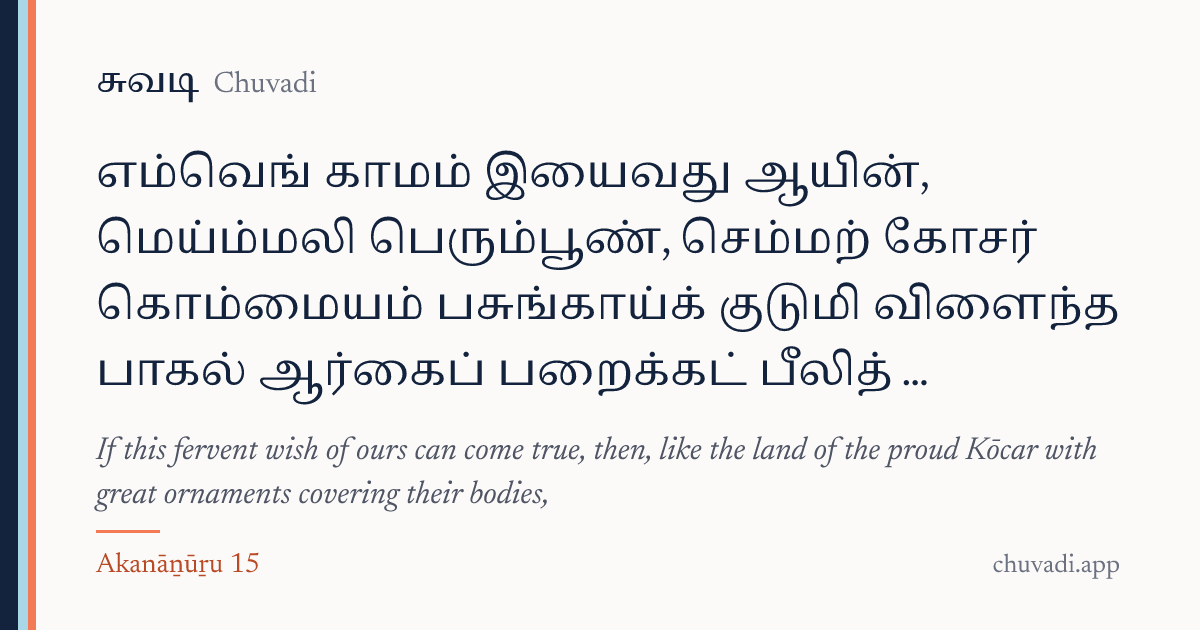
- If this fervent wish of ours can come true,
- then, like the land of the proud Kōcar with great ornaments covering their bodies,
- where the round green fruits ripen at the tips
- of the pākal vines, and peacocks with drum-eyed plumes feed on them
- in their groves — like that Tuḷu country,
- with its custom of sheltering empty-handed travellers,
- a noble old town with crowded streets,
- with people she knows — let it be such!
- Leaving her friends and me desolate,
- like the Pāḻi of Nannaṉ of bright jewels and elephants with face-cloths,
- our great closely guarded house —
- slipping past its tight watch, going off with him,
- where the new flowers of the wayside iruppai, loosened from their stalks,
- their mouths sucked dry, lie scattered over the dusty ground,
- and tearing at the tube-like pods on the koṉṟai's lovely branches,
- the strong-pawed bears spread out in mighty troops —
- with a resolve to follow her sweet companion, at one with him,
- my darling, whose soft shoulders are rounded like the bamboo of the hills —
- the road on which she went!
What the poem says
A mother speaks after her daughter has eloped with her lover. Probably this is the girl's own mother (naṟṟāy), since she calls her 'añai', my darling, and speaks of 'her friends and me' left desolate. The wish is a blessing, not a curse: she prays that the road her daughter has taken will be kind to her.
The wish is the first eight lines, and it is held up by the subject only at the very end: 'the road on which she went'. Let that road, she says, be like the Tuḷu country of the Kōcar, a people described here as proud and heavily ornamented, where peacocks feed on ripe pākal (bitter gourd) in the groves, and where the custom is to shelter travellers who arrive with nothing. Let it pass through a noble old town where she will find people she knows. In other words, may strangers take her in.
Between the wish and its subject comes the story of the flight. The girl left her friends and her mother, slipped past the guard of a house as tightly watched as Nannaṉ's Pāḻi, and went with her lover. The poem treats Pāḻi only as a byword for a strongly guarded place. Then comes the real road, very unlike the hoped-for one: a wasteland where bears suck the fallen iruppai flowers and tear at koṉṟai pods.
The contrast between the hospitable land of the wish and the bear-haunted road is the poem's force. Line 4 is not entirely clear: it is taken here as peacocks feeding on the pākal fruit, but 'pāgal ārkai' could be construed differently.