



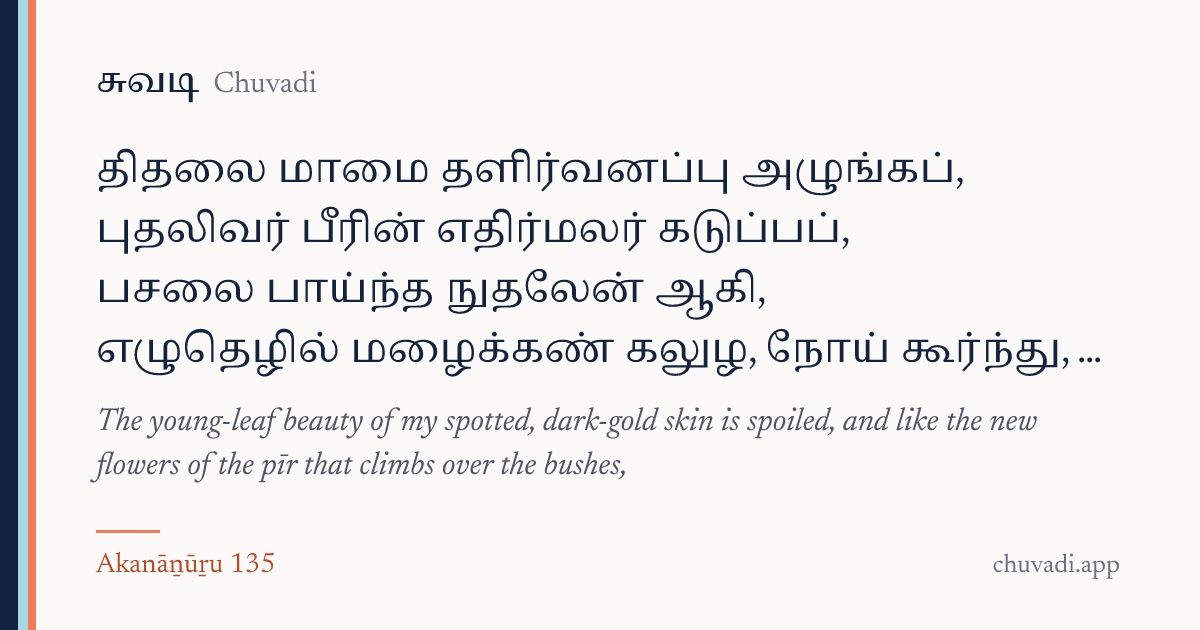

அகநானூறு 135
பாடல் · The poem
Tap a word to see where else it occurs.
பொருள் · Meaning in TamilAI
அன்புத் தோழி! தேமல் படர்ந்த என் மாந்தளிர் போன்ற மேனியின் இளந்தளிர் அழகு கெட்டது; புதர்மேல் படரும் பீர்க்கங்கொடியின் புதிய மலர்களைப் போலப் பசலை என் நெற்றியில் பரவிவிட்டது; ஓவியம் போன்ற அழகுடைய மழைக்கண்கள் கலங்குகின்றன; நோய் மிகுந்து, ஆதிமந்தியைப் போல அறிவு மாறுபட்டு நான் மயங்கிவிட்டேன். காய்ந்த கதிர்கள் காற்றை முறுக்க, காற்று விரைந்து வீச, அசையும் தளிர்களையுடைய இருப்பை மரத்தின் கிண்ணம் போலக் குவிந்த வெண்மலர்கள், கடைந்தெடுத்த கழங்குகளைப் போலப் பாறைகளின் மேல் உதிர்ந்து கிடக்கும் காட்டை என் காதலர் கடந்து சென்றுவிட்டார். கொல்லும் போரில், வானைத் தொடும் அகன்ற குடைகளையுடைய ஈரேழு வேளிர் ஒன்றுகூடிச் சென்று அழித்த, அழியாத பெரும்புகழுடைய கழுவுளின் காமூரைப் போல, அவரை நம்பிய என் நெஞ்சம் கலங்கிவிட்டது.
இது பாலைத் திணை; பிரிந்து சென்ற தலைவனை நினைந்து தலைவி தோழியிடம் தன் வருத்தத்தைக் கூறுவது. கணவனை இழந்து மயங்கித் திரிந்தவளாக மரபு சொல்லும் ஆதிமந்தி, அறிவு கலங்கிய நிலைக்கு உவமையாகிறாள். பதினான்கு வேளிர் தாக்கி அழித்த காமூர், நம்பிக்கை சிதைந்த நெஞ்சுக்கு உவமை; பாடல் சொல்வதற்கு மேல் அப்போரைப் பற்றி இங்கு எதுவும் சேர்க்கப்படவில்லை.
ஆங்கிலம் · English translationAI
Translation
- The young-leaf beauty of my spotted, dark-gold skin is spoiled,
- and like the new flowers of the pīr that climbs over the bushes,
- pallor has spread across my brow;
- my rain-cool eyes, lovely as if painted, stream with tears; my sickness grows;
- like Āti Manti, my mind has turned strange,
- and I am lost in bewilderment, my dear friend!
- As the burning rays twist the air and the wind rushes in gusts,
- the white cup-shaped flowers of the iruppai with its trembling shoots,
- like kaḻaṅku pieces turned on a lathe, lie strewn over the rocks;
- he has crossed that forest, my lover. Like the town
- of unfading great fame, which in a deadly war, with sky-touching wide umbrellas,
- the twice-seven Vēḷir, marching together, destroyed,
- like Kāmūr of Kaḻuvuḷ,
- it is shaken, alas, my heart that trusted him.
What the poem says
The heroine speaks to her dear friend while her lover is away across the wasteland. She lists the marks of her grief: her skin, once like young leaves, has dulled; pallor (pacalai), yellow as pīr flowers, covers her brow; her eyes stream; and she is as bewildered as Āti Manti. Āti Manti is a woman whom Sangam poems remember for losing her husband and wandering distraught; the poem uses her only as a name for a mind unhinged by loss.
The middle lines show the land he crossed: the sun's heat twists the air, wind gusts, and the white cup-like flowers of the iruppai lie on the rocks like kaḻaṅku game-pieces turned on a lathe. Iruppai flowers fall in the hot season, so the image also marks the time.
The poem closes with a war comparison. Her heart, which trusted him, is shaken like Kāmūr, the town of Kaḻuvuḷ, when the 'twice seven' (fourteen) Vēḷir, chieftains with wide umbrellas, marched against it together and destroyed it. The poem calls that siege a war of 'unfading fame'; it says no more, and no more is added here.
The word kōṭu kaṭai in line 9 may mean pieces turned from horn or from conch shell; either way the point is the smooth white roundness of the fallen flowers.