



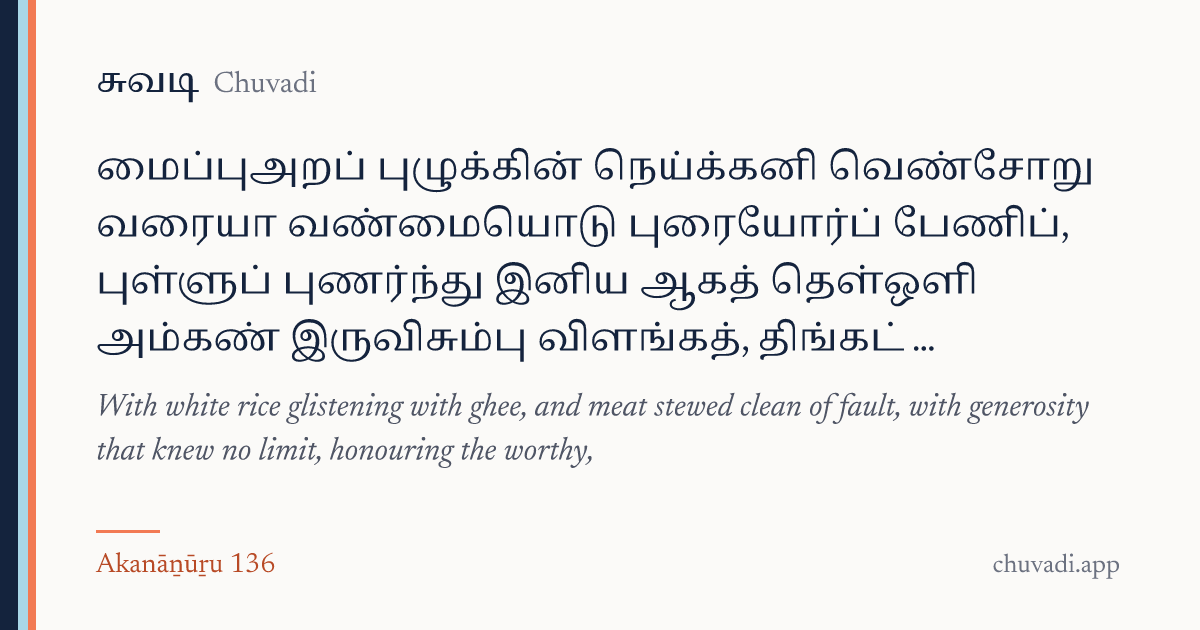

அகநானூறு 136
பாடல் · The poem
Tap a word to see where else it occurs.
பொருள் · Meaning in TamilAI
குற்றமின்றிச் சமைத்த இறைச்சியோடு நெய் தோய்ந்த வெண்சோற்றை அளவில்லாத கொடைத்தன்மையோடு பெரியோருக்கு வழங்கிப் போற்றி, பறவைகளின் நிமித்தம் நல்லனவாக அமைய, தெளிந்த ஒளியுடைய அழகிய அகன்ற வானம் விளங்க, திங்கள் சகடம் என்னும் நாள்மீனைச் சேர்ந்த குற்றமற்ற நன்னாளில், காவலுடைய மனையை அழகுபடுத்தி, தெய்வத்தை வழிபட்டு, மணமுழவோடு பெரிய முரசும் ஒலிக்க, மணமகளை நீராட்டிய மகளிர் ஆர்வத்தோடு பூக்களைப் போல இமைக்காமல் பார்த்துவிட்டு மறைந்தனர். மெல்லிய பூவுடைய வாகையின் மங்கிய பின்புறம் கொண்ட கவர்த்த இலைகளோடு, பழைய கன்றுகள் மேய்ந்த பயன் நிறைந்த அறுகம்புல்லின், இடிமுழக்கமுடைய வானின் முதல்மழைக்குத் தோன்றிய, கழுவிய நீலமணி போன்ற கரிய இதழ்களுடைய தளிர்களையும் குளிர்ந்த மணமுள்ள அரும்புகளையும் வெண்ணூலில் கட்டிச் சூட்டினர். தூய ஆடையில் பொலிவுற்று, அன்பர் சூழ, மழை பெய்தது போல மணல் பரப்பிய பந்தலில், அணிகலன்கள் அணிந்து நடந்ததால் உண்டான வியர்வையை ஆற்றி, அவளுடைய சுற்றத்தார் அவளை எனக்குத் தந்த முதல்நாள் இரவில், 'கசப்பில்லாத கற்புடையவளே! என் உயிருக்கு உடன்பட்டவளே! கசங்காத இந்த ஆடையை முழுவதும் சுற்றிக்கொண்டதால் உன் பிறைநெற்றியில் புள்ளிபுள்ளியாக வியர்வை அரும்பியிருக்கிறது; காற்று வீசி ஆற்றும்படி சிறிது திற' என்று ஆசை நெஞ்சோடு போர்வையைப் பற்றி இழுத்தேன். உறையிலிருந்து உருவிய வாளைப் போல அவள் உருவம் ஒளிவீசியது. மறைத்துக்கொள்ளும் வழி அறியாமல், சட்டென நாணித் தலைகுனிந்தாள்; தன்னைக் காத்துக்கொண்டு, ஆம்பல் மாலையை நீவி, வண்டுகள் ஒலிக்கும் சிறந்த மலர்களைச் சூடிய தன் கரிய அடர்ந்த கூந்தலின் இருளில் மறைந்துகொண்டாள்.
இது மருதத் திணை; தலைவன் தன் திருமண நாளையும் முதலிரவையும் நினைவுகூர்ந்து கூறுவது. ஊடல் கொண்ட தலைவியை ஆற்றுவதற்காகச் சொல்லப்பட்டதாக இருக்கலாம்; கேட்பவர் யார் என்பதைப் பாடல் காட்டவில்லை. 'பரூஉப்பகை ஆம்பல்' என்ற தொடரின் பொருள் உறுதியாகத் தெரியவில்லை.
ஆங்கிலம் · English translationAI
Translation
- With white rice glistening with ghee, and meat stewed clean of fault,
- with generosity that knew no limit, honouring the worthy,
- when the birds were favourable and sweet, and the clear-shining
- lovely wide sky was bright, and the moon
- had entered Cakaṭam in a conjunction free of blemish,
- they adorned the guarded house and worshipped the god,
- and as the wedding drum sounded together with the great drums,
- the women who had bathed the bride for the wedding, eager,
- gazing without blinking, like flowers' eyes, then slipped away;
- with the forked leaves, dull-backed, of the soft-flowered vākai,
- with the arukam, rich in use, that old calves have grazed,
- which the sky with its rumbling voice brought forth at the first rains,
- its dark-petalled shoots like a washed sapphire,
- with its cool fragrant buds, tied with white thread, they crowned her;
- splendid in pure clothes, she came crowded round with love
- under the pandal heaped with sand, as though rain had fallen there;
- cooling the sweat of her moving in her ornaments of honour,
- on the first night, when her people gave her to us,
- "You whose chastity is free of bitterness, who consent to my life!
- wrapped in this uncrumpled cloth all around,
- the beaded sweat on your crescent brow is too hot;
- so that the strong breeze may cool it, open it a little," I said,
- and with an eager heart I drew away the covering;
- like a sword drawn from its sheath, her form shone out, flashing;
- not knowing how to hide herself, at once
- in shame she bowed her head, and, guarding herself,
- smoothing the bright garland of thick-stemmed āmpal,
- dressed with choice flowers where the bees hum,
- she hid in the dark cover of her heavy hair.
What the poem says
The hero recalls his wedding night. The poem stands in a marutam place, and the remembering suggests a later sulk (ūṭal) of his wife which he is answering, perhaps speaking to her friend or to the heroine herself; the poem does not show the addressee, and this is an inference.
The first eighteen lines are a rich account of an early Tamil wedding as the poem describes it: a feast of ghee-soaked rice and meat for the worthy guests, good omens from the birds, a clear sky, the moon in Cakaṭam (the lunar mansion Rōhiṇi, by its usual identification), the house decorated, the god worshipped, drums sounding. Women who had given the bride her ritual bath watched wide-eyed and then withdrew. She was crowned with vākai leaves and fresh arukam grass tied with white thread, and brought, dressed in pure white, under a pandal floored with fresh sand.
Then the scene turns intimate. On that first night he asked her to loosen the cloth she had wrapped round herself, because her brow was beaded with sweat; he pulled the cover away, and her body flashed out 'like a sword drawn from its sheath'. Not knowing how else to hide, she bowed her head in shame and hid herself in her dark flowered hair. The movement from public ritual to private shyness is the poem's art.
A few words are uncertain: in line 27, parūuppakai āmpal is obscure, and 'thick-stemmed' is a guess; in line 9 the image of unblinking 'flowers' eyes' is my reading of a compressed phrase.