




அகநானூறு 151
பாடல் · The poem
Tap a word to see where else it occurs.
பொருள் · Meaning in TamilAI
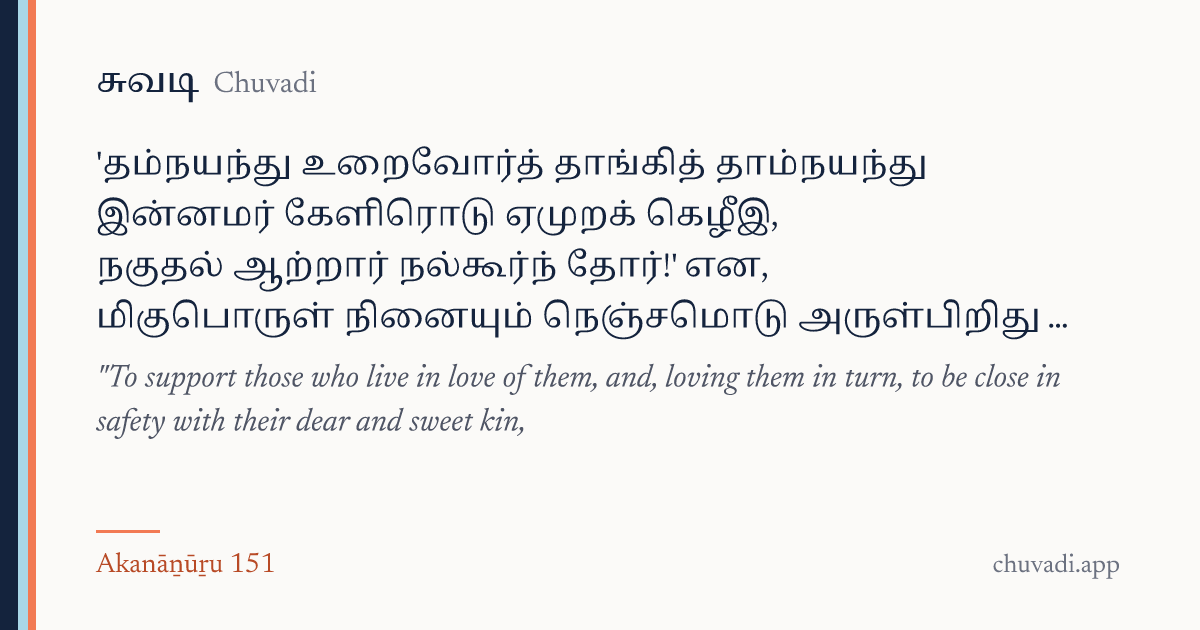
'தம்மை நம்பி வாழ்பவர்களைத் தாங்கி, தாமும் அன்போடு இனிதாகப் பழகும் உறவினரோடு பாதுகாப்பாகக் கூடி வாழ்ந்து மகிழ்ந்து சிரிப்பது வறியவர்களால் முடியாது' என்று எண்ணி, மிகுந்த செல்வத்தையே நினைக்கும் நெஞ்சத்தோடு அவருடைய அருள் வேறாகிவிட்டது, தோழி! நீ வாழ்க. காற்று விரிந்து பரவி, வலிய காற்று மோதும்போதெல்லாம் அசையும், புள்ளிவரிகளையுடைய கலைமானின் தலையில் அடியிலிருந்தே கவர்த்து வளரும் கொம்பைப் போன்ற வளைந்த கிளைகளையுடைய குட்டையான உழுஞ்சில் மரத்தின் கொத்தான கிளைகளில் முற்றிய நெற்றுகள், ஆடும் பெண்ணின் அரிக்கோல் பறையைப் போல மெல்ல ஒலிக்கும். கற்குவியலாக அமைந்த பதுக்கையின் அருகில் உள்ள காய்ந்த மரத்தின் நிழலில், கள்ளியின் முள்ளுடைய அடியைப் பற்றிக்கொண்டு, சிறிய சிவந்த நாவால், அடித்த மணியின் ஓசை போன்ற தெளிந்த குரலில், வழிச்செல்வோருக்கு நடக்கப்போவதைக் குறி சொல்லும் பல்லிகள் நிறைந்த காட்டை அவர் கடந்து சென்றுவிட்டார்.
இது பாலைத் திணை; பொருள் தேடிப் பிரிந்த தலைவனைப் பற்றித் தலைவி தோழியிடம் கூறுவது. பல்லியின் ஒலியை நிமித்தமாகக் கொள்வது மரபு; வழிச்செல்வோருக்குக் குறி சொல்லும் பல்லிகளும் பதுக்கைகளும் அவளுடைய அச்சத்தைக் காட்டுகின்றன. 'ஆபமன்', 'செதுக்கை' ஆகிய சொற்களின் பொருள் உறுதியாகத் தெரியவில்லை.
ஆங்கிலம் · English translationAI
Translation
- "To support those who live in love of them, and, loving them in turn,
- to be close in safety with their dear and sweet kin,
- and to laugh, these the poor cannot do!" so thinking,
- with a heart set on great wealth, his kindness turned elsewhere;
- so it became, alas, long live, my friend! Where, as the wind spreads out
- and each time the strong gust strikes, shaken, like the antlers
- of the stag with its spotted stripes, that fork from the very base,
- the forked, curving branches of the short-trunked uḻuñcil
- bear ripe pods on their clustered boughs, and like the dancing woman's
- rattling drum they softly rustle,
- in the shade of the withered tree beside the cairn of stones,
- clinging to the thorny stem of the kaḷḷi, to those who travel
- foretelling what will befall them, with little red tongues,
- in clear voices like a bell that is struck,
- the lizards with soothsaying mouths: he has crossed that forest!
What the poem says
The heroine speaks to her friend after her lover has left to earn wealth. She begins with his own reasoning, quoted in lines 1 to 3: the poor cannot support those who depend on them, cannot live in safety among their kin, cannot even laugh. With his heart fixed on great wealth, she says, his kindness turned elsewhere.
She then describes the forest he crossed. The uḻuñcil tree, short-trunked, with branches forking from the base like a spotted stag's antlers, rattles its ripe pods in the wind like the rattle-drum of a dancing woman. In the shade of a withered tree by a cairn of stones (patukkai, often a grave or memorial heap), lizards clinging to the thorny kaḷḷi chirp with little red tongues, in voices like a struck bell, and foretell what will happen to those who travel.
The lizard's chirp was taken as an omen, and the closing phrase, 'lizards with soothsaying mouths', carries the heroine's fear: what are those voices telling him? The cairns add a note of death to the landscape.
The phrase across lines 4 and 5 (aruḷ piṟitu āpamaṉ) is slightly unusual in form; I take it as 'his kindness became something else'. In line 11 the word cetukkai, 'withered (tree)', is my reading of a word whose exact sense is not certain.