




அகநானூறு 152
பாடல் · The poem
Tap a word to see where else it occurs.
பொருள் · Meaning in TamilAI
நெஞ்சை நடுங்கச் செய்த அரிய துன்பம் தீரும்படி வந்து, குன்றின் அருகே அமைந்த சிற்றூரில், திரும்பிச் செல்லப் புறப்பட்டவளின் வளைந்து சுருண்ட ஐம்பால் கூந்தல் இப்படிப்பட்டது. நுண்ணிய கோலையுடைய பாடுவோரைப் பேணிய பெரும்புகழும் சினமிக்க படையும் உடைய தித்தன் வெளியனின், ஒலிக்கும் கடற்பரப்பின் கடற்கரைச் சோலையுள்ள பெரிய துறையில், செல்வம் கொண்டுவரும் நல்ல மரக்கலங்கள் சிதையும்படி மோதும் அலைகளும், சிறிய வெள்ளை இறால்களின் குவியலைப் போலப் பெரும்பகையைக் கொண்டுவரும் படைகள் மொய்க்கும் பிண்டனின் போர்முனையை உடைத்து வென்ற வெற்றிவேலும், புகழ்பெற்ற கொடையும், யானைகளை வாரி வழங்கும் மகிழ்ச்சியும் உடைய பாரத்துத் தலைவனான ஆர நன்னனின், ஏழில் என்னும் நெடிய மலையின் பாழிச் சரிவில் வாழும் களிமயிலின் தோகையைப் போன்றது அவள் கூந்தல். அவள் தோள்கள், வலிய வில்லையுடைய இளையவர்களின் தலைவனான நள்ளியின் சோலைமலைச் சரிவில் வண்டுகள் உண்ணும்படி மலர்ந்த தெய்வக் காந்தளோடு பலவும் வியக்கும்படி நெருங்கிய சிறந்த மலர்களைப் போல மணக்கின்றன. வல்லவர்க்கும் வல்லாதவர்க்கும் வேறுபாடின்றி, வந்தவர்களுக்கு ஆழ்ந்த குழிகள் நிறையும்படி வாரி வழங்கும், கரிய யானைகளையுடைய ஆயின் காட்டில், ஆற்றின் தலைப்பகுதியில் நிற்கும் மிக உயர்ந்த சிகரத்தையும் இடையிலுள்ள மூங்கில் நிறைந்த பிளவுகளையும் போலத் தொலைவில் இருந்தாலும், அத்தோள்கள் எனக்கு நடுங்கும் துயரத்தைத் தருகின்றன.
இது குறிஞ்சித் திணை; சந்தித்துவிட்டுப் பிரிந்து சென்ற தலைவியை நினைந்து தலைவன் கூறுவது. நன்னன், நள்ளி, ஆய் ஆகிய தலைவர்களின் நாடுகளிலிருந்து உவமைகள் வருகின்றன. பிண்டனை வென்றவன் தித்தனா, நன்னனா என்பதும், 'சாலவிழ் நெடுங்குழி' என்ற தொடரின் பொருளும் உறுதியாகத் தெரியவில்லை.
ஆங்கிலம் · English translationAI
Translation
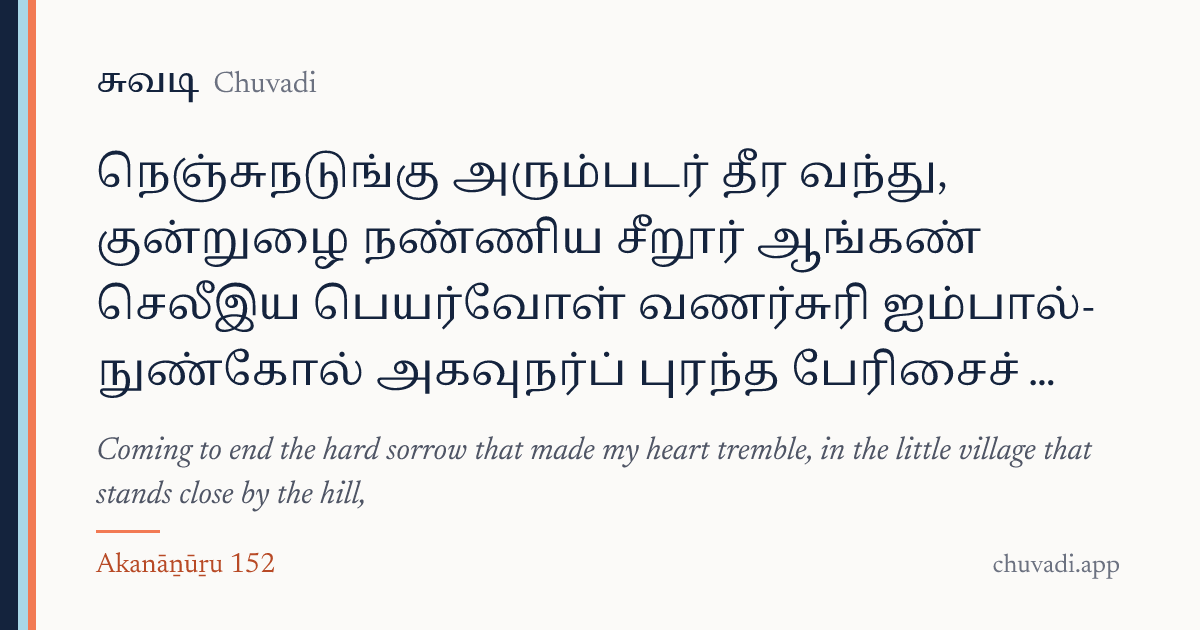
- Coming to end the hard sorrow that made my heart tremble,
- in the little village that stands close by the hill,
- she who turned back to go: her curling, twisted five-part hair,
- he who cherished the bards with their slender sticks, of great fame,
- Tittaṉ Veḷiyaṉ of the fierce army,
- at the great landing by the shore grove on the roaring expanse of sea,
- where, crashing so that the fine ships that bring wealth are broken,
- like heaps of small white prawns,
- Piṇṭaṉ with his swarming hosts that brought fierce enmity,
- his front he broke and overcame, with a victorious spear;
- of fine fame in giving, of generous feasting where elephants are given away,
- the lord of Pāram, Naṉṉaṉ of the sandal garland:
- on the slope of Pāḻi on the tall Ēḻil mountain,
- like the plumage of the joyous peacock, so is her hair; and her shoulders,
- of the lord of the young men with strong bows, Naḷḷi,
- on the slopes of his grove, opened for the bees to feed,
- with the god's kāntaḷ, many together,
- smelling of choice flowers that crowd wonderfully,
- to those who come, whether skilled or not,
- so as to fill the deep pits, he flings gifts,
- Āy of the dark elephants, in his forest,
- like the far-off lofty peak that stands at the river's head,
- and the bamboo-filled clefts between,
- though they are far away, give me trembling sorrow.
What the poem says
The hero speaks, apparently to his own heart, after a meeting with the heroine in her little village near the hills. She came to end the trembling sorrow he felt, and then turned back to go. The poem then describes her hair and her shoulders through a dense series of comparisons drawn from three chieftains' lands.
Her curling hair is like the plumage of a joyous peacock on the slopes of Pāḻi on the tall Ēḻil mountain, the land of Naṉṉaṉ, lord of Pāram. Before that, lines 4 to 11 tell of a victory: Tittaṉ Veḷiyaṉ, patron of the bards, had a great landing on the sea where waves wreck the ships that bring wealth, and Piṇṭaṉ, with hosts as many as heaps of prawns, was overcome there 'with a victorious spear'. The syntax of these lines is hard; I take Naṉṉaṉ as the one who broke Piṇṭaṉ's front, but it might be Tittaṉ Veḷiyaṉ, and the poem's connections are not clear to me.
Her shoulders are fragrant like the choice flowers, kāntaḷ among them, on the grove slopes of Naḷḷi, lord of the bowmen; and they are far off, like the high peak at the head of the river in the forest of Āy, the generous patron with dark elephants who flings gifts to all comers. Though far away, they give him trembling sorrow: a lover's longing for what has just left him.
The chieftains are named as the poem names them, and nothing is added. Line 20 (cālaviḻ neṭuṅkuḻi) is obscure; 'to fill the deep pits' is a literal guess.