




அகநானூறு 157
பாடல் · The poem
Tap a word to see where else it occurs.
பொருள் · Meaning in TamilAI
கள் விற்கும் பெண்டிர் அளந்து பங்கிட்டுக் கொண்ட, பிளந்த வாயுடைய பாளையிலிருந்து குவிந்த முலை போலச் சுரந்த, வரிவரியான நிறமுடைய கலங்கிய கள்ளை நிறையக் குடித்து, போரை விரும்பி முழங்குகின்றனர் சிவந்த கண்களையுடைய ஆடவர். அவர்களின் வில்லால் வீழ்ந்தவர்களின் கற்குவியல் அருகே உள்ள கோங்க மரத்தில், இரவில் மலர்ந்த பசிய அதிரல் கொடியை, விடியற்காலையில் காட்டு யானை அரும்புகளோடு இழுத்து வாயில் கவளமாகக் கொள்கிறது. அத்தகைய அச்சம் தரும் வழியில் தனியாகச் செல்வதாக, தோழி, அவர் நெஞ்சைத் தின்னும் சொற்களை முன்பு சொன்னார். அச்சொற்கள், பகைவரின் தாக்குதலால் மக்கள் ஓடிவிட்ட பொலிவற்ற ஊர் மன்றத்தில், மழை பட்டு இளகி, வெயில் பட்டுச் சுருங்கி, வேலைப்பாடு அழிந்த பாவையைப் போல உலர்ந்து, வீட்டில் தனித்து இருக்கும் வலிமை உடையவர்களுக்கே உரியவை!
இது பாலைத் திணை; தலைவி தோழியிடம் கூறுவது. பொருள் தேடிப் பிரிவேன் என்று தலைவன் சொன்னதை நினைத்து, பிரிவைத் தாங்கும் பெண்களிடம் சொல்ல வேண்டியதைத் தன்னிடம் சொன்னானே என்று வருந்துகிறாள். பாழ் மன்றத்தில் அழியும் பாவை, பிரிவில் வாடப்போகும் அவளையே காட்டுகிறது. முதல் அடியிலுள்ள 'அலகு' என்ற சொல்லின் பொருள் உறுதியாகத் தெரியவில்லை.
ஆங்கிலம் · English translationAI
Translation
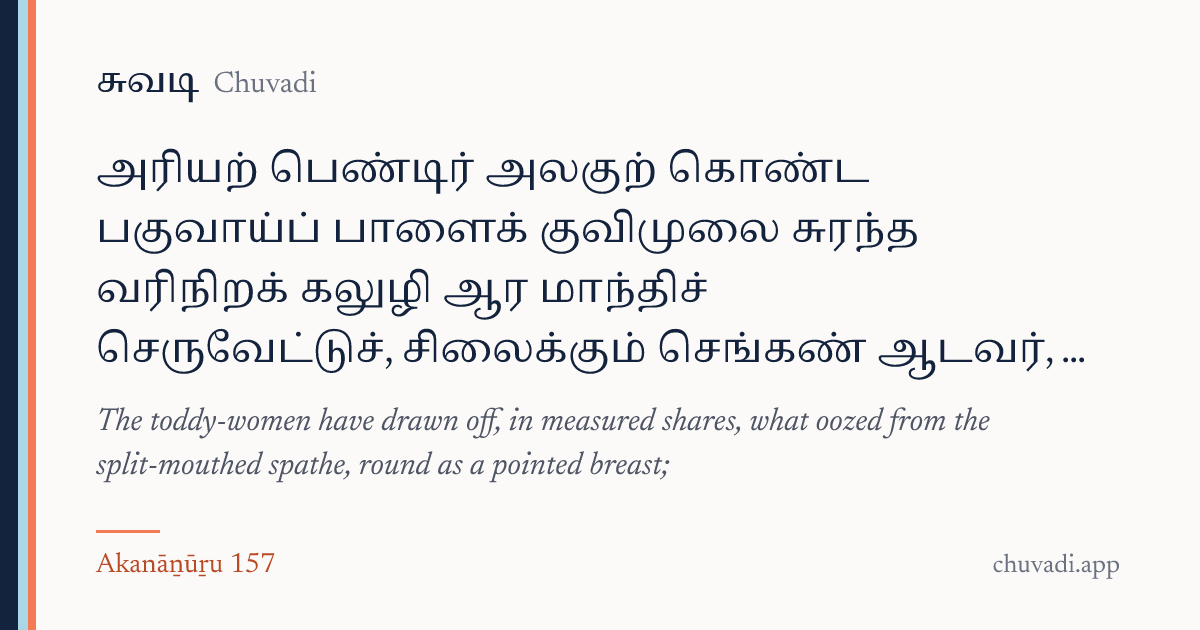
- The toddy-women have drawn off, in measured shares,
- what oozed from the split-mouthed spathe, round as a pointed breast;
- drinking their fill of that streaked and cloudy brew,
- lusting for battle, the red-eyed men roar;
- on the kōṅku by the stone cairns of those who fell to their bows
- the green atiral creeper that opened in the night
- the forest elephant pulls down, buds and all, in the wide grey dawn,
- and takes it for a mouthful —
- on such a fearful path, of going there alone,
- he spoke words that eat away the heart, once — friend —
- in a dreary common ground whose people raids have driven off,
- softening when rain falls and shrinking when the sun strikes,
- drying up like a doll whose making has come undone,
- to those who have the strength to stay behind at home!
What the poem says
The heroine speaks to her friend. The hero has talked of crossing the wilderness alone in search of wealth, and she answers that such talk is meant for women who can endure being left behind; she is not one of them. The particle maṉṉē at the end of line 10 marks something that was so and is now past or regretted, so she is recalling his words with bitterness.
The landscape is the usual pālai of danger. Men drink toddy gathered by the toddy-women from the palm spathe, whose swelling shape is likened to a breast, and they roar with lust for fighting. The cairns (patukkai) piled over travellers killed by their arrows stand under kōṅku trees, and a wild elephant tears down the night-blooming atiral creeper growing there. The detail joins drink, killing and graves in one picture of the road he would take.
The closing image is of the woman who stays: like a painted or modelled figure left in the public square (maṉṟam) of a village emptied by raids, softened by rain and shrunk by the sun until its workmanship is ruined. That is what waiting would make of her.
The word alaku in line 1 is not certain here; 'measure, share' is taken, but it may mean something else. The syntax of lines 10–14, in which the words are spoken 'to those who can bear to stay home', is read as the heroine's ironic refusal.