




அகநானூறு 158
பாடல் · The poem
Tap a word to see where else it occurs.
பொருள் · Meaning in TamilAI
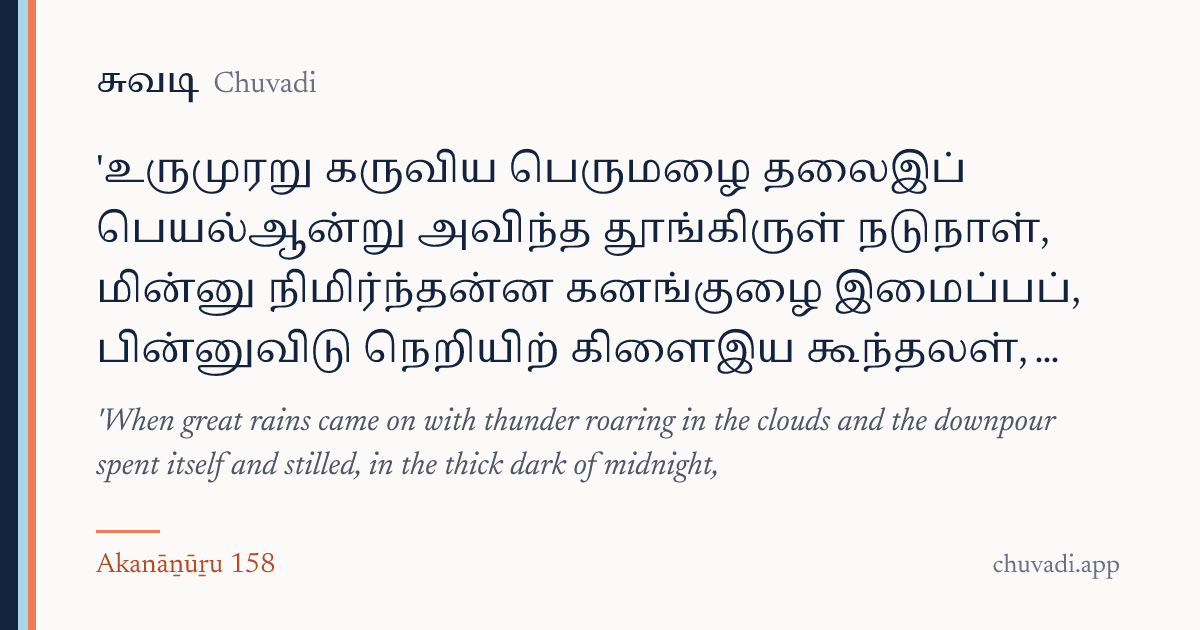
'இடி முழங்கும் மேகங்களோடு பெருமழை பெய்து, பெய்தல் ஓய்ந்து அடங்கிய அடர்ந்த இருள் கொண்ட நள்ளிரவில், மின்னல் மேலெழுந்தது போலக் கனமான காதணிகள் ஒளிர, பின்னல் அவிழ்ந்தது போலக் கலைந்த கூந்தலோடு, மலையிலிருந்து இறங்கும் மயில் போல அசைந்து ஒதுங்கி, வேலியின் மேல் ஏறி இறங்கிச் செல்வதை நான் கண்டேன்; அவள் இவள்தான்' என்று சொல்லி இவளை வருத்தாதே, அன்னையே, நீ வாழ்க, வேண்டுகிறேன்! நம் தோட்டத்தை அடுத்த, தெய்வங்கள் வாழும் மலைச்சாரலில், ஒளிரும் பூக்களைச் சூடி, தாம் விரும்பும் உருவத்தில் அணங்குகள் வருவதுண்டு. தூங்குபவர்களுக்கு நனவு போலவே தோன்றும் கனவு வந்து மயக்குவதும் உண்டு. இவளோ விளக்கு இல்லாமல் தனியாக இருந்தாலே நடுங்குவாள். ஊர் மன்றத்திலுள்ள மரா மரத்தில் கூகை அச்சம் தரும்படி குழறினாலும் மனம் கலங்கி அடைக்கலம் தேடுவாள். அதற்கு மேல், புலிக்கூட்டம் போன்ற நாய்களைச் சங்கிலியிலிருந்து அவிழ்த்துவிட்டு, முருகனைப் போன்ற சினமும் கடுமையான வலிமையும் உடைய நம் தந்தையும் வீட்டில் இல்லாதபோது, இவள் இப்படிச் செய்ய அஞ்சமாட்டாளா?
இது குறிஞ்சித் திணை; தோழி அன்னையிடம் கூறுவது. தலைவி இரவில் தலைவனைச் சந்திக்கச் சென்றதை அன்னை கண்டதாகச் சொல்ல, தோழி அதைத் தெய்வமோ கனவோ என்று மறுத்து, இவள் அஞ்சும் இயல்பினள் என்று காக்கிறாள். உண்மையில் சந்திப்பு நடந்தது என்பதே பாடலின் நுட்பமான நகை. 'மிடை' என்ற சொல்லை வேலி என்று கொண்டோம்; அதன் சரியான பொருள் உறுதியாகத் தெரியவில்லை.
ஆங்கிலம் · English translationAI
Translation
- 'When great rains came on with thunder roaring in the clouds
- and the downpour spent itself and stilled, in the thick dark of midnight,
- her heavy earrings glinting like lightning that shoots upward,
- her hair bunched loose as though the braid had come undone,
- swaying like a peacock coming down a mountain, slipping aside,
- I saw her climb the fence and go down — this one!' — saying so,
- do not torment her — long may you live, mother, I beg you! On our garden's
- slopes, where spirits dwell, wearing flowers bright as flame,
- goddesses come in whatever form they please;
- and to sleepers, as true as waking life,
- a dream may come there and deceive them. This girl
- shivers when she is alone without a lamp; if, to frighten,
- the owl in the marām tree of the common hoots,
- her heart fails and she runs for shelter; and on top of that,
- having loosed his leashed dogs, like a pack of tigers,
- our father, fierce in strength, with anger like Murukaṉ's,
- is away from home —
- would she not be too afraid to do such a thing?
What the poem says
The friend defends the heroine before the mother (aṉṉai), who has seen, or thinks she has seen, the girl slip out of the house at midnight after a storm. The first six lines quote the mother's words: earrings flashing like lightning, hair loose, the girl swaying like a peacock as she climbed over the fence. The friend begs her not to harass the girl.
Her defence is clever. The hill-slopes by their garden are haunted: spirits (cūr) live there, and goddesses (aṇaṅku) wearing bright flowers come in any shape they like. Dreams, too, can seem as real as waking. So what the mother saw may have been a spirit or a dream. And the girl is timid: she shivers alone without a lamp, and runs for cover when the owl hoots in the marām tree of the village common. With their father out hunting with his dogs, fierce as Murukaṉ, she would be more frightened still. How could such a girl go out in that darkness?
The poem is kuṟiñci: the night meeting is real, and the reader knows the friend is covering for the lovers. Her protest that the girl could never do such a thing is the poem's quiet irony.
The phrase miṭai ūrpu iḻiya in line 6 is read as climbing over a fence or raised barrier and going down; the exact sense of miṭai is not certain.