



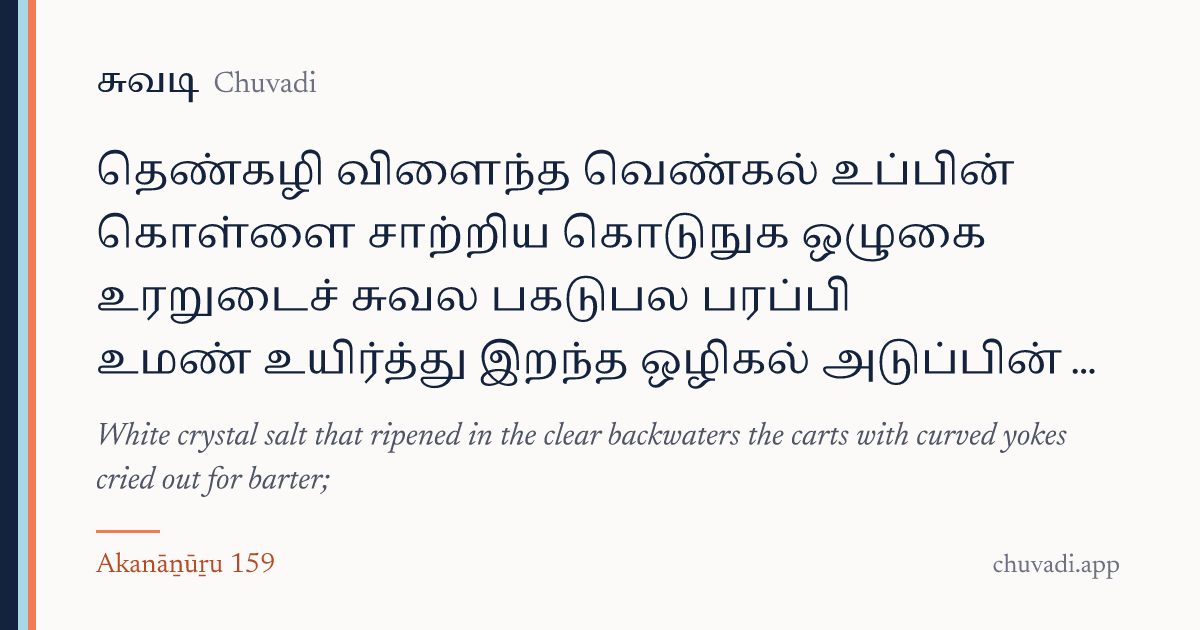

அகநானூறு 159
பாடல் · The poem
Tap a word to see where else it occurs.
பொருள் · Meaning in TamilAI
தெளிந்த உப்பங்கழியில் விளைந்த வெண்மையான கல்லுப்பைப் பண்டமாற்றுக்குக் கூவி விற்ற, வளைந்த நுகத்தடியுடைய வண்டிகளோடு, புண்பட்ட கழுத்துடைய பல எருதுகளைப் பரப்பி, உமணர் இளைப்பாறிச் சென்றுவிட்ட கைவிடப்பட்ட அடுப்புக் கற்களின் அருகே, கூரிய அம்பும் வளைந்த வில்லும் உடைய ஆடவர், தெய்வம் உறையும் வலிய வில்லை வளைத்து, பல பசுக்களின் நீண்ட நிரையைக் கவர்ந்து, ஆரவாரத்தோடு அரிய எல்லைப் பகுதியைத் தாக்கிய வெற்றிக் களிப்பில், விரைந்து ஒலிக்கும் துடிப்பறையின் தாளத்துக்கு ஆடி, தழைமாலை அணிந்து, இறைச்சி சமைக்கின்றனர். அத்தகைய கிளைவழிகளில் 'காதலர் சென்றுவிட்டார்' என்று மிகுந்த துயரம் கொள்ளாதே, அன்புத் தோழியே! வானத்தின் இடியேறு முழங்கும் உயர்ந்த சிகரமும், மணமுள்ள பூக்கள் நிறைந்த சாரலும் உடைய சிறு குன்றின் கிழக்கே, வில் ஏந்திய பெரிய கையும் வெற்றிப் போரும் உடைய வானவன், கன்னத்தில் வண்டுகள் மொய்க்கும் சிறுகண் யானைகளின் பூண் அணிந்த பெரிய தந்தங்கள் ஒடியும்படி அழித்தான்; வளைந்த முகட்டைக் காக்கும் ஒளிரும் நெடிய மதில்களையும் தொலைவிலும் விளங்கும் புகழையும் உடைய ஆமூரையே அடைந்தாலும், அணிகலன் தாங்கிய உன் மார்பைத் தழுவுவதை மறந்து அவர் அங்கே தங்கிவிடுபவர் அல்லர்.
இது பாலைத் திணை; பிரிவால் வருந்தும் தலைவியைத் தோழி தேற்றுகிறாள். வழியின் அச்சத்தை ஒப்புக்கொண்டாலும், எந்தச் சிறந்த நகரமும் தலைவனை உன்னிடமிருந்து பிரித்து வைக்காது என்கிறாள். வானவனுக்கும் ஆமூருக்கும் உள்ள தொடர்பைப் பாடல் தெளிவாகச் சொல்லவில்லை. 'கொடுமுடி', 'குரூஉக்கண்' ஆகிய சொற்களின் பொருள் உறுதியாகத் தெரியவில்லை; 'கொடுமுடி' ஒரு பெயராகவும் இருக்கலாம்.
ஆங்கிலம் · English translationAI
Translation
- White crystal salt that ripened in the clear backwaters
- the carts with curved yokes cried out for barter;
- spreading out their many bullocks with galled necks,
- the salt-traders rested and passed on, leaving their hearth-stones behind; there
- the men with curved bows and arrows filed sharp,
- bending low their strong bows where a spirit dwells,
- rounding up a long herd of many cattle, with uproar,
- having raided the hard frontier, flushed with the joy of winning,
- keeping time to the fierce tuṭi drum with its crowded beat,
- wearing wreaths of uvalai leaves, busy cooking meat —
- on such forking paths, 'My lover has gone,' you say, so
- do not give yourself to such grief, my dear friend!
- Where the fine bull of the sky roars on far summits,
- east of the low hill with its slopes of fragrant flowers,
- Vāṉavaṉ of the great hand that holds the bow, victorious in war,
- crushing small-eyed elephants with bees swarming at their cheeks
- till the great ringed tusks broke; —
- with long walls of bright gates that guard the curving crest,
- its fame shining afar — even if he reaches Āmūr,
- he is not one to settle and stay there, forgetting
- to lie close against your breast that bears its jewels.
What the poem says
The friend consoles the heroine, whose lover has gone across the wilderness. Do not grieve, she says, thinking only of the dangerous road; even if he came to Āmūr itself, a famous walled town, he would not stay there and forget your embrace.
The first part paints the road. Salt merchants (umaṇar) pass through with carts of white salt from the backwaters, calling out their barter, and leave behind the stones of their roadside hearths. At those abandoned hearths a band of bowmen, back from a cattle raid on the frontier, cook meat to the beat of the tuṭi drum, wearing wreaths of leaves. The forking paths (kavalai) are full of such men. The friend admits the danger and sets it aside.
The second part names a place. Āmūr lies east of a low hill where the thunder, 'the fine bull of the sky', roars on the peaks. The lines bring in Vāṉavaṉ, a title of the Cēra kings, who crushed elephants in battle, and they praise Āmūr's tall walls and wide fame. The poem does not say exactly how Vāṉavaṉ and Āmūr are related, whether he conquered it or it was his, and the connection is left open here.
Line 18 is unclear: koṭumuṭi may mean 'the curved crest' of the fortifications, or it may be a proper name; kurūukkaṇ, 'bright' or 'coloured', is also uncertain. The point is that no town, however splendid, could hold him.