




அகநானூறு 161
பாடல் · The poem
Tap a word to see where else it occurs.
பொருள் · Meaning in TamilAI
பொருளுக்காகப் பிரிந்து செல்வது என்பது எப்படி முடியும்? 'சுருண்ட, ஒழுங்கு செய்யாத தலைமுடியும் கொடிய கண்களும் உடைய ஆடவர், அடியில் பொருத்திய அம்புகளை முழுதாக இழுத்து எய்து, வழிப்போக்கரைக் கொன்ற அச்சம் தரும் கிளைவழிகள்; அங்கே அழுகிய பிணத்தை விரும்பி வாழும் சிவந்த செவியுடைய ஆண் கழுகு கூடியிருக்கும் தன் சுற்றத்தை அழைக்கிறது; அத்தகைய அஞ்சத்தக்க காட்டைக் கடந்து, பொருளை விரும்பி அவர் போக நினைத்தார்' என்பதை இவள் தெளிவாகக் கேட்டுவிட்டாளோ? தோள்கள் தளர்ந்து, வண்டுகள் தேன் உண்ண ஒலிக்கும் கரிய அடர்ந்த கூந்தலும், அழகிய மாநிற மேனியும், சிறந்த அணிகலன்களும் உடைய இந்த இளம்பெண்ணின், தேமல் படர்ந்த மார்பில் வருத்தும் தெய்வம் போல எழுந்த அழகிய இளமுலைகள் நனையும்படி, பல இதழ் கொண்ட மலர் போன்ற மையுண்ட கண்களில் கண்ணீர் பெருகிப் பரவியது.
இது பாலைத் திணை; பொருள் தேடிப் பிரிய நினைத்த தலைவன், சொல்லும் முன்பே தலைவி அழுவதைக் கண்டு, தன் நெஞ்சிடம் பிரிவைக் கைவிடுவதாகக் கொள்ளலாம்; தோழி தலைவனிடம் கூறுவதாகவும் கொள்ள இடமுண்டு. கொடிய வழியின் வருணனை, அவள் கண்ணீரின் முன் பொருள் தேடல் பொருளற்றது என்பதைக் காட்டுகிறது. ஒன்பதாம் அடியில் 'தோழ்' என்று அச்சானது 'தோள்' என்பதன் பிழை.
ஆங்கிலம் · English translationAI
Translation
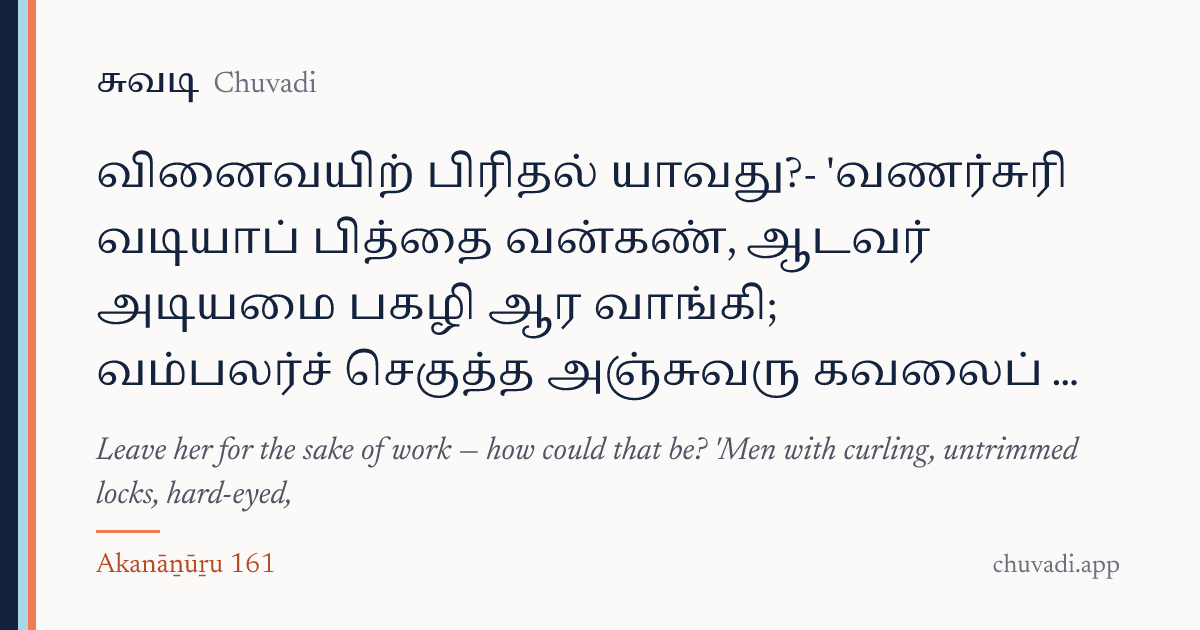
- Leave her for the sake of work — how could that be? 'Men with curling,
- untrimmed locks, hard-eyed,
- drawing to the full their arrows fitted with shafts,
- have killed wayfarers on the fearful forking paths;
- there, living on its craving for rotting flesh, the red-eared
- vulture cock calls its gathered kin;
- crossing that terrifying forest, bent on wealth,
- he has thought of going' — did she hear this,
- and hear it plainly? With drooping shoulders,
- with dark, thick hair that hums as bees feed on it,
- lovely dark-skinned, the young girl with choice jewels:
- on her breast spread with pale spots, risen fierce as a goddess,
- her fine young breasts are wetted,
- for tears have spread over her many-petalled, kohl-dark eyes.
What the poem says
The speaker sees the young heroine weeping and wonders whether she has heard of a plan to travel for wealth. The best reading takes him to be the hero himself, speaking to his own heart: he had been thinking of leaving, and her tears, falling before he has said a word, make the very idea impossible. 'Leaving for work — what is that?' he begins. It is also possible to take the lines as the friend's report to the hero, but the opening question sounds like a man talking himself out of a journey.
The quoted words in lines 1–8 are what she might have heard: the road is held by hard-eyed, long-haired bowmen who kill travellers, and the red-eared vulture calls its flock to the bodies. This is the standard pālai road, and the poem gives it only to set it against her grief.
The portrait of the girl is close and tender: drooping shoulders, thick hair humming with bees, dark lovely skin, choice jewels, and young breasts, 'risen like a goddess' (aṇaṅku), that is, with a beauty that torments, now wet with tears from her eyes, compared to many-petalled flowers.
The edition prints tōḻ in line 9; this is a clear misprint for tōḷ, 'shoulder', which is the reading taken.