




அகநானூறு 162
பாடல் · The poem
Tap a word to see where else it occurs.
பொருள் · Meaning in TamilAI
எவ்வளவு முகந்தாலும் குறையாத, சங்குகள் வளரும் ஆழ்கடலிலிருந்து நீரை முகந்து, அளக்க முடியாத பெருங்குவியல்களாகத் தோன்றிய மேகங்கள், கடலைப் போலத் தோன்றும் பெரிய வானத்தில், தீக்கொடி போன்ற மின்னல் பிளந்து நெளிய, விரைந்து தாக்கும் இடியோடு கடுந்துளிகளைச் சிதறி, முடிவு தெரியாமல் வானம் பொழிந்த நள்ளிரவில், கடுங்காவல் புரியும் காவலர் சோர்ந்திருக்கும் நேரத்தை எதிர்பார்த்து, பனி கலந்த அசையும் காற்று என்னை அலைக்க, அவள் தந்தையின் பெரிய மாளிகையின் ஒரு மூலையில் நான் நின்றேன். அப்போது, ஆற்றுமணல் அலை போல ஒளிரும் கூந்தலும், ஒளி பொருந்திய முகத்தில் மலர் போலச் சுழலும் கரிய இமையுடைய குளிர்ந்த கண்களும், அரும்புகளை வரிசைப்படுத்தியது போன்ற, யாவரும் விரும்பும் வெண்பற்களும், அழகிய புன்னகை விளங்கும் சிவந்த வாயும் உடையவள், திரண்ட வளையல்கள் ஒளிர வீசி, காற்றில் அசையும் தளிர் போல ஓயாமல் நடுங்கினாள்; என் காதல் நோயின் வருத்தம் தீரும்படி நான் அவளைத் தழுவினேன். உண்மைச் சொற்களால் நற்புகழைத் தரும் இரவலர் எண்ணி வந்த ஆசை பொய்யாகாதபடி கொடுக்கும், கழலும் தொடியும் அணிந்த அதிகனுடைய, காய்ப்பது ஓயாத பயன் நிறைந்த பலா மரங்களும் வேங்கையும் சேர்ந்த மலை பொலிவுற, வில்லேந்திய படையும் பசும்பொன் அணியும் உடைய பாண்டியனின் யானைகள் பொறித்த வெற்றிக்கொடியைப் போல, காண அழகாக ஒளிர்ந்து இறங்கும், உயர்ந்து தோன்றும் அருவியுடைய நேரான நெடிய மலைச்சாரலில் வாழும் சூர்மகளிரைவிடவும் அவள் பெறுவதற்கு அரியவள்.
இது குறிஞ்சித் திணை; இரவுக்குறியில் தலைவியைச் சந்தித்ததைத் தலைவன் நினைந்து கூறுகிறான். அவளைத் தழுவிய பின்னும், அவள் மலைத் தெய்வ மகளிரினும் அரியவள் என்பதே பாடலின் சுவை. அதிகனைப் பற்றியும் பாண்டியனைப் பற்றியும் பாடல் சொல்வதற்கு மேல் இங்கே எதுவும் சேர்க்கவில்லை.
ஆங்கிலம் · English translationAI
Translation
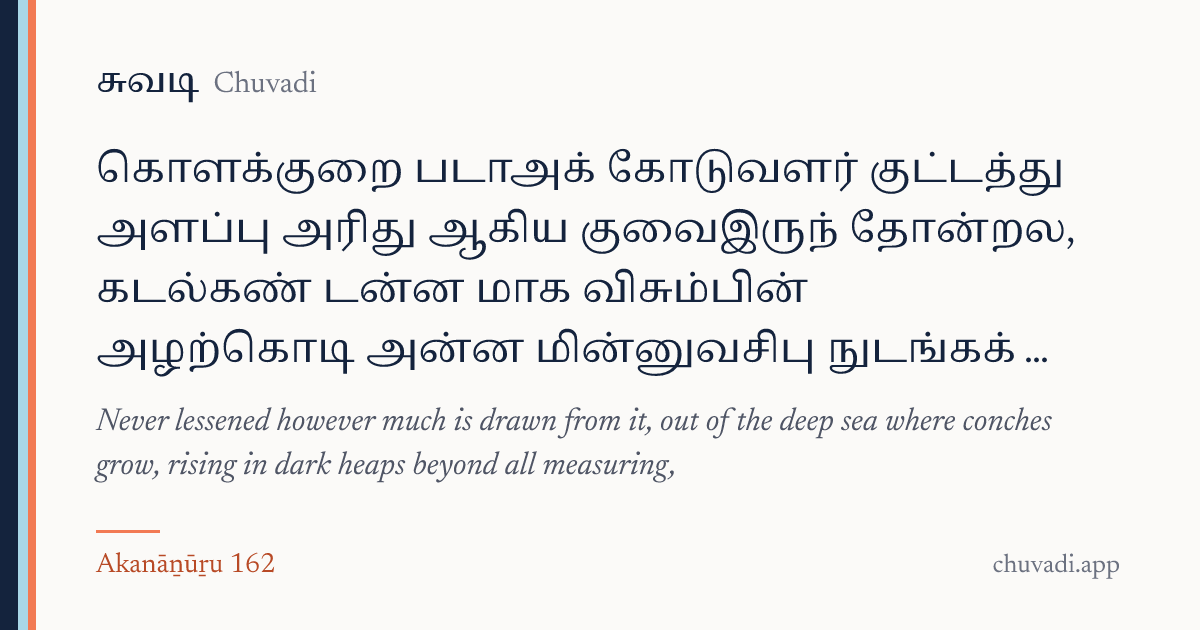
- Never lessened however much is drawn from it, out of the deep sea where conches grow,
- rising in dark heaps beyond all measuring,
- across the vast sky that looks like the sea,
- lightning like creepers of flame splitting it and quivering,
- with fast-striking thunder, scattering fierce drops,
- at midnight, when the sky poured as if it knew no end,
- watching for the moment the guards of strict watch grew slack,
- while the mist-laden swaying wind beat on me, at her father's
- great house, in one corner, I stood; and then —
- with hair that gleams like dark ripples of sand, with eyes
- dark-lidded and cool as rain, rolling like flowers in her shining face,
- white teeth that all would long for, like a row of buds,
- lovely red lips that glow with a perfect smile,
- swinging her fine bangles, shaped on the rod, so they flashed,
- trembling like a sprout the wind strikes, without ceasing —
- I held her close till my sickness and its weariness left me. With truthful words
- the suppliants bring him good fame, and what they come hoping for
- he never lets fail — Atikaṉ of the anklet and bangle;
- with jackfruit trees rich in yield that never cease to bear
- and with vēṅkai, his mountain shines; there, splendid to see,
- like the Pāṇṭiyaṉ's — he of the bow-bearing army and fresh-gold jewels —
- victorious banner adorned with elephants,
- the waterfall, seen from far, comes flashing down
- on the slope of the tall, straight range:
- harder to win than the cūr maidens there is she.
What the poem says
The hero recalls a night meeting, probably speaking to his own heart or to a companion. It was the middle of a storm: clouds that had drawn water from the inexhaustible sea filled the sky in dark heaps, lightning split them like creepers of flame, thunder struck and rain poured without end. Chilled by the wind, he stood in a corner of her father's great house, waiting for the guards to grow careless.
Then she came. Lines 10–15 give her beauty piece by piece: hair glinting like the ripples of dark sand in a stream, large rain-cool eyes moving in her bright face like flowers, teeth like a row of buds, red lips and a lovely smile, bangles flashing as she moved, and her whole body trembling like a young shoot in the wind. He embraced her and the ache of longing left him.
The closing comparison lifts her beyond reach. She is harder to win than the cūr maidens, the dangerous goddesses of the mountain, who live on the slope where a waterfall shines down like the elephant-banner of the Pāṇṭiyaṉ king. That mountain belongs to Atikaṉ, praised here as a chieftain who never disappoints the suppliants who spread his fame, and whose jackfruit trees never fail to bear. The poem says no more about either ruler, and nothing more is added here.
The paradox is deliberate: he has just held her, yet she remains, for him, as hard to win as a goddess.