




அகநானூறு 163
பாடல் · The poem
Tap a word to see where else it occurs.
பொருள் · Meaning in TamilAI
வானம் அதிர இடித்துப் பெய்யத் தொடங்கி, கலந்த மலர்கள் வாடும்படி குளிர்ந்த மேகங்கள் பொழிந்த, தாழ்ந்து பெய்யும் மழைக்காலத்தின் இறுதி நாளில், நான் தனியாக இருக்க, மனத்தில் வெறுப்பு மிக, சென்றவரை நினைத்து என் சில வளையல்கள் கழன்று விழ, அவர் வருகையை நான் விரும்பி எதிர்பார்ப்பதையும், என்னைக் கொல்லும் துயரத்தையும் பெருநகைப்புடைய உள்ளத்தோடு பார்த்து, 'இவள் இரங்கத்தக்கவள்' என்று நினைக்காமல், யானை மூச்சு விட்டது போலக் கண்ணை மறைக்கும் நீர்த்துளிகளோடு, தாமரைகள் கருகும் முன்பனிக் காலத்து நள்ளிரவில், மலையே உருகி வந்தது போன்ற குளிர்ந்த வாடைக் காற்றே! நீ எனக்காக மட்டுமே வந்தாய் போலும்! நீரோடும் கால்வாயில் இட்ட நுண்மணல் குவியல் போல என் நெஞ்சம் நெகிழ்ந்து கரைகிறது. கொடியவர் சென்ற நாட்டுக்கு, சோர்வில்லாமல், இப்படியே நீ சென்று அவரிடமும் இவ்வாறே நடந்துகொள்; வேலையில் விரைந்து ஈடுபட்டிருப்பவர்களும் அப்போது நினைத்துப் பார்க்கக்கூடும்!
இது பாலைத் திணை; பிரிவின்போது, திரும்பி வர வேண்டிய பருவம் வந்தும் தலைவன் வராததால், தலைவி வாடைக் காற்றிடம் கூறுகிறாள். அந்தக் குளிர் அவனையும் வாட்டினால் அவன் தன்னை நினைப்பான் என்று விரும்புகிறாள். ஐந்தாம் அடியிலுள்ள 'பெருநகை' வாடையின் ஏளனத்தைக் குறிப்பதாகக் கொண்டோம்; அது தலைவியின் முந்தைய மகிழ்ச்சியான எதிர்பார்ப்பைக் குறிக்கவும் கூடும்.
ஆங்கிலம் · English translationAI
Translation
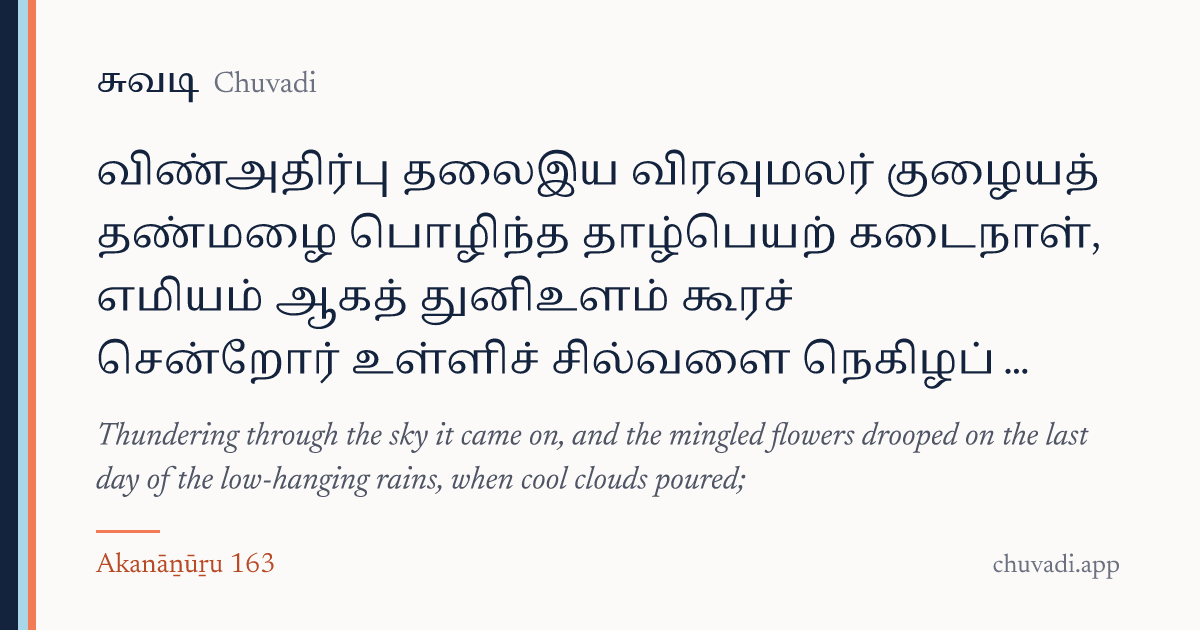
- Thundering through the sky it came on, and the mingled flowers drooped
- on the last day of the low-hanging rains, when cool clouds poured;
- as I am alone, with bitterness rising in my heart,
- thinking of him who left, my few bangles slipping loose,
- you, with a heart full of laughter, eyeing my longing for his return,
- and my grief that is killing me, never thinking, 'She is pitiable,'
- with blinding spray, like the breath an elephant blows out,
- in the midnight of early dew, when the lotuses blacken,
- cold north wind, like a hill dissolving!
- It seems you have come for me alone! As at a stream's channel
- a heap of fine sand gives way, my heart melts and comes loose;
- to the land where the cruel one went, without flagging,
- go there, and be just like this to him:
- even those eager for their work may then remember!
What the poem says
The heroine speaks to the cold north wind (vāṭai) at the end of the rainy season, when the man who left her for work has still not come back. The wind is the season's sign that he should have returned, and it reaches her like an enemy.
She describes herself and the wind together. She is alone, her heart sore, her bangles slipping from wasted arms; the wind, without pity, blows spray like the breath snorted by an elephant, blackens the lotuses with frost at midnight, and is as cold as if a hill had melted. 'You seem to have come for me alone,' she says, and her heart gives way like a heap of fine sand at the mouth of a channel when water runs.
Then she turns the complaint into a request: go to the land where that cruel man went and be the same to him. Even those wholly taken up with their work may remember, if the cold reaches them too. The wish is half reproach, half hope.
Line 5 is not certain. 'Great laughter' (perunakai) is read as the wind's mockery of her longing; it could instead describe the heroine's own glad hope as she waited for his return. The poem is pālai by the edition's arrangement, though the setting of season and waiting also recalls mullai; the theme of separation fits pālai well enough.