




அகநானூறு 164
பாடல் · The poem
Tap a word to see where else it occurs.
பொருள் · Meaning in TamilAI
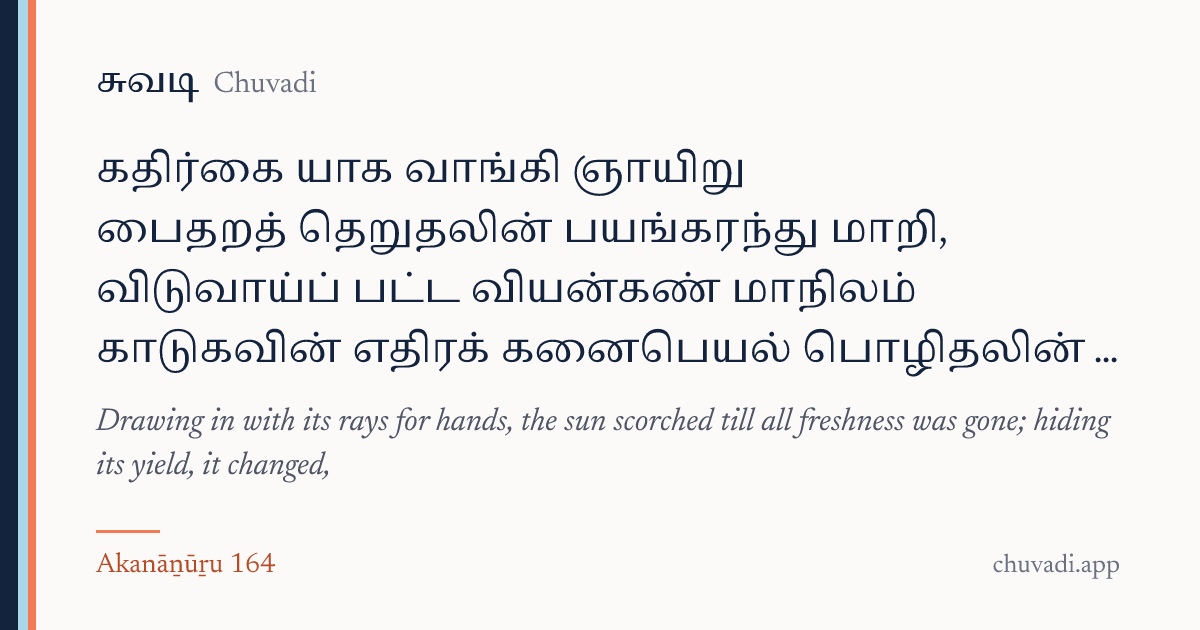
கதிர்களையே கைகளாகக் கொண்டு நீரை உறிஞ்சி, ஈரம் அற்றுப் போகும்படி ஞாயிறு சுட்டெரித்ததால், தன் பயனை மறைத்து மாறி, பிளவுபட்டுக் கிடந்தது அகன்ற பெரிய நிலம். இப்போது அடர்ந்த மழை பொழிந்ததால் காடு அழகு பெற்றது; புள்ளியும் வரியும் உடைய வண்டுக்கூட்டங்கள் ஆரவாரிக்க, மணமுள்ள பூக்களையுடைய முல்லையோடு பல தோன்றி மலர்களும் தோன்றின; மலர் மணக்கும் காடு நறுமணத்தால் மயக்குகிறது. 'அவர் நிலை இப்போது என்னவோ?' என்று கலங்கி, வழியும் கண்ணீர் சொட்டும் கண்களோடு அங்கே வருந்தித் துன்பத்தோடு வாழ்பவள் தன் பழைய அழகைத் திரும்பப் பெறும் நல்ல காலம் இதுவே. பார்! பகைவரின் மதில் முகப்பை அழித்ததால் பூண் சிதைந்த தந்தமும், கட்டிய தறியையே முறிக்கும் வலிமையும் உடைய யானையையுடைய, கடுஞ்சினம் கொண்ட வேந்தன் போர்ப் பணியிலிருந்து எங்களை விடுவித்தால்!
இது முல்லைத் திணை; அரசனின் போரில் ஈடுபட்டுள்ள தலைவன், கார்காலம் வந்ததைக் கண்டு, பெரும்பாலும் தன் தேர்ப்பாகனிடம் கூறுவது. மலர்ந்த காடு மீண்டு வர வேண்டிய பருவத்தைக் குறிக்கிறது; தறியை முறிக்கும் யானை அவனைத் தடுத்து வைத்திருக்கும் போரைக் குறிக்கிறது. ஆறாம் அடியில் 'தோன்ற' என்பதற்குப் பின் உள்ள மேற்கோள் குறி அச்சுப்பிழையாகத் தெரிகிறது.
ஆங்கிலம் · English translationAI
Translation
- Drawing in with its rays for hands, the sun
- scorched till all freshness was gone; hiding its yield, it changed,
- and the wide great earth lay cracked open;
- now heavy rain has poured, so that the forest comes into its beauty;
- swarms of bees with spotted stripes hum, and many together
- with the fragrant-flowered mullai the tōṉṟi have appeared;
- the woods, sweet with blossom, are heady with scent —
- 'What can his state be now?' bewildered,
- with eyes that drop falling tears, grieving there,
- she who lives in sorrow would get back her old beauty:
- this is the good season; see — if the king,
- with his elephant, the tusk whose ring has split from tearing at the face of enemy walls,
- the elephant that snaps the post it is tied to,
- the king of fierce anger, would only release us from the war!
What the poem says
The hero is away on a king's campaign, and the rains have come. He speaks to someone near him, most likely his charioteer or companion ('see', kaṇṭicin), about the change in the land and about the woman waiting at home.
The opening lines set summer against the rains. The sun, its rays like hands drawing up the earth's moisture, had burned the land until it hid its yield and cracked open. Now heavy rain has fallen, the forest is beautiful again, bees hum, and the mullai and the tōṉṟi (glory lily) are in flower. The scented woods are the classic mullai sign that the time of return has come.
At home the heroine wonders what has become of him, and weeps; this season, he says, is the time when she could get back her old beauty, if only he were with her. But that depends on the king. The war elephant, its tusk-ring split from battering enemy walls and strong enough to snap its tethering post, stands for the campaign that still holds him. The fierce king must first set him free.
There is a stray quotation mark after tōṉṟa in line 6 of the edition; it appears to be a misprint and is ignored. The king is not named.