




அகநானூறு 17
பாடல் · The poem
Tap a word to see where else it occurs.
பொருள் · Meaning in TamilAI
வளம் நிறைந்த எங்கள் அழகிய வீட்டில் பந்தைச் சிறிது எறிந்தாலும், இளந்தோழியர் கூட்டத்தோடு கழங்கு ஆடினாலும், 'அம்மா! என் உடம்பு சோர்ந்துவிட்டது' என்று சொல்லித் தளர்ந்து, வியர்வை அரும்பிய நெற்றியோடு, குளிர்ச்சியாக என்னைத் தழுவிக்கொண்டு இருப்பாளே! இப்போதோ, அழகிய வளையல் அணிந்த தோழியரையும் எங்களையும் நினைக்காமல், பெருமிதச் சொல்லுடைய தந்தையின் கடுமையான காவலைக் கடந்து, அயலான் ஒருவன் தன் நெஞ்சை முழுமையாகக் கவர்ந்துகொண்ட, வயதுக்கு மீறிய அறிவுடைய என் சிறுமகளின் சிலம்பு ஒலிக்கும் சிறிய அடிகள் அந்த வழியில் நடக்க வல்லவையோ? அங்கே, நீரில்லாத பாலையின் அரிய வழிகளில், ஊரே எழுந்து செல்வதுபோல அச்சம் தரும் ஆரவாரத்தோடு கூட்டமாகச் செல்லும், வளைந்த தார்க்கோல் உடைய உப்பு வணிகர் எருதுகளை அதட்டும் தெளிவான கூக்குரல் நெடிய பெரிய குன்றுகளில் எதிரொலிக்கிறது. கொடிய வெயிலால் முறுக்குண்ட மூங்கில் நிறைந்த மலைச்சரிவில், பெரிய களிறுகள் உரசியதால் மண் படிந்த அடிமரமுடைய யா மரம் நிற்கிறது. கொடிய பாலையின் பிரிவு வழிகள் உள்ள இடத்தில், நீண்ட அடிமரமுடைய இலவத்தின் முதிர்ந்து உதிரும் பல மலர்கள், விழா தொடங்கிய பழம்பெருமையுடைய மூதூரில் நெய் வழியும் விளக்குச் சுடர்கள் காற்று மோதச் சிதறுவதுபோலவும், விடியற்காலை மீன்கள் போலவும் தோன்றுகின்றன. கரிய பெரிய மலைகள் குறுக்கே கிடக்கும் பாலை அது!
இது பாலைத் திணை; உடன்போக்குச் சென்ற மகளை நினைந்து தாய் வருந்துவது. பந்தாடியே சோர்ந்த மகளின் மென்மையும் அவள் செல்லும் கொடிய வழியும் எதிரெதிராக வைக்கப்படுகின்றன. காற்றில் அணையும் விளக்கும் விடியல் மீனும் போன்ற இலவமலர்கள், தாயின் அச்சத்தையும் துயரையும் உணர்த்துகின்றன.
ஆங்கிலம் · English translationAI
Translation
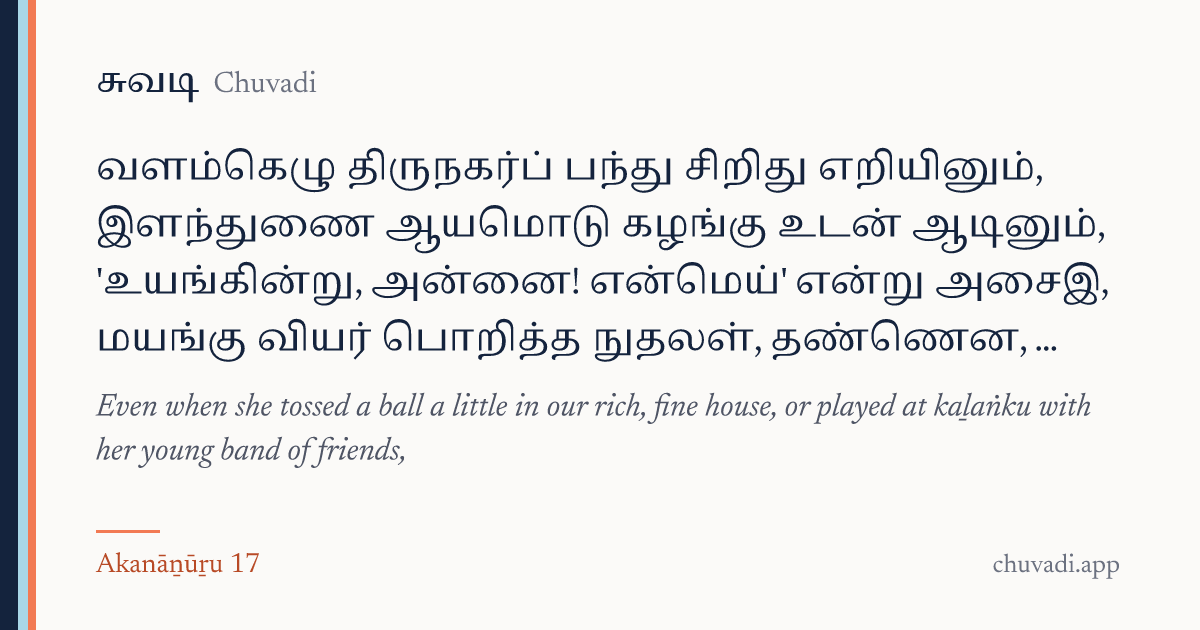
- Even when she tossed a ball a little in our rich, fine house,
- or played at kaḻaṅku with her young band of friends,
- 'Mother, my body is tired!' she would say, and resting,
- her brow beaded with clinging sweat, coolly
- she would lie in my embrace! But now,
- not thinking of her friends with their fine bangles, nor of us,
- slipping past the strict guard of her father of proud words,
- my girl, whose heart a stranger has won entirely,
- my little one, wise beyond her years — her small feet with their tinkling anklets,
- can they manage the walking? — where with a clamour,
- fearsome in their going, like a whole town on the move,
- crowding together in the hard passes of the waterless wasteland,
- the salt-merchants with crooked goads — their clear cries driving the oxen
- ring out and echo across the tall great hills;
- on the slopes thick with bamboo, twisted by the harsh sun,
- by the yā tree whose trunk is caked with mud where great elephants rubbed,
- where the paths of the cruel wasteland fork,
- the many blossoms of the tall-trunked ilavam, past their prime,
- like the lamps of an old town of ancient glory when its festival has begun,
- flames dripping oil, flickering low as the wind strikes them,
- look like the stars at the end of night —
- the wasteland cut across by great cloud-dark mountains!
What the poem says
A mother speaks of her daughter, who has run away with her lover. This edition gives no speaker, but the girl's calling her 'mother' (aṉṉai) when she came to be embraced makes it natural to take the speaker as the girl's own mother.
The poem moves between two pictures. First, the girl at home: so delicate that tossing a ball or playing kaḻaṅku (a game with seeds or pebbles) left her tired, and she would come with sweat on her brow to rest in her mother's arms. Then the girl now: she has forgotten her friends and family, slipped past her stern father's guard, and gone with a stranger who has won her heart completely. The mother calls her 'ciṟu mutukkuṟaivi', a little girl wise beyond her years, half in tenderness and half in grief. The question at the centre is simple and painful: can those small feet, which tired at a game of ball, walk that road?
The road follows. Salt-merchants (umaṇar) drive their ox-carts through the passes, their shouts echoing like a whole town on the move; the hills are scorched; the yā tree is smeared with mud where elephants have rubbed. The final image is the most memorable. The red ilavam flowers, falling apart past their prime, look like festival lamps in an old town guttering in the wind, and then like the last stars at dawn. The image of dying lights fits the mother's fear.
The text reads clearly; the sense of 'cilki' in line 20 is taken as the flames dwindling or scattering in the wind.