




அகநானூறு 18
பாடல் · The poem
Tap a word to see where else it occurs.
பொருள் · Meaning in TamilAI
நீரின் நிறம் மறையும்படி, காலம் வந்ததும் உதிர்ந்து விழுந்த மலர்கள் நெருங்கிக் கிடக்கும், வேகமாகப் பாயும் காட்டாற்றில், உயர்ந்த பாறைகளிடையே திரும்பிச் சுழலும் சுழிகளில் முதலைகள் உறங்குகின்றன. அந்த அச்சம் தரும் வெள்ளம் காட்டு யானையையும் அதன் மதம் அடங்கும்படி மோதி இழுத்துச் செல்கிறது. கொடிய கண்ணுடைய பன்றியைப் போல நடுங்காமல் துணிந்து, அச்சம் தரும் அந்த அரிய துறையைக் கடந்து, நள்ளிரவில் இங்கு யாரேனும் வருவார்களா, உயர்ந்த மலைநாடனே! ஒருநாள் உனக்குத் துன்பம் நேர்ந்தாலும், மறுநாள் என் தோழி உயிர் வாழ மாட்டாள். சிறிதும் ஆபத்தில்லாத வழிகளிலும் அடிக்கடி நடப்பவர்கள் நாளடைவில் வழுக்கி விழுவார்கள். அதனால் நாங்கள் அலைக்கழிக்கும் துயரத்தில் வருந்துகிறோம். எங்கள் தோட்டத்தில், தேனீக்கள் கூடு கட்டிய உச்சி உயர்ந்த நெடிய மலையின் அருகே, பழங்கள் தொங்கும் அடர்ந்த காந்தள் சோலையில், நீ பகலில் வந்தாலும் அவளோடு கூடலாம். அகன்ற மலையில் வளைந்த மூங்கிலின் கணுக்களுக்கு இடைப்பட்ட பகுதி போன்ற, என் அன்னை காத்து வளர்த்த பெரிய மென்மையான தோள்களை உடையவள் அவள்.
இது குறிஞ்சித் திணை; இரவில் வருவதை மறுத்துப் பகலில் வரச் சொல்லும் தோழி தலைவனிடம் கூறுவது. நீரின் நிறத்தை மறைக்கும் மலர்கள், வெளியே தெரியாமல் மறைந்திருக்கும் ஆபத்தைக் குறிப்பாகக் காட்டுகின்றன. 'யாய்' என்பது தோழியின் தாயைக் குறிப்பதாகக் கொள்ளப்பட்டது; அவளே தலைவியை வளர்த்த செவிலியாகவும் இருக்கலாம்.
ஆங்கிலம் · English translationAI
Translation
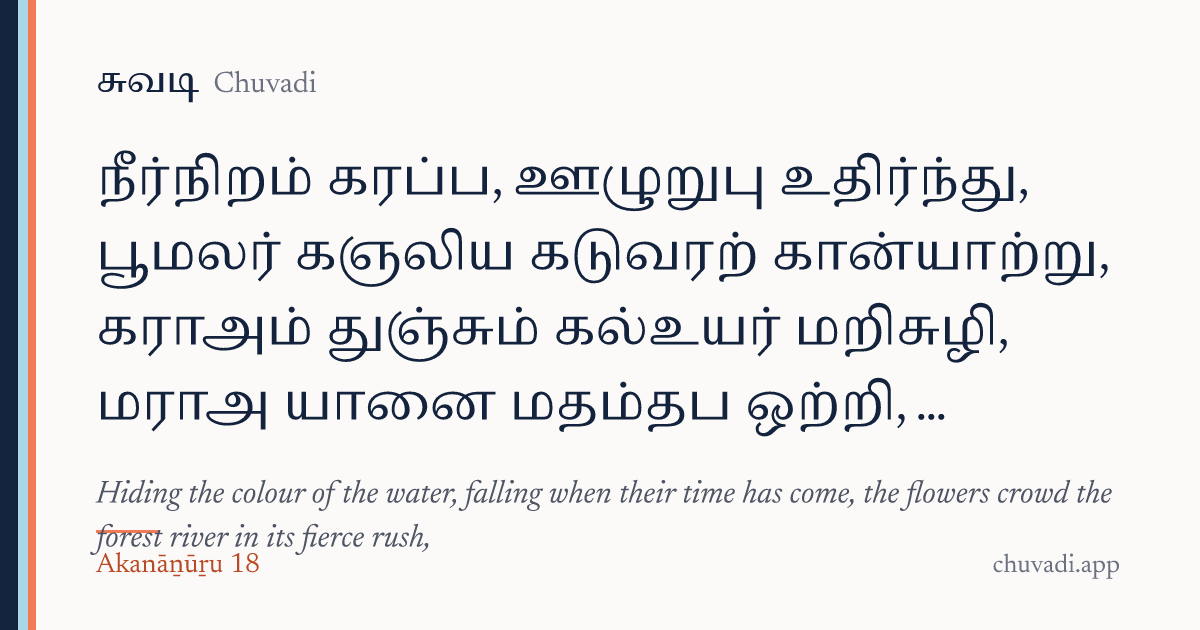
- Hiding the colour of the water, falling when their time has come,
- the flowers crowd the forest river in its fierce rush,
- where crocodiles sleep in the backward-swirling eddies among high rocks;
- the flood strikes a wild elephant until its rage is spent
- and drags it along — a terrifying torrent:
- unshaken, daring like a fierce-eyed boar,
- crossing back over that dreadful ford, at midnight
- should anyone come here? — lord of the lofty mountain! —
- if you should meet with harm on even a single day, on the next
- my friend would not live; even on
- paths with no danger at all, those who often travel them
- will slip before long; and so
- we suffer in restless anguish; in our garden
- by the tall, high-peaked mountain where bees have built their combs,
- in the shady kāntaḷ grove, dense and hung with fruit,
- if you come by day you can be with her — like the bamboo
- of the broad mountain, bending, between its joints, the shoulders my mother
- has watched over and raised, those broad soft shoulders.
What the poem says
The heroine's friend speaks to the hero, the lord of the hills, who has been coming at night to meet the heroine. She tries to stop the night visits and offers instead a daytime meeting place. This shift from the night tryst to the day tryst is a recognised turn in kuṟiñci poems.
Her reason is the river. At night he must cross a mountain stream in flood, its surface hidden by fallen flowers, where crocodiles lie in the eddies and the current can knock down a wild elephant and drag it off. He comes through it as boldly as a boar, but that is exactly the trouble. If any harm befell him even once, she says, the heroine would not live another day. Even the safest paths cause those who use them often to slip in the end. So the two girls live in constant fear.
The offer follows: in the family's own garden, in a grove of kāntaḷ under the bee-hung mountain, he may come by day and be with her. The flowers hiding the water at the start are a quiet picture of hidden danger, matching the friend's worry that frequent secret visits will sooner or later lead to disaster.
The last lines praise the heroine's shoulders, rounded like the joints of bending bamboo, which 'my mother' has guarded and raised. 'Yāy' here is most naturally the friend's mother, who may also be the heroine's foster-mother; that is the usual relationship of the friend to the heroine. The friend's mention of her protects the girl's honour while she arranges the meeting.