



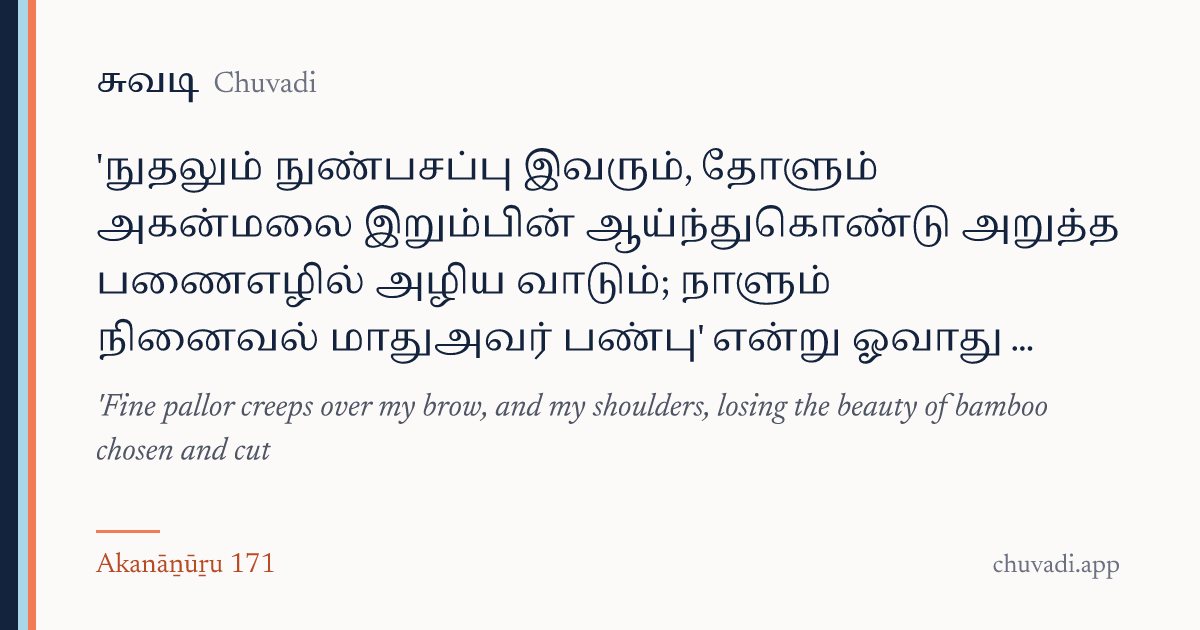

அகநானூறு 171
பாடல் · The poem
Tap a word to see where else it occurs.
பொருள் · Meaning in TamilAI
'என் நெற்றியில் நுண்ணிய பசலை படர்கிறது; அகன்ற மலையின் புதர்க்காட்டில் தேர்ந்தெடுத்து வெட்டிய மூங்கிலைப் போன்ற என் தோள்களும் அழகிழந்து வாடுகின்றன; நாள்தோறும் அவருடைய பண்பையே நினைக்கிறேன்' என்று ஓயாமல் வருந்தாதே, தோழி, நீ வாழ்க! அவர் உன்னோடு வந்து சேர்வார். உன் ஒளிரும் அழகிய வளையல்கள் கழலும்படி, பொருளை விரும்பிச் சென்ற அவர் கடந்த பாலை வழி எத்தகையது என்றால்: உச்சி வாடிய ஞெமை மரங்களிடையே வழியில் காத்திருக்கும் பெருமலைச் சிற்றூரின் மருண்ட பல மக்கள், கவர்ந்து கொள்வதில் வல்ல ஆண் விலங்கின் ஓசையைக் கேட்பதற்காக, திருத்திய அம்புகளைக் கையில் கொண்டு, வலிய வில்லைத் தோளில் வைத்து, இடந்தோறும் திரிகின்றனர். அதனால், கீழே கிடக்கும் தேனை உண்ணாமல், மேல் கிளைகளில் உள்ள பழம் போலச் சாறுடைய இனிய உள்துளை மலர்களை உண்பதற்காக, பெரிய கையுடைய கரடி கரிய கிளைகளையுடைய இருப்பை மரத்தில் ஏறுகிறது. அத்தகைய பாலையைக் கடந்தவர் அவர்!
இது பாலைத் திணை; பிரிவால் வருந்தும் தலைவியைத் தோழி தேற்றுகிறாள். கீழுள்ள ஆபத்தைத் தவிர்த்து மேலே இனிமை தேடும் கரடி, இடர்களைக் கடந்து திரும்பி வரும் தலைவனைக் குறிப்பாகக் காட்டலாம். 'கோள்வல் ஏற்றை' என்பது கரடியா புலியா என்பதும், 'மருள்' என்ற சொல்லின் பொருளும் உறுதியாகத் தெரியவில்லை.
ஆங்கிலம் · English translationAI
Translation
- 'Fine pallor creeps over my brow, and my shoulders,
- losing the beauty of bamboo chosen and cut
- from thickets on the broad mountain, wither; each day
- I think of his ways' — do not, so, without end,
- grieve — long may you live, friend! He will be with you again,
- he who, though your bright, finely shaped bangles slipped, went seeking wealth:
- among the ñemai trees with withered crowns, posted along the path,
- the many wary folk of the little village on the great mountain,
- to catch the sound of the male so skilled at seizing,
- holding arrows they have set straight, their strong bows
- laid on their shoulders, move about from place to place;
- so, not eating the honey that lies below, to feed on
- the sweet hollow flowers, juicy as fruit, on the upper branches,
- the big-pawed bear climbs the black-limbed iruppai —
- he has crossed the wilderness where it does!
What the poem says
The friend comforts the heroine, who keeps repeating her complaint: pallor spreads over my brow, my shoulders, once lovely as mountain bamboo, are wasting, and every day I think of him. Stop grieving like this, says the friend; he will come back to you.
Most of the poem describes the land he has crossed. In a mountain village the people sit in wait by the path among withered ñemai trees, listening for the sound of 'the male strong at seizing', with arrows trimmed and bows on their shoulders, and move from place to place. Because of them the bear does not dare take the honey that lies low down, and instead climbs the black-branched iruppai (mahua) tree to eat its sweet, fleshy flowers high on the branches.
The bear's change of habit can be read as a hint: just as the bear, kept from danger below, finds sweetness high up, the hero will find his way through the dangers and return. The friend's reassurance is that he is out there, in a hard country, but working toward their reunion.
The 'male strong at seizing' (kōḷval ēṟṟai) in line 9 is not named. It is read here as the bear itself, which the villagers hunt; it could also be a tiger. Marulpal mākkaḷ in line 8 is taken as 'the many wary people'; the exact sense of marul is uncertain.