



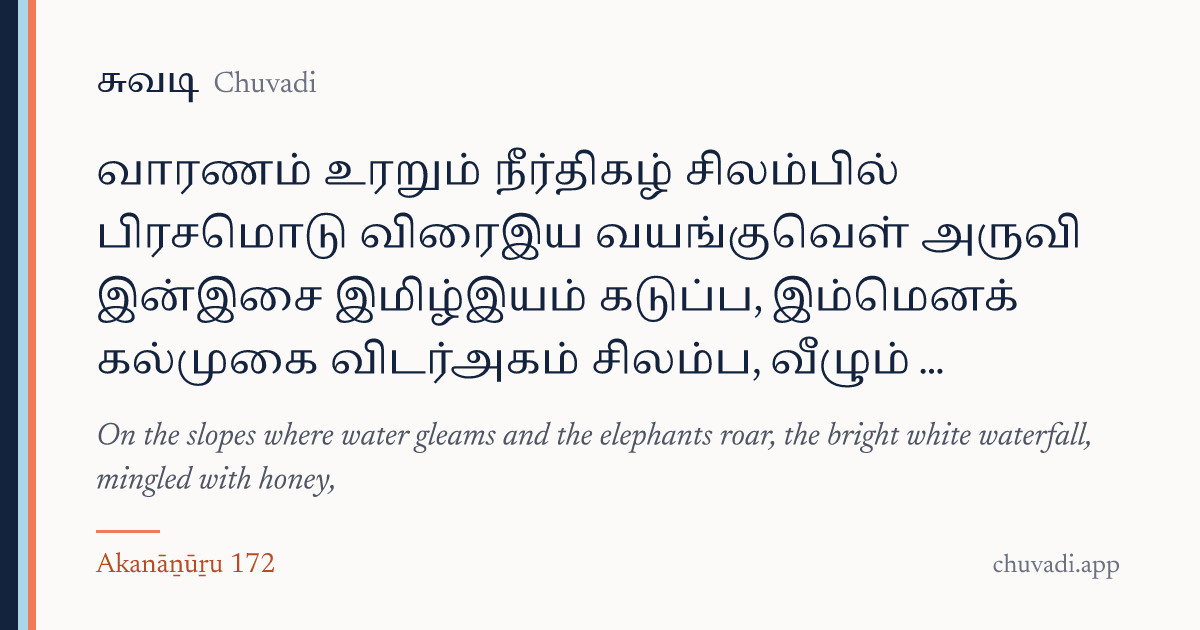

அகநானூறு 172
பாடல் · The poem
Tap a word to see where else it occurs.
பொருள் · Meaning in TamilAI
யானைகள் முழங்கும், நீர் ஒளிரும் மலைச்சாரலில், தேனோடு கலந்த ஒளிரும் வெண்மையான அருவி, இனிய இசையை ஒலிக்கும் இசைக்கருவிகளைப் போல 'இம்' என்ற ஒலியோடு, பாறைக் குகைகளும் பிளவுகளும் எதிரொலிக்க, மூங்கில்களின் உச்சிகள் நெருங்கிய உயர்ந்த மலைச்சாரலில் வீழ்கிறது. அங்கே, இரும்பை அடித்து வடித்தது போன்ற கரிய கையுடைய வேடன், விரிந்த மலர்களையுடைய மரா மரத்தோடு ஒட்டி நின்று, அம்பைத் தேர்ந்தெடுத்து, வரிகள் உள்ள நெற்றியுடைய யானையின் துளைக்க அரிய உடலில் அழுத்தி எய்தி, அதன் போர்வலிமையுடைய வெண்தந்தத்தை எடுத்துத் தன் புல்வேய்ந்த குடிசையின் அருகே காயும்படி நட்டு, முற்றத்தில் உயர்ந்து வளர்ந்த முழவு போன்ற பலாப்பழத்திலிருந்து பிழிந்த கள்ளால் மகிழ்ந்து, சுற்றத்தோடு ஆரவாரித்து, சந்தனக் கட்டையின் நெருப்பில் இறைச்சி சமைக்கும் மலைநாட்டவனே! நீ அன்பில்லாதவனாக மாறுவாய் என்று நான் அறியவில்லை. அதை அறிந்திருந்தால், அணிகலனும் மையுண்ட கண்ணும் தேர்ந்த இதழ் போன்ற இமையும் உடைய இந்த இளம்பெண்ணின் மணி போன்ற சிறந்த அழகு சிதையும்படி, பொன்னிறப் பசலை படர்ந்திருக்காதே!
இது குறிஞ்சித் திணை; தலைவியைப் புறக்கணிக்கும் தலைவனைத் தோழி கடிந்து கூறுவது. யானையைக் கொன்று தந்தத்தை எடுத்துச் சுற்றத்தோடு விருந்துண்டு களிக்கும் வேடன், தலைவியைப் பெற்ற பின் அவளை மறந்து களிக்கும் தலைவனைக் குறிப்பாகக் காட்டலாம். முதல் அடியிலுள்ள 'வாரணம்' யானையையோ காட்டுக்கோழியையோ குறிக்கலாம்.
ஆங்கிலம் · English translationAI
Translation
- On the slopes where water gleams and the elephants roar,
- the bright white waterfall, mingled with honey,
- like instruments that sound a sweet tune, with a hum,
- making the rock caves and clefts echo, comes down
- on the high mountain's flank where bamboo crowns crowd close;
- there the hunter, his hands black as forged iron,
- pressed against a marām tree in full flower, choosing his arrow,
- drove it into the hard hide of a stripe-browed elephant,
- took the white tusk of its warring strength, and by his
- grass-thatched hut set it upright to dry;
- with the toddy pressed from the drum-like jackfruit grown tall in his yard
- glad and merry, revelling with his kin,
- he cooks meat over a brand of sandalwood: lord of that
- hill country! That you would turn loveless
- I did not know; had I known it —
- then the young girl with jewels, kohl-dark eyes and lids like chosen petals,
- her gem-like, perfect beauty spoiled,
- would not be spread with pallor the colour of gold!
What the poem says
The friend speaks to the hero, reproaching him for neglecting the heroine. Had I known you could be without love, she says, I would never have let things go so far, and this girl would not now be covered with the golden pallor of longing.
The long description of his hill country is not idle. A waterfall mixed with honey falls with the sound of music through the caves; a hunter, hands black as iron, shoots an elephant from behind a marām tree, plants its tusk to dry by his hut, drinks jackfruit toddy, and feasts with his kin over a sandalwood fire. This is the hero's land of plenty and celebration. The hunter who kills, takes the prize and then feasts carelessly with others may be read as an iṟaicci on the hero, who has won the girl and now enjoys himself without thought for her.
The final lines turn sharply. The friend admits her own part: she trusted him and brought the lovers together. The pallor (pacalai), compared to gold, spreads over the girl's gem-like beauty and spoils it. The particle maṉṉē at the end gives the sense of 'it would not have happened, but it has'.
Vāraṇam in line 1 is taken as elephants; it can also mean the jungle fowl, and the verb 'roar' does not settle it with certainty.