




அகநானூறு 173
பாடல் · The poem
Tap a word to see where else it occurs.
பொருள் · Meaning in TamilAI
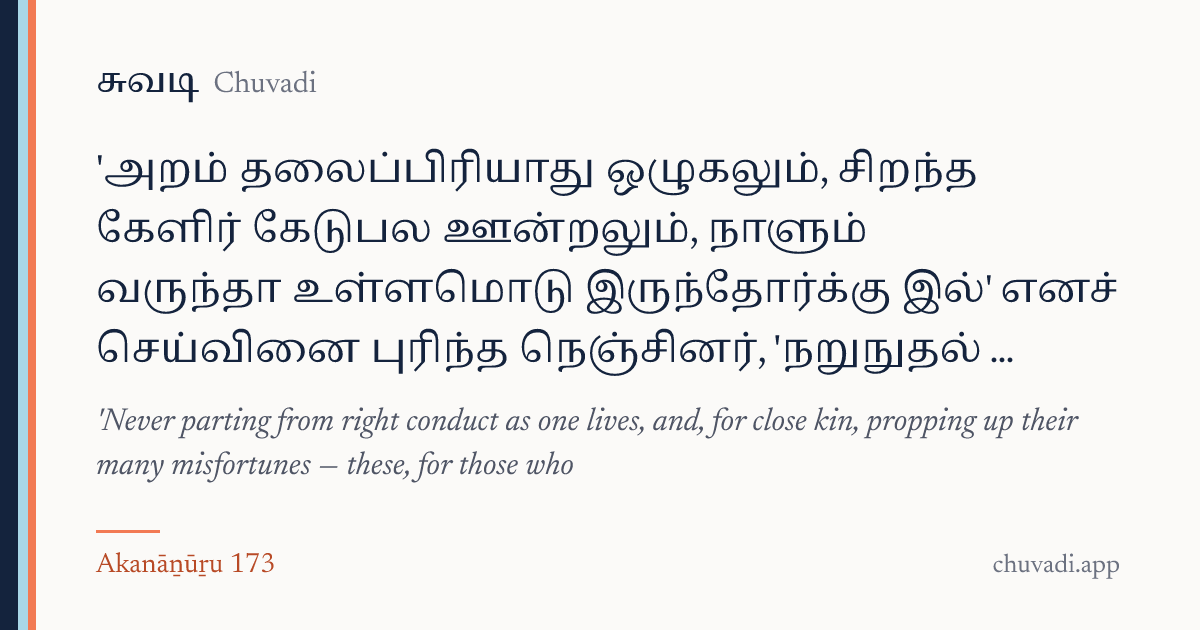
'அறத்திலிருந்து விலகாமல் வாழ்வதும், சிறந்த உறவினரின் பல துன்பங்களைத் தாங்கித் தூக்கி நிறுத்துவதும், நாள்தோறும் உழைக்காத மனத்தோடு வீட்டில் இருப்பவர்களுக்கு இயலாது' என்று எண்ணி, செய்ய வேண்டிய வேலையில் உறுதியான நெஞ்சோடு, 'நறுமணமுள்ள நெற்றியும் கரிய எண்ணெய் பூசிய கூந்தலும் உடையவளே! அரிய இந்தத் துயரத்தைச் சில நாள் பொறுத்துக்கொள்' என்று சொல்லி, உன் சிறந்த ஒளிரும் வளையல்களை அவர் திருத்தினார் என்றால், அவர் கட்டாயம் வருவார், தோழி, நீ வாழ்க! பல புரிகளாலான நீண்ட கயிற்றால் வண்டியை வலிய கழுத்தில் பூட்டிய எருதுகள் துறையிலிருந்து ஏறும்போது, உமணர் கூவும் ஒலிக்கு அஞ்சி, அழகிய பெண் மான் தன் கூட்டத்திலிருந்து விலகி ஓடுகிறது. காட்டின் அழகு அழியும்படி கோடைக்காற்று நின்று தின்றதால் அழகிய மூங்கில் காய்ந்து, நீண்ட மூங்கிலின் கணுக்கள் பிளந்து, கழுவாத முத்துக்களைக் கழற்சிக்காய் போலத் தோன்றும்படி பழைய குழிகளில் சிதறிப் பரப்புகின்றன. இனிய களிப்புத் தரும் கள்ளும் சிறந்த தேரும் உடைய நன்னனின், வானைத் தொடும் நெடிய மலைச்சாரலில் பொன் விளையும் பக்கமுடைய மலையைக் கடந்து சென்றவர் அவர்.
இது பாலைத் திணை; பொருள் தேடிச் சென்ற தலைவன் பிரியும்போது சொன்னதை நினைவூட்டித் தோழி தலைவியைத் தேற்றுகிறாள். நன்னனின் மலை வழியின் கடுமையைக் காட்டப் பெயரளவில் வருகிறது. பதின்மூன்றாம் அடியில் அச்சான 'அம்புணை' என்பதை 'அம்பணை' (அழகிய மூங்கில்) என்று கொண்டோம்.
ஆங்கிலம் · English translationAI
Translation
- 'Never parting from right conduct as one lives, and, for close
- kin, propping up their many misfortunes — these, for those who
- stay at home with hearts that never toil, are not to be had' — so,
- with his heart set on the work he had chosen, 'You of the fragrant brow,
- with dark, oiled hair! The labour of this hard longing
- you must bear for a few days,' he said, and if your
- fine, bright bangles he set straight,
- he will come — long may you live, friend! Where, with many-stranded
- long ropes, the carts are yoked to the strong necks
- of bullocks climbing from the ford, and, frightened by the salt-traders' calls,
- the lovely doe of the uḻai deer flees from her herd;
- where the summer wind has lingered and fed, so the forest's beauty is ruined,
- and the lovely bamboo has died, and the tall reeds
- split at their nodes and fling out unwashed pearls
- that look like playing pebbles, spreading over old pits —
- Naṉṉaṉ's, of the sweet, heady toddy and well-made chariots,
- on the slope of the tall range that strikes the sky,
- the mountain with gold in its flanks: he has crossed it.
What the poem says
The friend comforts the heroine by recalling what the hero said before he left. He had argued that a man who sits at home without effort can neither live by aṟam (right conduct) nor help his kin in their troubles, so he must go and earn. To her he said, 'Bear this hard longing for a few days,' and he set her bangles straight on her wrist. A man who parted like that, the friend says, will surely come back.
The second half describes the mountain he has crossed. Salt merchants' carts climb from a ford, the drivers' shouts scattering the deer; the hot summer wind has withered the forest, the bamboo has died, and its split nodes have scattered 'unwashed pearls' that look like the pebbles girls play with (kaḻaṅku). Pearls from bamboo are an old poetic idea and the poem uses it without comment.
The mountain belongs to Naṉṉaṉ, praised here for his toddy and chariots; its high slopes are said to hold gold. The poem names him only to identify the range, and nothing more is said about him here.
The printed ampuṇai in line 13 makes little sense; it is read as am paṇai, 'lovely bamboo', which fits the following line. Some of the syntax of lines 8–15 is loose, but the picture of a hard, dry mountain road is clear.