



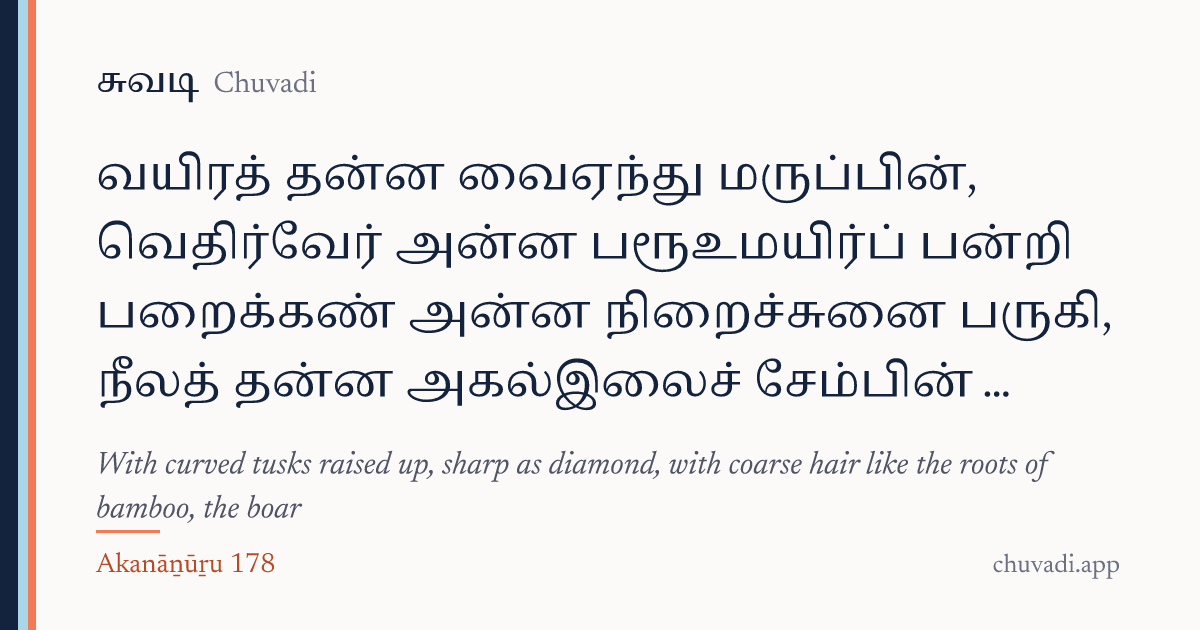

அகநானூறு 178
பாடல் · The poem
Tap a word to see where else it occurs.
பொருள் · Meaning in TamilAI
வைரம் போன்ற கூர்மையான வளைந்த தந்தங்களும், மூங்கில் வேர் போன்ற தடித்த மயிரும் உடைய பன்றி, பறையின் முகம் போன்ற நிறைந்த சுனையில் நீர் பருகி, நீலமணி போன்ற அகன்ற இலைகளையுடைய சேம்பின் உருண்டை போன்ற கொழுத்த கிழங்கைத் தின்று, பெண்யானை படுத்திருப்பது போன்ற பாறையின் மேல் முறையாக இறங்குகிறது. ஆறு கூடியது போன்ற ஊற்றுநீருடைய சதுப்பு நிலத்தில், பசிய புதர்களின் அடர்ந்த கிளைகளில் குருகுகள் அமர்ந்திருப்பது போல, இறுகிய மொட்டுகள் அவிழ்ந்த வெண்மையான கூதாள மலர்களின் அசையும் கொத்துகளைத் தீண்டியதால் தாது உதிர, பொன்னை உரைத்த கட்டளைக்கல் போலக் காண அழகாக, கிளைத்து நெருங்கிய சிறுதினையின் விளைந்த கதிர்களை மேய்ந்து, கண் இனிதாக உறங்குகிறது. அத்தகைய நல்ல மலைநாட்டவனோடு உன் மனம் அறிந்து கூடிய நீயும், உன் தோள்களின் மூங்கில் அழகு அழியாமல், துணையோடு சேர்ந்து, எப்போதும் குறைவற்ற உலகில் வாழ்வாயாக, தோழி! 'பகல் இரவு என்று இல்லாமல் ஆரவாரத்தோடு கீழைக்காற்றின் மேகம் மழை பொழிந்த விடியற்காலையில், குளிர்ந்த பனியுடைய முன்பனிக் காலம் தனித்திருப்பவர்களுக்குத் தாங்க அரியது' என்று அவன் கனவிலும் பிரிவை அறியமாட்டான். அதற்கு மேலும், முதன்முதலில் உன்னைக் கண்ட நாளைவிடப் பின்பு தன் இயல்பால் உன்னை மிகவும் அன்போடு பேணுகிறான்.
இது குறிஞ்சித் திணை; தலைவனோடு கூடிய தலைவியைத் தோழி வாழ்த்தி, அவனுடைய அன்பின் உறுதியைப் புகழ்கிறாள். உண்டு உறங்கும் பன்றியின் நிறைவான வாழ்க்கை, இருவரின் இன்ப வாழ்வுக்கு ஏற்ற குறிப்பாக அமைகிறது. மேற்கோளில் உள்ள சொற்கள் தலைவனுடையவையா தோழியின் பொதுக்கூற்றா என்பது உறுதியாகத் தெரியவில்லை.
ஆங்கிலம் · English translationAI
Translation
- With curved tusks raised up, sharp as diamond,
- with coarse hair like the roots of bamboo, the boar
- drinks from a brimming spring round as the face of a drum,
- gorges on the rich tubers of the cēmpu with broad leaves dark as sapphire,
- tubers like lumps of food,
- goes down by turns over a rock that looks like a cow-elephant lying down;
- by a marsh of seeping water that looks like a river's meeting,
- like herons perched on the dense branches of green bushes,
- the white kūtāḷam has loosened its firm buds;
- he brushes its swaying clusters of blossom, and as the pollen falls,
- lovely to see like a touchstone where gold is rubbed,
- he grazes on the ripening heads of small millet crowded with shoots
- and sleeps with eyes sweetly closed: with the lord of that good mountain land
- you have come together, knowing your own mind; may you, your shoulders'
- bamboo-like beauty never fading, joined with your partner, always
- live in a world without loss — friend!
- 'Whether by day or by night, when noisily
- the east-wind clouds have poured their rain, the dawn
- of the cool, dewy cold season is hard on those who are alone' — so
- even in dreams he does not know parting; and more than that,
- than on the day he first saw you,
- he cherishes you far more now, by his own nature.
What the poem says
The friend speaks to the heroine, rejoicing in her union with the hero and praising his steadiness. The lines read like a blessing: may your beauty never fade, may you live together always in a world without loss.
The long opening is a single study of a boar in the hills. Its tusks are sharp as diamond and its bristles like bamboo roots; it drinks from a round spring, digs up the fat tubers of the cēmpu (taro), goes down over rocks shaped like a lying elephant, brushes against the white kūtāḷam flowers, which crowd the bushes like perched herons, and is dusted with their pollen so that it looks like a touchstone streaked with gold. Then it eats ripe millet and sleeps contentedly. The boar's full, easy life is a fitting picture of the hero's land and perhaps of the settled happiness the friend wishes the couple.
The hero's character is then given in his own reported words: 'the cold season's dawn after rain is hard for those who are alone.' Because he knows that, he never even dreams of leaving her, and he cares for her more now than on the day they first met.
The phrase uṇarntaṉai puṇarnta in line 14 is read as 'you, who knew your mind and joined him', suggesting a love freely chosen. The quoted words of lines 17–19 may also be the friend's own general saying rather than the hero's; either way they explain why he will not part from her.