



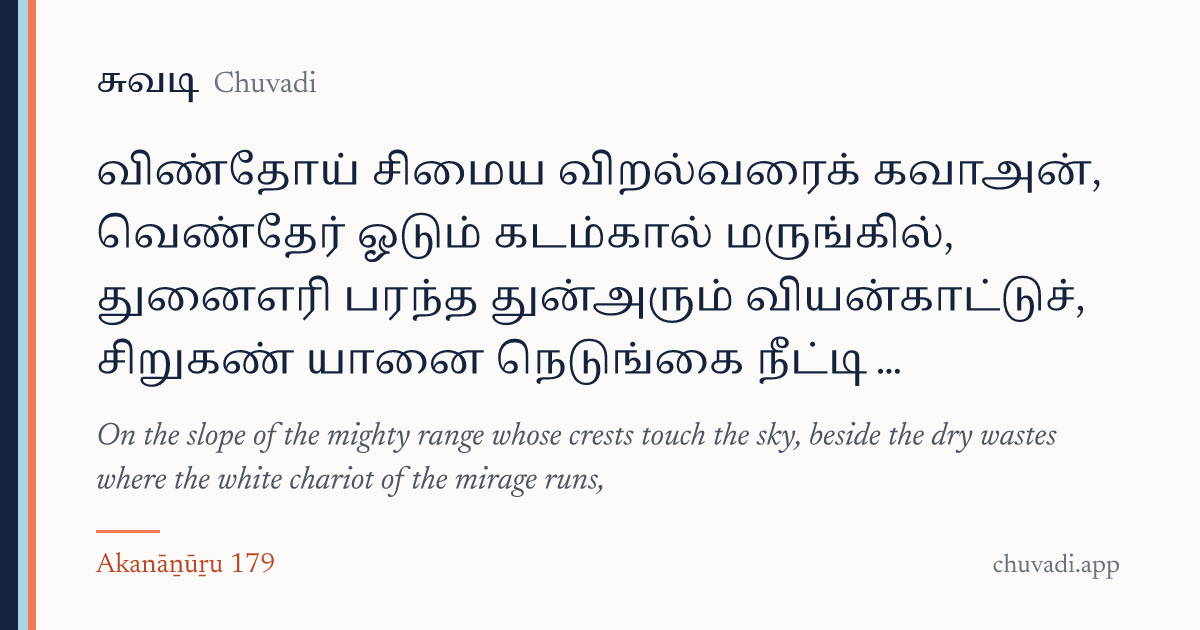

அகநானூறு 179
பாடல் · The poem
Tap a word to see where else it occurs.
பொருள் · Meaning in TamilAI
வானைத் தொடும் சிகரங்களையுடைய வலிய மலையின் சாரலில், கானல்நீர் ஆகிய வெண்தேர் ஓடும் வறண்ட நிலத்தின் பக்கத்தில், விரைந்த தீ பரவிய, அணுகுவதற்கு அரிய அகன்ற காட்டில், சிறிய கண்களையுடைய யானை தன் நீண்ட கையை நீட்டி, வானத்தை நோக்கி வாயைத் திறந்தும் மிகுந்த நீர் கிடைக்காமல், காட்டை வெறுத்துக் கடந்து செல்லும் அகன்ற பரப்பில், விடுபடும் சிவந்த அம்பும் வளைந்த வில்லும் உடைய ஆடவரின் சிறந்த நிலையைப் பொறித்த கற்கள் நிற்கும் வழிகளும், கள்வர் தாக்கியதால் எழும் கூக்குரலைப் போக்குவார் யாரும் இல்லாத இடங்களும் உள்ள பாலை வழியில் செல்ல நீ விரும்பினால், இனிய புன்னகையும், மயிலிறகின் அடிக்குருத்துப் போலத் திரண்ட கூரிய பற்களும் சிவந்த வாயும், புதிதாக மலர்ந்த குவளை மலர் போன்ற மையுண்ட கண்களும், நிலவு போன்ற ஒளிவீசும் நெற்றியும் உடைய இவள் தனிமையில் வருந்தும்படி, ஊரை விட்டு வேறிடத்தில் தங்கியிருப்பது உனக்கு இயலுமோ?
இது பாலைத் திணை; பொருள் தேடிப் பிரிய நினைக்கும் தலைவனிடம் தோழி கூறுவது. வழியின் கொடுமையையும் தலைவியின் அழகையும் எதிர்நிறுத்தி அவனைத் தடுக்க முயல்கிறாள். 'அரம்பு' என்ற சொல்லின் சரியான பொருள் உறுதியாகத் தெரியவில்லை.
ஆங்கிலம் · English translationAI
Translation
- On the slope of the mighty range whose crests touch the sky,
- beside the dry wastes where the white chariot of the mirage runs,
- in the vast, hard-to-reach forest where swift fire has spread,
- the small-eyed elephant, stretching out its long trunk,
- opening its mouth to the sky, yet getting no plenteous water,
- turns sulking from the forest and moves on; across that wide expanse,
- where the stones that bear, carved, the fine standing of men
- with curved bows and red loosed arrows line the path,
- where none can be found to still the cry of those set on by robbers —
- if you wish to go through that wilderness — this girl of sweet smile,
- with red lips and pointed teeth set close like quill-tips,
- with kohl-dark eyes like fresh kuvaḷai flowers,
- with shining brow lovely as the moon — leaving her lonely,
- can you bear to quit your home and live away?
What the poem says
The friend speaks to the hero, who is thinking of leaving to earn wealth. She describes the road in the strongest terms and then turns to the girl at her side: can you bear to leave this one alone?
The wilderness is the classic pālai of thirst and death. On the high mountain slope the mirage, 'the white chariot', runs across dry land, and fire sweeps through the forest. An elephant raises its trunk and opens its mouth to the sky for rain that does not come, and turns away from the forest in disgust. Along the path stand memorial stones carved with the names and deeds of fallen bowmen, and travellers attacked by robbers cry out with no one to help them.
The portrait of the heroine follows in a few strokes: her sweet smile, red lips and close, pointed teeth white as quill-tips (muruntu), eyes like fresh kuvaḷai flowers, and a brow shining like the moon. The demonstrative 'this' (im) shows the friend speaking in her presence, or pointing to her.
The word arampu in line 9 is taken as robbery or violence; its precise sense is not certain. The memorial stones (naṭukal) are not named as such in the poem, which speaks of 'stones engraved with their good standing'.