




அகநானூறு 188
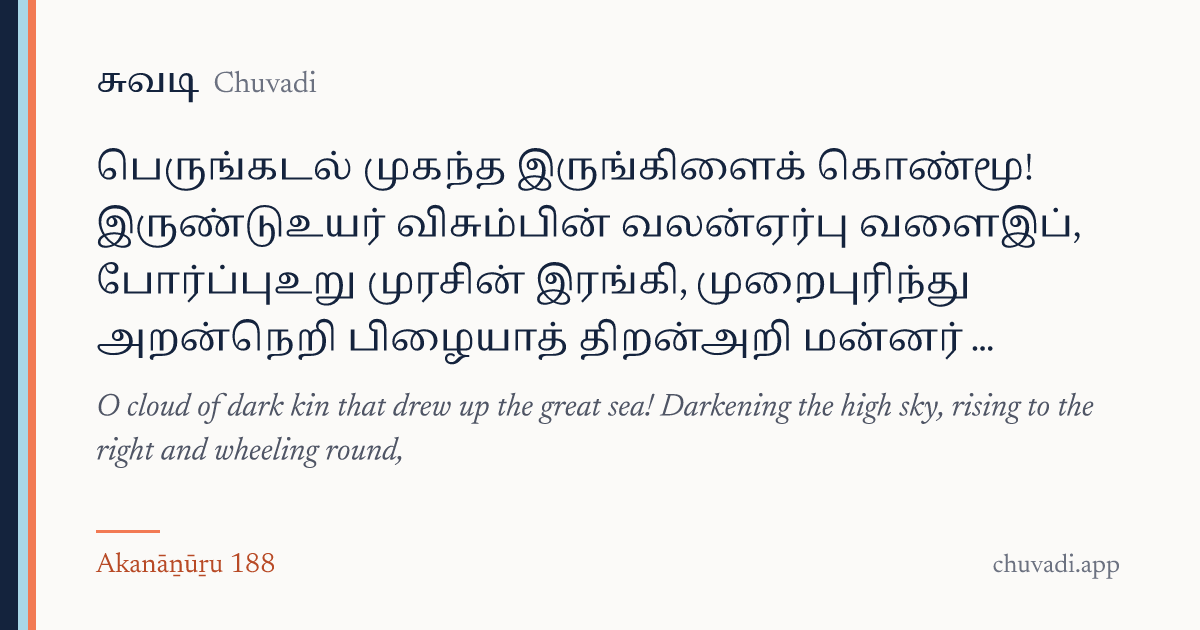
பாடல் · The poem
Tap a word to see where else it occurs.
பொருள் · Meaning in TamilAI
பெருங்கடலை முகந்த கரிய பெருங்கூட்டமான மேகமே! உயர்ந்த வானத்தை இருளச் செய்து, வலப்பக்கமாக எழுந்து சூழ்ந்து, தோல் போர்த்த முரசு போல முழங்கி, முறைமையைப் பின்பற்றி அறநெறியிலிருந்து தவறாத, திறம் அறிந்த மன்னர்களை அரிய போர்க்களத்தில் எதிர்கொண்ட பெருஞ்செயல் வீரர்கள் உருவி வீசும் வாள்களைப் போல, அடர்ந்து ஒளிரும் மின்னல்களைக் கொண்ட தொகுதியாகி, நாள்தோறும் வீணாகவா நீ இந்த ஆரவாரம் செய்கிறாய்? பொன் போல மலர்ந்த வேங்கையின் நிறைந்த பூச்சரங்களைச் சூடி, பொலிவுள்ள தோழியர் கூட்டத்தோடு காண அழகாக நடந்து, கவணை இழுத்தும், தட்டையைத் தட்டிப் பறவைகளை ஓட்டியும், தீப் போன்ற செயலையின் அழகிய தழையை அசைத்தும் குறமகள் காவல் காக்கும் தினைப்புனத்தையும் நீ காப்பாயோ? மழையே, நீ வாழ்க!
இது குறிஞ்சித் திணை; பெரும்பாலும் தோழி மழைமேகத்தை நோக்கிக் கூறுவது. தினைப்புனக் காவல் நீடித்தால் பகலில் தலைவன் தலைவியைச் சந்திப்பது தொடரும் என்ற எண்ணம் இதில் உள்ளது. இறுதி அடியிலுள்ள 'புறமும் தருதியோ' என்பதன் பொருள் உறுதியாகத் தெரியவில்லை; அது 'காப்பாயோ' என்றும் 'முடித்துவிடுவாயோ' என்றும் கொள்ள இடமுண்டு.
ஆங்கிலம் · English translationAI
Translation
- O cloud of dark kin that drew up the great sea!
- Darkening the high sky, rising to the right and wheeling round,
- rumbling like a drum with its leather cover, — kings who, following order,
- never stray from the path of right, who know true worth:
- facing them in hard battle, the warriors of great deeds
- draw and fling their swords, and like those, gleaming thick,
- you have become a mass full of lightning; day after day
- do you make all this din for nothing? Like gold
- the vēṅkai has flowered; tucking its full strings in her hair,
- with her splendid companions, moving so lovely to see,
- drawing back the sling, beating the clapper to scare the birds,
- waving the lovely leaves of the aśoka, bright as fire,
- the hill-girl guards the millet:
- will you look after that field too? Long may you live, rain!
What the poem says
The speaker addresses a rain cloud. It has drunk from the sea, darkened the sky, and rumbles and flashes like the swords of warriors in a just king's battle; yet, she complains, it makes its noise every day for nothing. The speaker is most likely the friend, though it could be the heroine.
The closing request turns on the millet field. The hill-girl, crowned with gold vēṅkai flowers and surrounded by her friends, guards the ripening millet against parrots and other birds with a sling, a clapper (taṭṭai) and waved branches of aśoka (ceyalai). In kuṟiñci this field-guarding is the time when the lovers can meet by day. The vēṅkai's flowering also traditionally marks the season of harvest, after which the girl will be kept at home.
So the plea to the cloud carries a double hope. If the rain keeps the millet growing, the guarding goes on, and the lovers' meetings continue; at the same time, the friend may be urging that time is short and the hero must act. The poem leaves the hero unnamed and absent.
Puṟamum tarutiyō in line 14 is not certain. It is read here as 'will you also protect' the field; it may instead mean 'will you also bring the field to its end', that is, ripen it for harvest, which would make the line a complaint rather than a request.