




அகநானூறு 189
பாடல் · The poem
Tap a word to see where else it occurs.
பொருள் · Meaning in TamilAI
பசிய பழங்களையுடைய பலாக்காடு வெந்து, வானத்தின் முகம் அழிய, வேனில் நீடித்து, குளங்களின் ஊற்றுகள் அற்றுப்போன, பாறைகள் உயர்ந்த நிலப்பகுதியில், நறுமண மூச்சுடைய இளம் பெண்யானையைத் தழுவிக்கொண்டு, வேறு நாட்டு விழாவுக்குச் செல்லும் வீரர்கள் முழவை உயர்த்தித் தூக்கிச் செல்வது போல, ஆண்யானை வழி அமைத்த பாறைகள் உயர்ந்த மலைச்சாரலாகிய கொடிய மலைப் பாலை வழியைச் சுட்டிக்காட்ட, மெல்ல, வயல் மலர்களால் ஆன அழகிய மாலை தொடைவரை தொங்க, தேமல் படர்ந்த அல்குலையுடைய இளமகள் அவனோடு சென்று பிறனுக்கு உரியவள் ஆனாள். அந்தக் கணம் முதல், எப்போதும் ஏக்கம் நிறைந்த துயரத்தோடு எல்லாத் திசைகளிலும் தேடி வீட்டில் மயங்கி இருக்கும் என்னைவிடவும், கள்ளால் மகிழும் நல்லவர்களின் இனிய இசைக்கருவிகள் ஒருசேர ஒலித்துத் தேர் ஓடும் தெருக்களில் நிறைந்து ததும்பும் இந்த ஊரே, தான் விரும்பிய செல்வத்தை இழந்துவிட்டது!
இது பாலைத் திணை; உடன்போக்கில் மகள் சென்றபின் செவிலித்தாய் கூறுவதாகக் கொள்ளலாம். துணையோடு செல்லும் யானை, தலைவனோடு செல்லும் தலைவியைக் குறிக்கிறது. தன் இழப்பைவிட ஊரின் இழப்பைப் பெரிதாகச் சொல்வதால் அவள் சிறப்பு விளங்குகிறது. ஆறு, ஏழாம் அடிகளில் உள்ள மேற்கோள் குறிகளின் நோக்கம் தெளிவில்லை.
ஆங்கிலம் · English translationAI
Translation
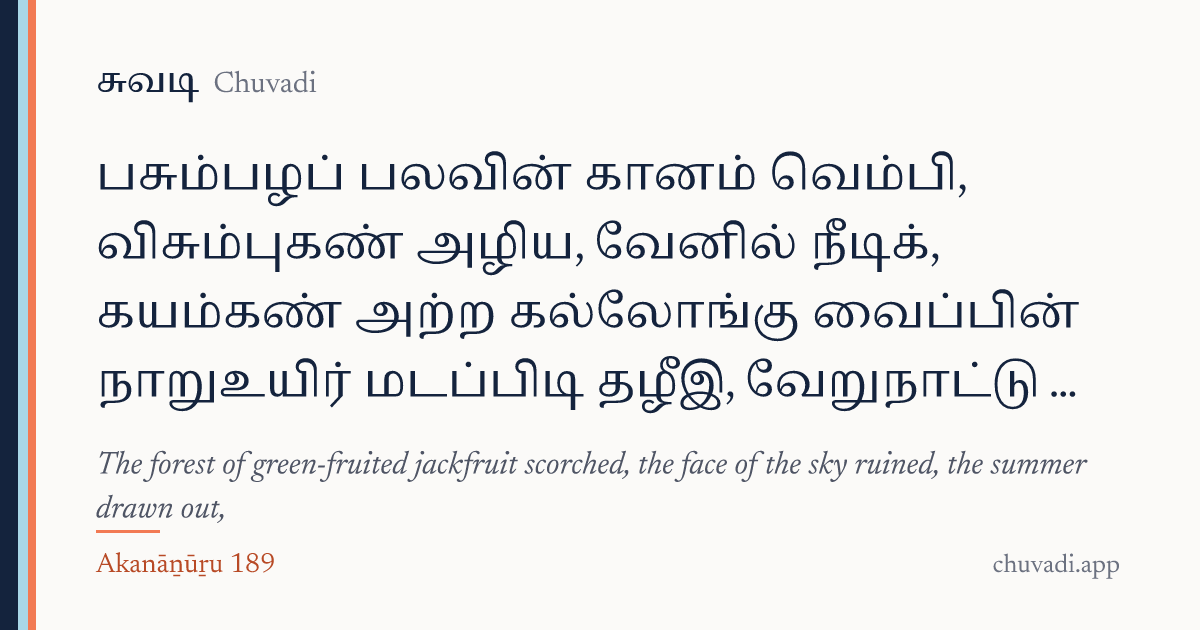
- The forest of green-fruited jackfruit scorched,
- the face of the sky ruined, the summer drawn out,
- in a rock-high region where the pools have lost their springs,
- embracing his young mate of fragrant breath, as warriors bound
- for a festival in another land lift high their drums,
- the bull elephant beat paths on the stone-high slope;
- pointing to that burning mountain waste, softly,
- with a lovely garland of field flowers hanging down to her thighs,
- the young girl with the spotted waist went with him
- and became another's; from that moment, always
- searching every direction with a grief full of longing,
- more even than I, who sat bewildered in the house, the town where, joyous with toddy,
- the sweet instruments of good men crowd together
- and overflow in the streets where chariots run —
- the town has lost the treasure it loved.
What the poem says
A girl has eloped with her lover, and the speaker, her mother or more probably her foster-mother (cevili), tells of the loss. The tiṇai is pālai: the separation is between the daughter and her home.
The first lines give the road the girl took. In the long summer the jackfruit forest is scorched, the pools are dry, and a bull elephant, holding his mate close, has beaten a path over the stony slope. The elephant's march is compared to warriors carrying their drums high on the way to a festival in another country. The pair of elephants, moving together through hard country, matches the young couple; the festival image hints that for her this is a joyful departure, whatever it means to those left behind.
Then the departure itself. Someone pointed out the burning mountain way, and softly the girl, with a garland of field flowers hanging to her thighs, went with him and 'became another's'. Since that moment the speaker has sat at home bewildered, searching every direction in grief.
Yet she says the town has suffered more than she has. A lively town of toddy, music and chariot streets has lost the treasure it loved. Praising the girl through the town's loss is a gentle way of measuring her worth. The edition puts lines 6–7 partly in quotation marks, perhaps marking the hero's words in pointing out the way; the marks are not reproduced.