



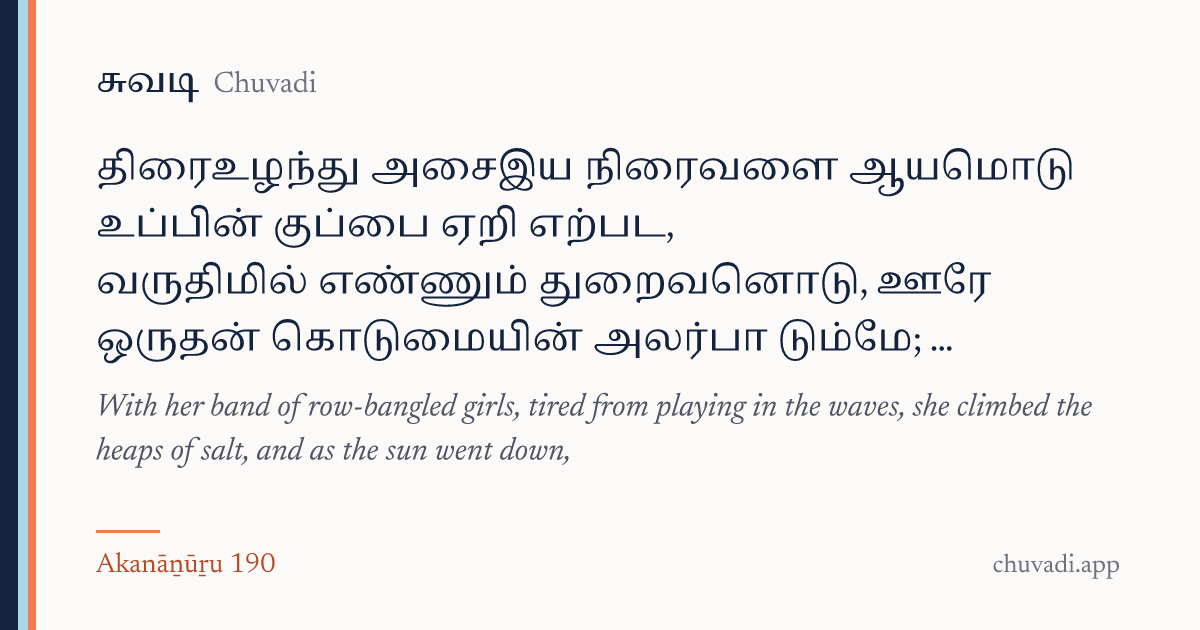

அகநானூறு 190
பாடல் · The poem
Tap a word to see where else it occurs.
பொருள் · Meaning in TamilAI
அலையில் விளையாடிக் களைத்த, வரிசையான வளையல்களை அணிந்த தோழியர் கூட்டத்தோடு, உப்புக் குவியலின் மேல் ஏறி, கதிரவன் மறையும் வேளையில், வரும் படகுகளை எண்ணிக்கொண்டிருந்த துறைவனோடு சேர்த்து, இந்த ஊர் தன் கொடுமையால் மட்டுமே அலர் பேசுகிறது. இவளோ கலங்கும் மழைபோன்ற கண்களால் அமைதியாக நிமிர்ந்தும் பார்க்கமாட்டாள். இவளை வருத்தாதே, அன்னையே, நீ வாழ்க, வேண்டுகிறேன்! ஒருநாள், உயர்ந்த உச்சியுடைய சோலையில் புன்னைக் கிளையில் அமர்ந்திருந்த புதிய நாரைகள் அஞ்சி ஓடும்படி, பொங்கி வரும் வாடைக்காற்றோடு கடல் அலைத்தபோதும், அருகிலுள்ள கடலில் செல்லும் தன்மை உடையவன் அவன். அதற்கு மேல், கரிய கழியின் முகத்துவாரத்தில் வலிமையான சுறா தாக்கியதால், தேர்ப்பாகன் அவிழ்த்துவிட, அழகிய பயன் குன்றி வலிமை அழிந்த, வரிசையாக மணிகள் கட்டிய குதிரைகள் விரைந்த நடையைக் கைவிட, ஒலிக்கும் கடற்கரைச் சோலையின் சிறந்த மணலில் இளைப்பாறி, களைத்த குதிரைகளோடு அவன் இங்கே வந்தான்; ஆனால் இருண்ட மாலையில் அவன் எம்மோடு சேரவே இல்லை!
இது நெய்தல் திணை; ஊரார் அலர் தூற்றுவதால் வருந்தும் தலைவியைக் காக்கத் தோழி அன்னையிடம் கூறுவது. தலைவன் வந்ததை ஒப்புக்கொண்டாலும், சந்திப்பு நடக்கவில்லை என்று மறுப்பதில் களவைக் காக்கும் நுட்பம் உள்ளது. பத்து முதல் பதினான்காம் அடிவரை உள்ள சில தொடர்களின் பொருள் உறுதியாகத் தெரியவில்லை.
ஆங்கிலம் · English translationAI
Translation
- With her band of row-bangled girls, tired from playing in the waves,
- she climbed the heaps of salt, and as the sun went down,
- with the lord of the shore who counts the boats coming in, the town,
- out of its own cruelty alone, sings its gossip;
- she will not look up calmly with her troubled, rain-wet eyes;
- do not torment her — long may you live! I beg you, mother! In the high-crested
- grove, the stranger herons perched on the punnai branches
- scattered in flight, one day,
- as the sea pounded, with the gale coming on in a surge,
- and he is one who may well travel the sea near at hand; and on top of that,
- striking hard at the mouth of the dark backwater,
- a fierce shark lunged, and as the driver unyoked them,
- the horses with rows of bells, their fine use lost, their strength broken,
- gave up their swift pace;
- he rested on the fine sand of the murmuring shore grove,
- with tired horses he came here, yet
- in the darkening evening he did not join us at all!
What the poem says
The friend speaks to the mother (aṉṉai), defending the heroine from the town's gossip. As in akam.158, she does it by explaining away what people saw.
What happened, in the friend's version, is this. The girls had been playing in the waves and climbed the salt heaps at sunset; the hero, whose shore it is, was there counting the returning boats. That is all, and the town, out of its own malice, has made it into scandal. The girl is so troubled she cannot even raise her eyes calmly. Do not harass her, the friend begs.
She then gives a second explanation. One stormy day, with the sea pounding and the herons fleeing the punnai trees, a shark attacked at the mouth of the backwater, the hero's horses were injured or frightened, and his driver had to unyoke them. So he rested on the sand of the grove and came this way with his tired horses. 'But in the dark evening,' she insists, 'he did not join us.'
The reader is meant to hear what lies under the denial: the hero did come, and the friend is protecting the lovers. The poem is neytal, the shore and its waiting. Several phrases in lines 10–14 are uncertain, especially uḻaikkaṭal vaḻaṅkalum uriyaṉ and ciṟai aḻi toḻila; the sense given is the most likely, not secure. The final line is read as a denial, sērntaṉṟē ilaṉē, 'he did not come close at all'.