




அகநானூறு 191
பாடல் · The poem
Tap a word to see where else it occurs.
பொருள் · Meaning in TamilAI
பாலை நிலத்துப் பாதிரியின் மென்மையான நுனியுடைய புதுமலர்களை, தீப் போன்ற இதழ்களையுடைய மலர்களோடு இடையிடையே கலந்து, செழித்த இதழ்களால் தொடுத்த, வண்டுகள் மொய்க்கும் மாலையை அணிந்து, தோலால் மூடிய வெடிப்புள்ள கால்களும் கையில் கோலும் உடைய உமணர், ஊரையே கண்டது போன்ற நீண்ட வணிக வரிசையை இழுத்துக்கொண்டு, அரிய பாலை வழியில் ஏறிய, சோர்வில்லாத வலிய கால்களையுடைய திருந்திய எருதுகளின் வளைந்த மணிகள் ஒலிக்க, கவனத்தோடு உதட்டை மடித்து எழுப்பும் சீழ்க்கை ஒலியோடு விரைந்து எதிரே ஓடி, ஓமை மரங்கள் நிறைந்த பெருங்காட்டில் வரும் வழிப்போக்கருக்குப் பாதுகாப்பு உண்டு என்று அறிவிக்கும், வெயில் கொளுத்தும் நீண்ட வழியில், அரிய பொருளை விரும்பி, பிரிந்து வாழும் வல்லமையோடு நீ செல்கிறாய். வேலையையே நீ எண்ணுகிறாய் என்றால் நல்லது; ஆனால் என் நெஞ்சே, நீ வாழ்க, அவளிடம் இதைச் சொல்: 'வரிசையான முல்லை மொட்டுகளைச் சூடும் மென்மையுடையதும், ஆற்றுமணல் அலைபோல விரிந்ததும், தொடுவதற்கு இனிய மென்மையுடையதுமான அடர்ந்த கரிய கூந்தலே, ஆறுதல் கொள்' என்று இப்படிக் கடுமையாகச் சொல்லவும் உன்னால் முடியுமா?
இது பாலைத் திணை; பொருள் தேடிச் செல்லத் துடிக்கும் தன் நெஞ்சிடம் தலைவன் கூறுவது. தலைவியிடம் 'ஆறுதல் கொள்' என்று சொல்லக்கூட முடியாது என்று உணர்ந்து பிரிவைத் தயங்குகிறான். 'சிரற்றடி', 'ஊர்கண்டன்ன ஆரம்', 'மடிவிடு வீளை' ஆகிய தொடர்களின் பொருள் உறுதியாகத் தெரியவில்லை.
ஆங்கிலம் · English translationAI
Translation
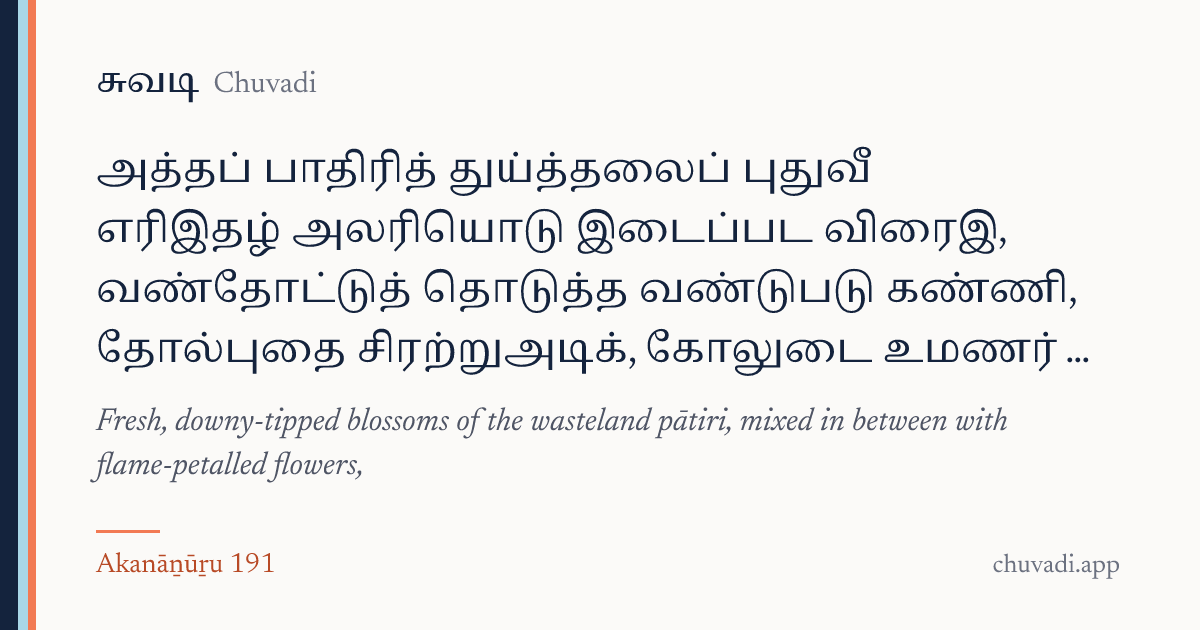
- Fresh, downy-tipped blossoms of the wasteland pātiri,
- mixed in between with flame-petalled flowers,
- strung with rich petals into a bee-haunted garland they wear;
- with leather-wrapped, cracked feet, the salt-traders with their staffs,
- drawing out their long train like a town on the move,
- with well-built bullocks, tireless, of strong legs, that climbed the hard wastes,
- their curved bells ringing, and with whistles
- let out from the traders' lips with care, running swiftly ahead,
- to travellers coming through the great forest of ōmai
- they announce safety: on that long, sun-scorched way,
- longing for rare wealth, able to live apart,
- you go; if you are set on the task, well and good —
- but tell her this, long may you live, my heart! 'Your rows of buds
- of mullai, which it wears, so soft it is,
- spread like rippled sand, with a grace sweet to touch,
- your thick, dark hair, be comforted' — saying so,
- are you hard enough to say even that?
What the poem says
The hero argues with his own heart, which is eager to leave for wealth. Go then, he says, if you are set on the work; but first tell her to be comforted. Can you be hard enough to say even that?
Most of the poem describes the road. Salt merchants (umaṇar), wearing garlands of pātiri and flame-coloured flowers, walk on cracked, leather-wrapped feet with staffs in hand, their long caravan like a moving town. Their sturdy bullocks climb the hard wastes with bells ringing, and the traders whistle and run ahead to tell travellers coming through the ōmai forest that the way is safe. This is a rare picture of help on a pālai road, and it makes the journey seem possible; yet the heat and the length of the way remain.
The ending turns to the heroine's hair, which the heart is to address: soft, thick and dark, spread like rippled sand, sweet to touch, crowned with rows of mullai buds. The hero imagines the heart telling her hair, and so her, to be consoled, and knows that no one could say such a thing to her face.
Some details are uncertain. Ciraṟṟaṭi in line 4 is read as 'cracked feet'; ūr kaṇṭaṉṉa āram in line 5 as a caravan 'like a town'; maṭivitu vīḷai in line 8 as whistles. The edition closes a quotation at the end of line 16 without opening one; the quotation is taken to begin in line 13.