




அகநானூறு 199
பாடல் · The poem
Tap a word to see where else it occurs.
பொருள் · Meaning in TamilAI
கரையில் பாய்ந்து மோதும் வெண்மையான அலைகளைப் போல, வரிசையாக வீசும் காற்று மோதுவதால், மலையைச் சார்ந்து நிற்கும் மராமரத்தின் கொத்தான மலர்கள் பாறைகளின் மேல் பலவாகச் சேர்ந்து உதிர்கின்றன. அதை மழை என்று எண்ணிக் களைத்த யானை நீர் வேட்கையால் அலைந்து திரிகிறது. சிலந்தி வலை பின்னிய வெறுங்கிளைகளையுடைய, வாடி அசையும் உலவை மரத்தின் ஐதான நிழலில் தங்கி, வாடிய மரலைக் கவ்விக்கொண்டிருந்த மான்கூட்டம் செய்வதறியாது ஒன்றுகூடி நிற்கிறது. அரத்தால் தேய்த்த ஊசியின் திரண்ட முனை போன்ற உறுதியான பற்களையுடைய செந்நாய் அவற்றைத் துரத்தவே, காற்றின் முன் பறக்கும் பூளைப் பூப் போல அவை சட்டென அலறிச் சிதறுகின்றன. சிதறிய அந்த மான் கூட்டத்தை மீண்டும் சேர்க்க, கதிர் மறையும் மாலையில் கலைமான் ஆண்குரலில் அழைக்கிறது. இத்தகைய கடல் போன்ற பரந்த காட்டைக் கடந்து, 'பிறரைப் போல நாமும் சென்றால் நம் பயணம் நன்றாக முடியும்' என்று ஆசை கொண்ட உள்ளம் ஓய்வின்றி என்னைத் தூண்டுகிறது. நெஞ்சே! நீ வேண்டுமானால் போகலாம். மூங்கிலைப் போல வளைந்த, நிலைத்த, குளிர்ந்த, திரண்ட பெரிய தோள்களையுடைய என் காதலியை விட்டுவிட்டு, மேற்கே வாகைப் பெருந்துறையில் நடந்த போரில் பொன்னணி பூண்ட நன்னன் களத்தில் வீழ, வெற்றி தந்த தவறாத வாளையும் களங்காய்க் கண்ணியையும் உடைய நார்முடிச் சேரல் இழந்த நாட்டை மீட்டுத் தந்தது போன்ற பெருஞ்செல்வம் கிடைத்தாலும் நான் வரமாட்டேன்.
இது பாலைத் திணை; பொருள் தேடப் பிரியும்படி தூண்டும் தன் நெஞ்சுக்குத் தலைவன் கூறுவதாக அமைந்தது. சிதறிய மான் கூட்டத்தை மாலையில் அழைக்கும் கலைமான், துணையைக் கைவிட்டுச் செல்லக் கூடாது என்ற எண்ணத்தை மறைமுகமாக உணர்த்துகிறது. நன்னன் வீழ்ந்ததையும் நார்முடிச் சேரல் இழந்த நாட்டை மீட்டதையும் பாடல் ஒப்புமையாக மட்டுமே கூறுகிறது. 'இரும்பொன் வாகை' என்ற தொடரின் பொருள் உறுதியாகத் தெரியவில்லை.
ஆங்கிலம் · English translationAI
Translation
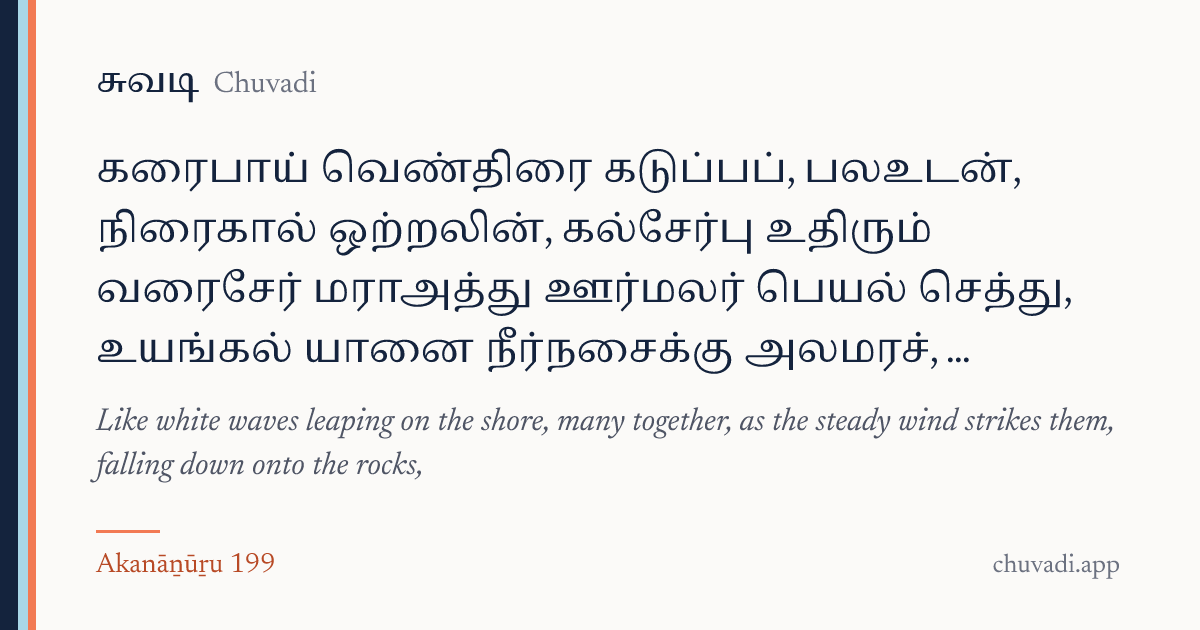
- Like white waves leaping on the shore, many together,
- as the steady wind strikes them, falling down onto the rocks,
- the clustered blossoms of the marā by the hill are taken for rain,
- and a weary elephant wanders, distressed, in its longing for water;
- where spiders have netted the bare, dry branches,
- resting in the thin shade of the swaying ulavai,
- the helpless huddled herd that chewed the withered maral,
- like the thick points of needles that a file has ground,
- when red dogs with firm-set teeth rouse them,
- scatter with a sudden cry like pūḷai before the wind,
- and to bring back that lost herd of deer the stag
- calls with its male voice in the evening when the rays fade:
- leaving behind that forest wide as the sea, 'If, like others,
- we go, our going will turn out well,' says
- the desiring mind, driving me on without rest;
- you may go, if it is yours to go, O heart! But, like bamboo,
- curved, lasting, cool and rounded,
- are the large shoulders of the woman I would leave; in the west,
- in the battle at Perunturai of Vākai of great gold,
- where Naṉṉaṉ of golden ornaments fought and fell on the field,
- with the true sword that brought him victorious conquest,
- Nārmuṭic Cēral of the garland of kaḷam fruits
- brought back the land that had been lost: like that,
- even if I gained wealth that great, I would not come.
What the poem says
The hero speaks to his own heart. It has been urging him to set out after wealth as other men do, crossing a forest as wide as the sea, and he answers that the heart may go if it wishes, but he will not leave the woman he loves.
The landscape is the familiar pālai drought, drawn with unusual care. The wind shakes the clustered marā blossoms down onto the rocks, and a thirsty elephant mistakes the falling flowers for rain. Deer resting under the thin shade of a bare, cobwebbed ulavai tree, chewing withered maral fibre, are startled by red dogs whose teeth are like needle points sharpened on a file; they scatter like pūḷai down before the wind, and at dusk the stag calls with its male voice to gather the herd again. That stag, calling its scattered mates together at evening, is the quiet counter-image to the hero's temptation to abandon his own.
The closing comparison names a battle at Perunturai in Vākai, in the west, where Naṉṉaṉ of the golden ornaments fell, and where Nārmuṭic Cēral, wearing a garland of kaḷam fruits, with his unfailing sword, brought back a land that had been lost. Even wealth on the scale of that recovered country, the hero says, would not draw him away. The poem says no more about this war than that.
The phrase 'irumpoṉ vākai', rendered 'Vākai of great gold', is not clear; it may describe the place or the golden flowers of the vākai tree. The syntax of the first twelve lines is one long chain of images hanging on 'forest', and the English keeps that chain line by line.