




அகநானூறு 200
பாடல் · The poem
Tap a word to see where else it occurs.
பொருள் · Meaning in TamilAI
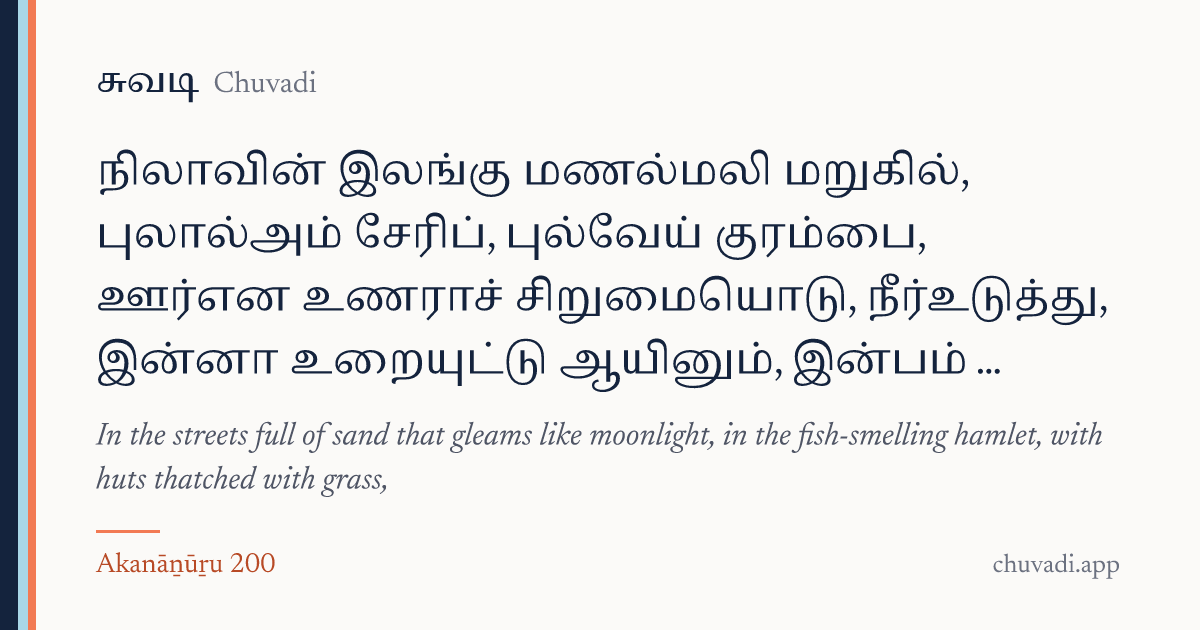
நிலவைப் போல ஒளிரும் மணல் நிறைந்த தெருக்களையும், மீன் நாற்றம் வீசும் சேரியையும், புல்லால் வேய்ந்த குடிசைகளையும் உடையது எங்கள் ஊர். ஊர் என்று எண்ண முடியாத அளவுக்குச் சிறியது; நீரால் சூழப்பட்டது; வாழ்வதற்குத் துன்பமான இடம். ஆயினும், ஒருநாள் தங்கியவர்களும் மறுநாள் தம் ஊரையே மறந்துவிடும் அளவுக்கு இன்பம் தருவது. சங்குகள் மேயும் கடற்பரப்பின் தலைவனே! அத்தகைய எங்கள் ஊருக்கு வந்து தங்கிச் செல்வாயாக. பொங்கி எழும் அலைகள் ஓசையுடன் உடையும், மரங்கள் உயர்ந்து நிற்கும் ஒரு பக்கத்தில், பலவற்றையும் பாராட்டிப் பேசிப் பகல் முழுவதும் எங்களோடு கழித்துவிட்டு, ஞாயிறு மறையும்போது உன் நல்ல தேரைப் பூட்டிச் செல்லவும் உனக்கு உரிமை உண்டு. அவ்வாறு அல்லாமல், இரவு தங்கிப் பிறகு சென்றால், நாங்களும் எங்களால் இயன்ற அளவுக்கு உன்னை அன்போடு போற்றுவோம். அது உனக்கு ஏற்றதாகுமோ? எங்களுக்குச் சொல்வாயாக.
இது நெய்தல் திணை; பகலில் வந்து மாலையில் திரும்பும் தலைவனைத் தோழி இரவு தங்கிச் செல்லும்படி அழைப்பதாகத் தோன்றுகிறது. ஊரின் சிறுமையையும் வாழ்க்கையின் கடுமையையும் ஒப்புக்கொண்டே அதன் இன்பத்தைப் புகழ்வது, தலைவியோடு கொண்ட உறவை உறுதிப்படுத்தும்படி மறைமுகமாக வேண்டுவதாகும். 'நும் ஒப்பதுவோ' என்ற இறுதித் தொடரை 'உனக்கு ஏற்றதோ' என்றும் 'உன் தகுதிக்கு ஒத்ததோ' என்றும் கொள்ளலாம்.
ஆங்கிலம் · English translationAI
Translation
- In the streets full of sand that gleams like moonlight,
- in the fish-smelling hamlet, with huts thatched with grass,
- so small one would not know it for a village, clothed in water,
- it is a hard place to live in; and yet its pleasure is such
- that even those who stay a single day, on the days after,
- forget their own towns: to that town of ours
- come, and then go, lord of the shore where conches graze!
- Where the swelling waves break with a roar,
- on the one side where the trees grow tall, praising many things,
- spending the daylight with us, when the sun goes down
- you are free to yoke your fine chariot; but not that:
- if you stay the night and then go, we too,
- within the measure of what we have, will cherish you;
- would that suit you? Tell us.
What the poem says
The speaker is most likely the heroine's friend, addressing the hero who visits the seashore by day and drives home at evening. She invites him to stay the night in their village. The 'we' who will cherish him includes the heroine; the invitation is a gentle push toward a settled union.
She runs her own village down before praising it: sand that shines like moonlight, a hamlet that reeks of fish, grass-thatched huts, so small one would hardly call it a village, ringed by water and hard to live in. Yet one day there, she says, makes visitors forget their own towns. The modesty is part of the courtesy, and part of the challenge: he is a lord, and they offer only what is within their measure.
The middle of the poem allows him his usual habit. He may spend the day with them by the grove where the waves break and yoke his chariot at sunset; that is his right. But 'not that', she says: if he stays the night they will welcome him as well as they can. In the neytal setting the evening departure is the moment of the heroine's loneliness, so the request to stay carries her longing.
The last line, 'num oppatuvō', can be taken as 'would that suit you?' or 'would that be worthy of you?'; I have chosen the first. The lord is called 'lord of the expanse where conches graze', a stock neytal epithet.