




அகநானூறு 20
பாடல் · The poem
Tap a word to see where else it occurs.
பொருள் · Meaning in TamilAI
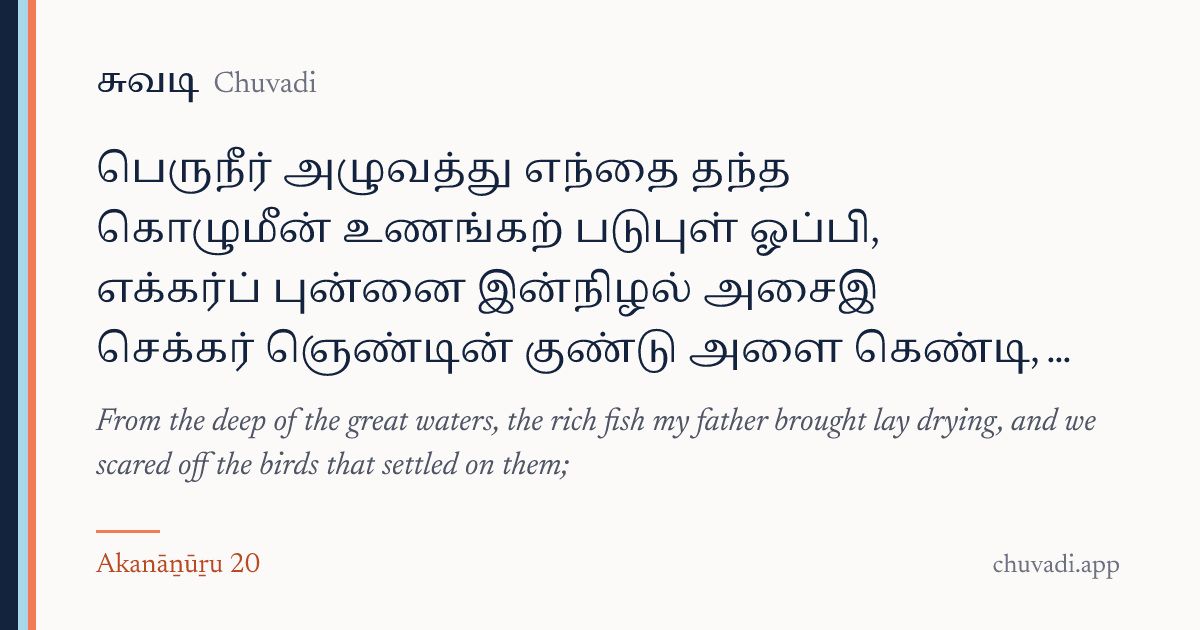
பெருங்கடலின் ஆழத்திலிருந்து என் தந்தை கொண்டுவந்த கொழுத்த மீன்கள் காய்ந்துகொண்டிருக்க, அவற்றின்மேல் வந்து அமரும் பறவைகளை ஓட்டினோம். மணல்மேட்டில் உள்ள புன்னையின் இனிய நிழலில் இளைப்பாறினோம். சிவந்த நண்டுகளின் ஆழமான வளைகளைத் தோண்டினோம். வளைந்த கழியின் அருகே ஞாழல் மரத்தின் உயர்ந்த கிளையில், தாழையின் தொங்கும் விழுதுகளைக் கயிறாகக் கட்டி ஊஞ்சலாடினோம். கீழைக்காற்று குவித்த மணலில் குரவைக் கூத்து ஆடிச் சலித்தால், வெண்ணுரைத் தலையுடைய அலைகளில் தோழியரோடு விளையாடினோம். நீலமணி போன்ற பூக்களோடு பசுந்தழையாடை கட்டி, அழகாகப் பல மலர்கள் நிறைந்த கடற்கரைச் சோலையில் தங்கிவிட்டுத் திரும்பினோம். அதற்காக, அணங்கு பிடித்ததுபோல அலர் பேசும் இவ்வூரில், கொடுமையையே அறிந்த பெண்டிரின் சொல்லை நம்பி, என் அன்னை என்னைக் காவலில் வைத்துவிட்டாள், தோழி! பெருந்துறையில் பகல் இரவு என்று பாராமல், கடகடவென்று ஒலிக்கும், பாகன் தேர்ந்தெடுத்த சிறந்த குதிரைகளை உடைய ஒரு தேர் நிலவொளி படர்ந்த மணலில் சுற்றிச் சுற்றி வருகிறது என்று சொல்லித்தான்!
இது நெய்தல் திணை; ஊரில் அலர் எழுந்து அன்னை காவல் வைத்ததைத் தலைவி தோழியிடம் கூறுவது; அருகில் நிற்கும் தலைவன் கேட்கும்படி சொல்வதாகக் கொள்ளலாம். கடற்கரையில் தோழியரோடு செய்த விளையாட்டுகள் அவள் வெளியே சென்றதற்கான குற்றமற்ற காரணங்களாகக் காட்டப்படுகின்றன. நிலவு மணலில் சுற்றும் தேர் தலைவனுடையது; களவு வெளிப்பட்டதால் இனி மணம் பேச வேண்டும் என்பது குறிப்பு. பதினோராம் அடியில் 'அணங்கு உற்ற' என்பது ஊரைக் குறிப்பதா தலைவியைக் குறிப்பதா என்பது உறுதியாகத் தெரியவில்லை.
ஆங்கிலம் · English translationAI
Translation
- From the deep of the great waters, the rich fish my father brought
- lay drying, and we scared off the birds that settled on them;
- we rested in the sweet shade of the puṉṉai on the dune;
- we dug out the deep holes of the red crabs;
- on the tall branch of the ñāḻal by the winding backwater we tied
- a swing with ropes of the tāḻai's hanging roots, and swung;
- when we tired of the kuravai dance on sand heaped by the east wind,
- we played with our friends in the white-crested surf;
- we put on green leaf-skirts with sapphire-blue flowers, and, beautifully,
- we lingered in the seaside grove of many flowers before coming home; for that,
- this town, seized by gossip as if by a spirit —
- taking the word of women who know only spite, my mother
- has put me under guard — friend! — saying that on the great shore,
- without regard for day or night, with a loud rattle,
- its fine horses chosen by the charioteer,
- a certain chariot keeps circling on the moonlit sand!
What the poem says
The heroine speaks to her friend. Her secret meetings with the hero have been noticed, the town is full of talk, and her mother has shut her up at home. She may be speaking so that the hero, waiting nearby, overhears; this is a common device, and it suits the ending, which describes his chariot.
Most of the poem is a lovely list of the girls' ordinary days on the shore, given as the innocent explanation of why they were always out. They guarded the fish her father caught as they dried, chasing off the birds; rested under the puṉṉai; dug for red crabs; swung on a swing made of tāḻai (screw-pine) roots tied to a ñāḻal branch; danced the kuravai on the sand; played in the surf; made leaf-skirts and lingered in the flowering grove. All of this is neytal: the fishing village, the backwater, the dunes, the sea.
Then the turn. The town has caught gossip (kavvai) like a possession, and her mother, listening to spiteful women, has set a guard on her. The gossip is about a chariot: day and night, people say, a chariot with fine horses keeps wheeling over the moonlit sand of the great shore. That chariot is the hero's, and the hint is plain. His coming has been seen; if he wants her, he must now ask for her openly.
Line 11 is compressed: 'kavvai nal aṇaṅku uṟṟa' is taken as the town gripped by gossip as by a spirit, but it might also refer to the heroine as the one 'afflicted'. The edition's colon after 'friend' is simply its punctuation of the aside.