




அகநானூறு 21
பாடல் · The poem
Tap a word to see where else it occurs.
பொருள் · Meaning in TamilAI
'வீட்டின் அருகே உள்ள இளம் நொச்சியில் படர்ந்த மௌவலின் வெண்மையான அரும்புகளை இணையாக வரிசைப்படுத்தி வைத்ததுபோன்ற, எல்லோரும் விரும்பும் வெண்பற்களும், அழகிய வயிறும், அகன்ற அல்குலும், பின்னிய நீண்ட மென்மையான கூந்தலும், பெரிய மென்மையான திரண்ட தோள்களும் உடைய இந்த மடந்தையின் சிறந்த அழகு தனிமையில் வாடும்படி தொலைநாட்டுக்குப் போகாதே' என்று நான் சொன்னபோதும் நீ உடன்படவில்லை. வினையை விரும்பி அதிலேயே உறுதியாகிவிட்டாய். அப்படியானால், வீடு மகிழ்ந்து சிரிக்கும்படி பலவகைச் செல்வத்தைக் கொண்டுவருவோம்; விரைந்து இப்போதே எழு, என் நெஞ்சே! நீ வாழ்க! முறுக்கிய பூங்கொத்துகள் மெல்ல அவிழும் அழகிய கிளைகள் வெறுமையாகும்படி, வல்லவன் அடித்த கிளையிலிருந்து உதிர்வதுபோல மலர்கள் உதிரும்படி தொட்டு, மராமரத்தை அலைக்கழித்த மணம் கமழும் தென்றல், பாலைவழியே செல்லும் வீரர்களின் சுருண்ட முடியில் அவற்றைத் தூவுகிறது. கடும் வெயில் நிலைத்து நிற்கும் வெறுமையான நிலத்தில், பருந்து இளைப்பாறும் உச்சி முறிந்த ஓமை மரம் நிற்கிறது. பெரிய பாறைப் பிளவில் குட்டி ஈன்று இளைத்துக் கிடக்கும் மென்மையான பெண்நாய் பசித்ததால், பசுங்கண்ணுடைய ஆண் செந்நாய் பன்றியைத் தாக்குகிறது. அஞ்சி ஓடும் பெண்பன்றி உரசியதால் பசுங்குலையுடைய ஈச்சமரம் சிவந்த காய்களை உதிர்க்கிறது. பரல்மண் மேடுகளில், கூழ் உண்ணும் இடையர்கள் வலிய கணிச்சியால் கடின நிலத்தை உடைத்துத் தோண்டி, நீர் ஊறாததால் தழையால் மூடிவிட்டுச் சென்ற கிணற்றை, வெண்தந்தத்தை விரும்பும் இரக்கமற்ற கானவர் தாம் திரியும் வழியில் தோண்டிய குழி என்று எண்ணி, பெரிய களிறுகளின் கூட்டம் தூர்த்துவிடுகிறது. அத்தகைய பெரிய கற்கள் நிறைந்த பாலையின் குறுக்கே கிடக்கும் காடு அது!
இது பாலைத் திணை; பொருள் தேடச் செல்ல உறுதிகொண்ட நெஞ்சுக்குத் தலைவன் இணங்கிக் கூறுவது. குட்டி ஈன்ற துணைக்காக இரை தேடும் செந்நாய், குடும்பத்துக்காகப் பொருள் தேடும் தலைவனை நினைவூட்டுகிறது. பதிப்பில் முதல் அடியில் தொடங்கும் மேற்கோள் குறி மூடப்படவில்லை; தலைவன் முன்பு சொன்ன சொல் ஆறாம் அடியில் 'செல்லல்' என்பதோடு முடிகிறது. பத்து, பதினோராம் அடிகளின் உவமையின் பொருள் உறுதியாகத் தெரியவில்லை.
ஆங்கிலம் · English translationAI
Translation
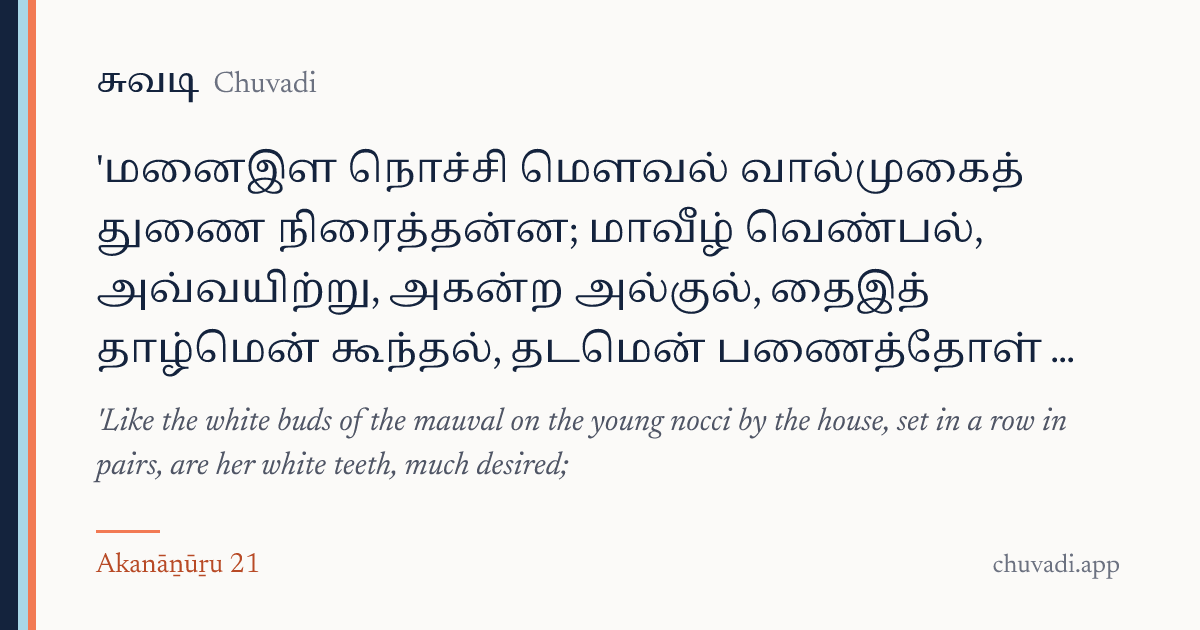
- 'Like the white buds of the mauval on the young nocci by the house,
- set in a row in pairs, are her white teeth, much desired;
- her lovely belly, her broad hips; and, plaited,
- her long soft hair, her broad, soft, rounded shoulders —
- so that this maiden's rare beauty pines, to a far country
- do not go,' I said; and still you would not agree;
- set on the task, you have made up your mind; then, so that our house may laugh,
- let us bring back wealth of many kinds; quickly,
- rise now — long may you live, my heart! — where its twisted clusters
- softly opening, its lovely branches are left bare, as from a branch
- that a skilled man has struck, touching it so the flowers fall,
- the fragrant south wind that has shaken the marā
- scatters them over the curly hair of the warriors crossing the wasteland;
- in the bare-topped land where the summer heat stands still,
- on the ōmai with broken crown, where the kite rests weary,
- in a cleft of the great rocks, having given birth and lying weak,
- his gentle mate, newly delivered, being hungry, the green-eyed
- male red dog attacks a boar;
- the sow, fleeing in panic, brushes against it and, in her rush,
- the green-clustered date palm sheds its red fruit;
- on the gravelly ridges, the hard ground broken open
- by the strong-edged picks of herdsmen who live on gruel —
- the well they dug and left, covered with brushwood, where no water seeped,
- taking it for a pit that the pitiless forest-men, who covet white tusks,
- dig on the paths where they roam without care,
- the herds of great bull elephants fill it in —
- the forest of great rocks that lies across the wasteland!
What the poem says
The hero speaks to his heart. The poem is a little drama of reversal. Earlier, he says, he himself had told his heart not to go to a far country and leave the girl to pine; the heart refused and set itself on the journey. So now he gives in: very well, let us go and bring home wealth that will make the house laugh. Rise, my heart. The last word, 'the forest', is where they are to go.
The first six lines are his own earlier words, a portrait of the woman: teeth like paired white mauval buds on the nocci by the house, long plaited hair, broad soft shoulders. The edition opens a quotation mark at line 1 but never closes it; the quoted words end with 'do not go' in line 6.
Lines 9–27 are the road, crowded with detail, and nearly all of it is hunger and danger. A fragrant south wind strips the marā tree and showers its flowers on the hair of warriors crossing the waste. A red dog (cennāy, the dhole), whose mate has just whelped in a rock cleft and is hungry, attacks a boar; the fleeing sow knocks the red dates from a palm. Herdsmen who live on gruel have dug a well in the hard ground and abandoned it dry; elephants, taking it for one of the pits that ivory hunters dig on their paths, fill it in. Even the elephants' fear of traps is part of the picture of the road.
Several phrases are uncertain. The comparison in lines 10–11 ('as from a branch a skilled man has struck') is a guess at a difficult phrase. The animal that the red dog attacks and the sow that flees may be read differently; the construction is compressed.