



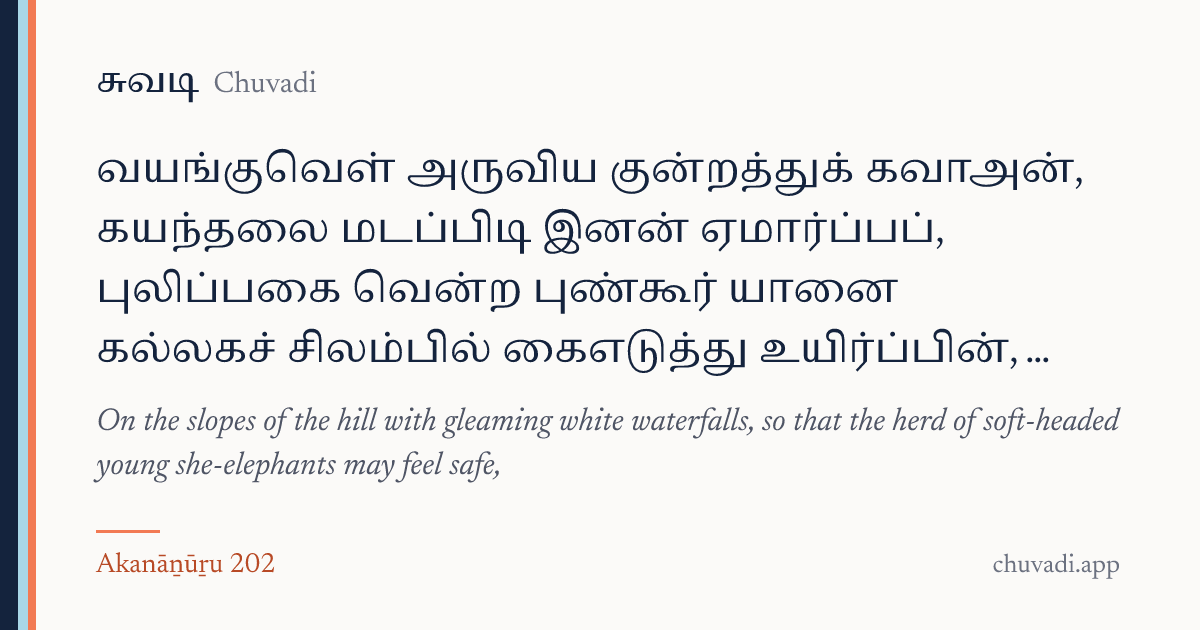

அகநானூறு 202
பாடல் · The poem
Tap a word to see where else it occurs.
பொருள் · Meaning in TamilAI
வெண்மையாக ஒளிரும் அருவிகளையுடைய மலைச்சரிவில், மென்மையான தலையுடைய இளம் பெண்யானைகளின் கூட்டம் அச்சம் நீங்கிப் பாதுகாப்பாக இருக்கும்படி, தன் பகையான புலியை வென்று புண்பட்ட ஆண்யானை பாறை நிறைந்த மலைப்பக்கத்தில் துதிக்கையைத் தூக்கிப் பெருமூச்சு விடுகிறது. அப்போது, நல்ல கொத்துகளையுடைய வேங்கை மரத்தின் மணமுள்ள மலர்கள், கொல்லன் துருத்தியால் ஊதும் உலையிலிருந்து பறக்கும் தீப்பொறிகள் போலப் பொங்கி, சிறிய மின்மினிப் பூச்சிகள் போலப் பலவாகச் சேர்ந்து, நீலமணி நிறமுடைய பெரிய புதர்களின் மேல் தாவி விழுகின்றன. அத்தகைய நாட்டின் தலைவனே! நள்ளிரவில், புள்ளியுடைய பாம்பின் படமெடுத்த தலை துண்டாகும்படி வலிய இடி அச்சம் தரும்படி முழங்கும் பரந்த நிலத்தில், பின்வாங்காத உள்ளத்தோடு, வேலை மட்டுமே துணையாகக் கொண்டு, அடர்ந்த இருள் பரவிய கற்கள் நிறைந்த சிறிய வழியில் எதையும் ஆராயாமல் நீ வருகிறாய். உன்னை எண்ணித் தாங்க முடியாத கவலையிலும் அரிய துன்பத்திலும் நீந்துபவர் எங்களைத் தவிர வேறு யாரேனும் உண்டோ?
இது குறிஞ்சித் திணை; இரவில் ஆபத்தான வழியில் வரும் தலைவனிடம் தோழி, தானும் தலைவியும் படும் கவலையைச் சொல்லி, இரவுக்குறியை விட்டு விரைவில் மணம் முடிக்கும்படி மறைமுகமாக வேண்டுவதாகும்; கூறுபவள் தலைவியாகவும் இருக்கலாம். புலியை வென்று பெண்யானைகளைக் காக்கும் களிறு, தலைவன் தலைவியைக் காக்க வேண்டியவன் என்பதை உணர்த்தும் உள்ளுறையாகக் கொள்ளலாம்.
ஆங்கிலம் · English translationAI
Translation
- On the slopes of the hill with gleaming white waterfalls,
- so that the herd of soft-headed young she-elephants may feel safe,
- the bull, sore with wounds, having beaten its enemy the tiger,
- lifts its trunk on the rocky hillside and breathes out hard,
- and the fragrant blossoms of the vēṅkai with its fine clusters,
- flying up like sparks from the treadle forge where the smith blows the bellows,
- like many small fireflies, all together
- leap onto the great sapphire-coloured bushes: man of such a land!
- Are there any besides us, at midnight,
- when, to sever the spread hood of the snake with the spotted mark,
- the mighty thunder strikes, terrifying, over the wide land,
- while with a heart that never turns back, your spear your only companion,
- along the small stony path where dense darkness spreads,
- you come without a thought, who for your sake
- swim through unbearable distress and hard suffering?
What the poem says
The speaker addresses the hero who comes to meet the heroine at night. The 'us' who suffer for him is most naturally the heroine's friend speaking for both of them, though it could be the heroine herself. The plea is the usual kuṟiñci one: the night visits are too dangerous; marry her and end the fear.
The opening picture is of the hero's own hill country. A bull elephant, wounded after beating off a tiger, stands guard so the young she-elephants feel safe, and lifts its trunk to breathe out on the rocks. The blast shakes the vēṅkai blossoms loose, and they fly up like sparks from a smith's treadle forge, like a swarm of fireflies, and settle on the dark blue-green bushes. The protective bull is a fair model for what the hero ought to be to the heroine; the blossoms scattered like sparks may suggest how easily his rough coming can unsettle her peace.
The second half turns to the night itself: thunder so violent it is said to sever a cobra's hood, total darkness on a narrow stony path, and the hero striding through it with only his spear, heedless. The question 'are there others besides us?' is rhetorical. No one else lies awake worrying for him as they do.
The text is clear. 'Utti' is the spot or mark on the cobra's hood; the belief that thunder strikes snakes is common in Sangam poetry.