




அகநானூறு 203
பாடல் · The poem
Tap a word to see where else it occurs.
பொருள் · Meaning in TamilAI
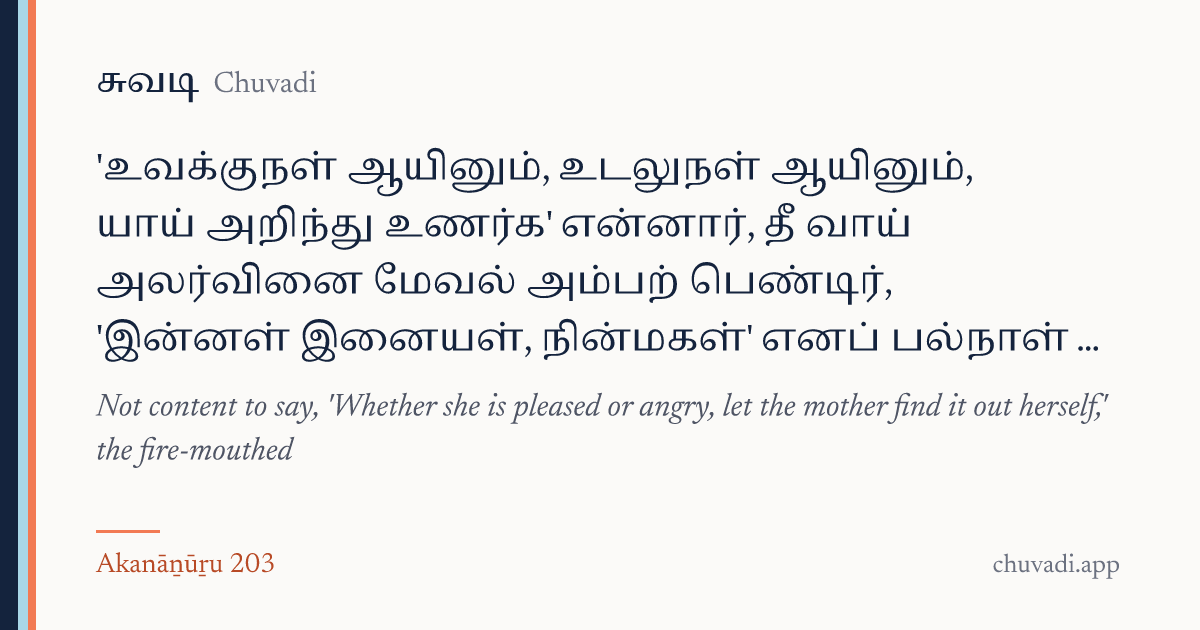
'அவள் மகிழ்ந்தாலும் சினந்தாலும் தாய் தானே அறிந்து உணரட்டும்' என்று விட்டுவிடாமல், தீயைப் போலச் சுடும் வாயும் அலர் பேசும் தொழிலில் விருப்பமும் கொண்ட ஊர்ப் பெண்கள் 'உன் மகள் இப்படிப்பட்டவள், இன்னது செய்கிறாள்' என்று பல நாள் என்னிடம் வந்து சொன்னார்கள். அப்போதும் அவளிடம் எப்படிப் பேசுவது என்று எனக்குத் தெரியவில்லை; 'இவள் நாணுவாள்' என்று எண்ணி நான் எல்லாவற்றையும் மறைத்தே வாழ்ந்தேன். அவளோ, 'அன்னை அறிந்தால் இங்கே வாழ்வது எனக்கு எளிதாக இருக்காது' என்று எண்ணி, வெறுமையான இந்த வீட்டில் என்னைத் தனியே விட்டுவிட்டு, கழல் அணிந்த கால்களும் மின்னலைப் போல ஒளிரும் நெடிய வேலும் உடைய இளைஞன் முன்னே செல்ல, பல மலைகளைக் கொண்ட கடினமான பாலை வழியில் போய்விட்டாள். நான் அவள் நினைத்தது போன்ற தாய் அல்லள் என்பது அவளுக்கு உண்மையாகத் தெரியட்டும். மான்கள் நடந்த தடங்கள் குழம்பிக் கிடக்கும் மலையடிவாரச் சிறுவழியில் வெயில் வருத்தாமல் அவள் சென்று சேர்ந்த பின், அங்கே வறண்ட பெரிய மலையின் கீழுள்ள தனிமையான சிற்றூரில், வழிச்செல்லும் விருந்தினரை உபசரித்து ஓய்விடத்தில் தங்க வைக்கும், நுனி தளிர்த்து அசையும் நொச்சி வேலியுடைய வீட்டின் தலைவியாக நான் இருக்கக் கூடாதா!
இது பாலைத் திணை; உடன்போக்கில் சென்றுவிட்ட மகளை எண்ணித் தாய் (அல்லது செவிலித்தாய்) வருந்திக் கூறுவது. மகளை வருத்தக்கூடாது என்றே தான் மௌனமாக இருந்ததை அவள் அறியாமல் போனாளே என்ற வேதனையும், வழியில் அவளைத் தானே உபசரிக்க வேண்டும் என்ற ஏக்கமும் பாடலில் உள்ளன. முதல் இரண்டு அடிகளின் பொருள் தெளிவாக இல்லை; இங்கு ஒரு பொருளையே கொண்டேன்.
ஆங்கிலம் · English translationAI
Translation
- Not content to say, 'Whether she is pleased or angry,
- let the mother find it out herself,' the fire-mouthed
- village women, who delight in the work of gossip,
- saying 'Your daughter is like this, like that,' day after day
- came and told me; and still I did not know how to speak to her;
- thinking 'she will be ashamed', I lived keeping it closely hidden;
- and leaving me in this empty house, she herself,
- thinking 'if mother knows, the life of staying here
- will not be easy for me', with the youth of anklet-wearing feet
- and long spear shining like lightning going before her,
- has gone across the hard wasteland of many hills; for her, let it prove
- truly said that I am not that kind of mother;
- on the small path at the hills' foot where the deer tracks wander,
- when she has reached it without the heat troubling her, and ahead,
- in the lonely little village under the drab great hill,
- who cares for travelling guests and seats them in a lodging,
- in the house where the nocci with tender shoot-tips sways,
- would that I were the woman who keeps that house!
What the poem says
The speaker is the girl's mother, or possibly her foster-mother (the poem names no speaker), after the daughter has eloped with her lover across the hills. The tiṇai is pālai, the road of separation, here seen from the house left behind.
She begins with the village gossips, 'fire-mouthed' women who were not content to let her discover things for herself, but came day after day to report what her daughter was doing. The mother knew, and said nothing, because she thought the girl would be ashamed. The irony is painful: the daughter, believing her mother would make life at home impossible once she found out, ran off, when in fact the mother had been protecting her silence all along. 'Let it prove true, for her, that I am not that kind of mother,' she says.
The ending is one of the tenderest wishes in the akam tradition. She imagines the couple reaching the narrow hill path unharmed by the heat, and coming to a lonely hamlet at the foot of a bare hill. There some housewife, behind a hedge of nocci, will welcome the travellers and give them a place to rest. The mother wishes she could be that woman, so that she could care for her daughter once more without the girl knowing.
The first two lines are hard to construe. I take 'eṉṉār' as 'not saying', meaning the gossips would not leave the mother to learn it in her own time; other construals are possible. 'Tuccil' is a lodging or resting place.