




அகநானூறு 204
பாடல் · The poem
Tap a word to see where else it occurs.
பொருள் · Meaning in TamilAI
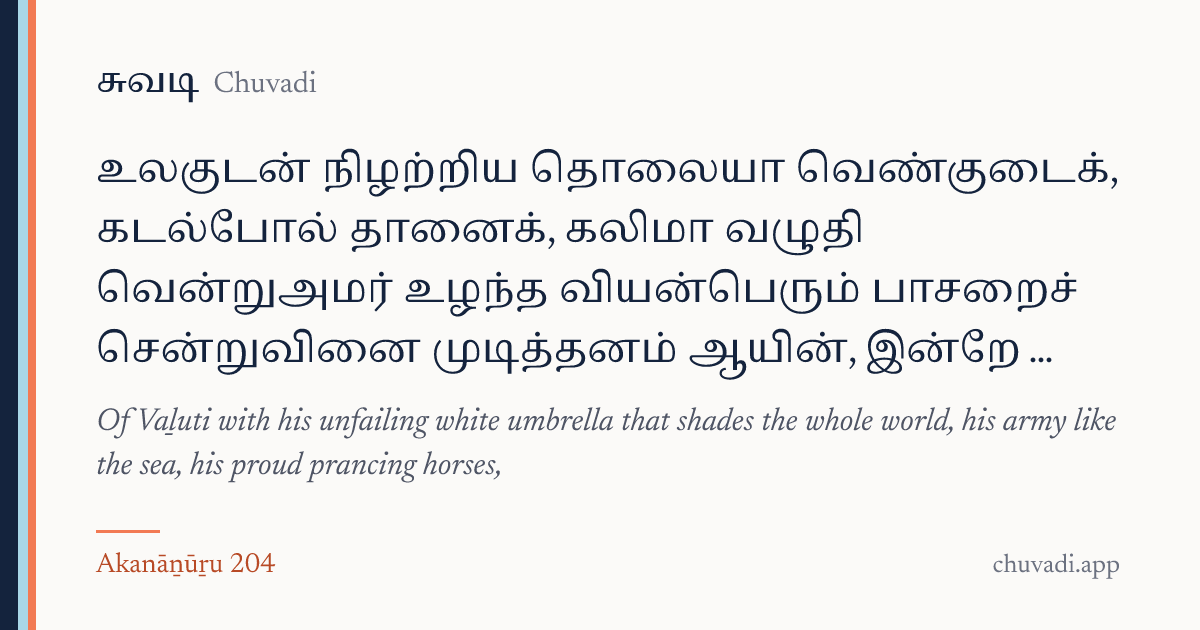
உலகம் முழுவதற்கும் நிழல் தரும் அழியாத வெண்கொற்றக் குடையும், கடலைப் போன்ற படையும், செருக்குடைய குதிரைகளும் உடைய வழுதியின், போரில் உழைத்து வெற்றி பெற்ற பெரிய பரந்த பாசறைக்குச் சென்று, நாம் ஏற்ற பணியை முடித்துவிட்டோம். ஆதலால் இன்று, கார்கால மழையை எதிர்கொண்ட அழகிய காட்டுநிலத்தில், அழகிய சிறகுடைய வண்டுகள் கூட்டம் கூட்டமாக மாலை நேரத்தில் மணம் வீசும் முல்லை மலர்களின் மேல் ஒலிக்கின்றன. அதோ பார், நாம் சொன்ன பருவம் வந்துவிட்டது! பாகனே, நல்ல வேலைப்பாடு அமைந்த உன் நெடிய தேரை மிக விரைவாகச் செலுத்துவாயாக. வெண்ணெல் அறுப்பவர்களின் மடிந்த வாயுடைய தண்ணுமைப் பறை, பல மலர்களையுடைய பொய்கையில் வந்து இறங்கும் பறவைகளை ஓட்டும், முற்றும் நெல் விளையும் தோட்டங்களையுடைய வாணனின் சிறுகுடி என்னும் ஊரின் சோலைகளைப் போல மணக்கும் கூந்தலையும் ஒளிரும் வளையல்களையும் உடைய என் தலைவியின் இரு தோள்களையும் நான் தழுவும்படி விரைந்து செல்வாயாக.
இது முல்லைத் திணை; போர்ப்பணி முடிந்து திரும்பும் தலைவன், தான் வருவதாகச் சொன்ன கார்ப்பருவம் வந்ததைக் கண்டு தேர்ப்பாகனிடம் கூறுவது. மாலையில் முல்லை மலரில் வண்டுகள் ஒலிப்பது, தலைவி தனிமையில் காத்திருக்கும் பொழுதை நினைவூட்டுகிறது. வாணன் அவ்வூரின் தலைவன் என்பதற்கு மேல் பாடல் எதுவும் கூறவில்லை; 'மடிவாய்' என்ற சொல்லின் பொருள் உறுதியாகத் தெரியவில்லை.
ஆங்கிலம் · English translationAI
Translation
- Of Vaḻuti with his unfailing white umbrella that shades the whole world,
- his army like the sea, his proud prancing horses,
- in the vast great war-camp where he toiled in battle and won,
- since we have gone and finished the work, today,
- in the lovely woodland that has met the monsoon rain,
- the throng of lovely-winged bees in their crowds
- hums over the fragrant mullai at evening:
- look there, the season has come! With all speed
- drive on, charioteer, your tall chariot of good workmanship,
- to where the drum of the reapers of white paddy, its leather folded at the mouth,
- scares off the birds that settle on the pond of many flowers,
- in Vāṇaṉ's Ciṟukuṭi with its gardens of ripening paddy,
- to the girl whose hair smells like its groves,
- the girl with bright bangles, so that I may have her two shoulders.
What the poem says
The hero speaks to his charioteer on the way home from a campaign. This is a classic mullai poem: the season of the rains has come, the season by which he promised to return, and he urges the driver to hurry.
He has been serving in the camp of Vaḻuti, a name of the Pāṇṭiya kings, whose white umbrella shades the world and whose army is like the sea. The war is won and his part is done. Around him the woodland has taken the first monsoon rain; bees hum over the mullai, the jasmine that is the emblem of patient waiting, and evening, the hour of the waiting wife's loneliness, is coming on. 'Look there, the season has come,' he says, as if the evening itself were a messenger.
His destination is described through a farming village, Ciṟukuṭi of Vāṇaṉ, where reapers in the white-paddy fields beat a drum to drive off the birds settling on the flower-filled pond. The heroine's hair smells as sweet as the groves of that village. Vāṇaṉ is evidently the chieftain of the place; the poem tells us nothing else about him. Ciṟukuṭi may be a place name or simply 'the small village'; I take it as a name.
'Maṭivāyt taṇṇumai' is a drum whose mouth or rim is bound or folded; the exact sense of 'maṭivāy' is uncertain.