




அகநானூறு 205
பாடல் · The poem
Tap a word to see where else it occurs.
பொருள் · Meaning in TamilAI
'உயிரோடு உயிர் கலந்து ஒன்றான பழைய நட்புடையவர்களைப் போல, குற்றமற்ற நெஞ்சோடு நெருங்கியிருப்போம்; பெண்ணே! உன்னை விட்டு நாம் பிரியமாட்டோம்' என்று, பொய் சொல்லும் திறமையுள்ள உள்ளத்தோடு, நான் நம்பும்படி அவர் சொன்னார். உறுதியற்ற கொள்கையுடையவராக, இப்போது காதல் நோயின் துன்பத்தால் என் நெற்றியில் பசலை படரவும், நாம் அழவும், நம்மை விட்டுப் பிரிந்து சென்றார். அப்படியானாலும், சொன்ன சொல் தவறாத, தொலைவு வரை விளங்கும் நல்ல புகழுடைய, வளம் மிக்க கோசரின் ஒளிரும் படையை அழித்து, அவர் நிலத்தைக் கைப்பற்ற விரும்பிய பொன்னணி பூண்ட கிள்ளியின், மலர்கள் விரியும் நீண்ட கழிகளின் நடுவே உள்ள பெரும்புகழ் வாய்ந்த காவிரிக் கரைப் பட்டினத்தைப் போன்ற பெருஞ்செல்வத்தை, நம் வளமான வீட்டில் நல்ல விருந்தினரை மகிழ்வோடு உபசரிக்கும்படி, அவர் எளிதில் பெறுவாராக! மழை பொழியும் குளிர்காலத்தில் கரிய இருள் நீங்கி, உயர்ந்த மூங்கில்கள் நிழல் தரும் மலைச்சரிவில், மதயானையின் கன்னத்தில் விழும்படி அழகிய மலையுச்சியிலிருந்து நீர் இறங்கி ஓடுகிறது. புலித்தோலின் வரிகளைப் போலத் தோன்றும்படி வேங்கையின் மணமுள்ள புதுமலர்கள் உதிர, ஆரவாரத்தோடு குரங்குக் கூட்டத்தின் தலைவன் உயரும் பெருங்கிளையில் ஏறிக் கூவித் தாவுகிறது. அத்தகைய மலைச் சிறுவழியையும் கற்கள் நிறைந்து வழிமறிக்கும் அரிய பாதையையும் கடந்து, மொழி வேறுபடும் நாட்டின் சுரத்திற்கு அவர் சென்றுவிட்டார்.
இது பாலைத் திணை; பொருள் தேடிப் பிரிந்த தலைவனைப் பற்றித் தலைவி தோழியிடம் கூறுவதாகத் தோன்றுகிறது. அவன் பொய் சொன்னான் என்று வருந்தினாலும், விருந்தோம்பலுக்குத் தேவையான செல்வத்தை அவன் எளிதில் பெறட்டும் என்று வாழ்த்துவது அவளுடைய பெருந்தன்மையைக் காட்டுகிறது. கிள்ளி கோசரை வென்றதைப் பாடல் ஒப்புமையாகவே கூறுகிறது. 'மாலிருள் நீக்கி' என்ற அடியின் பொருள் தெளிவாக இல்லை.
ஆங்கிலம் · English translationAI
Translation
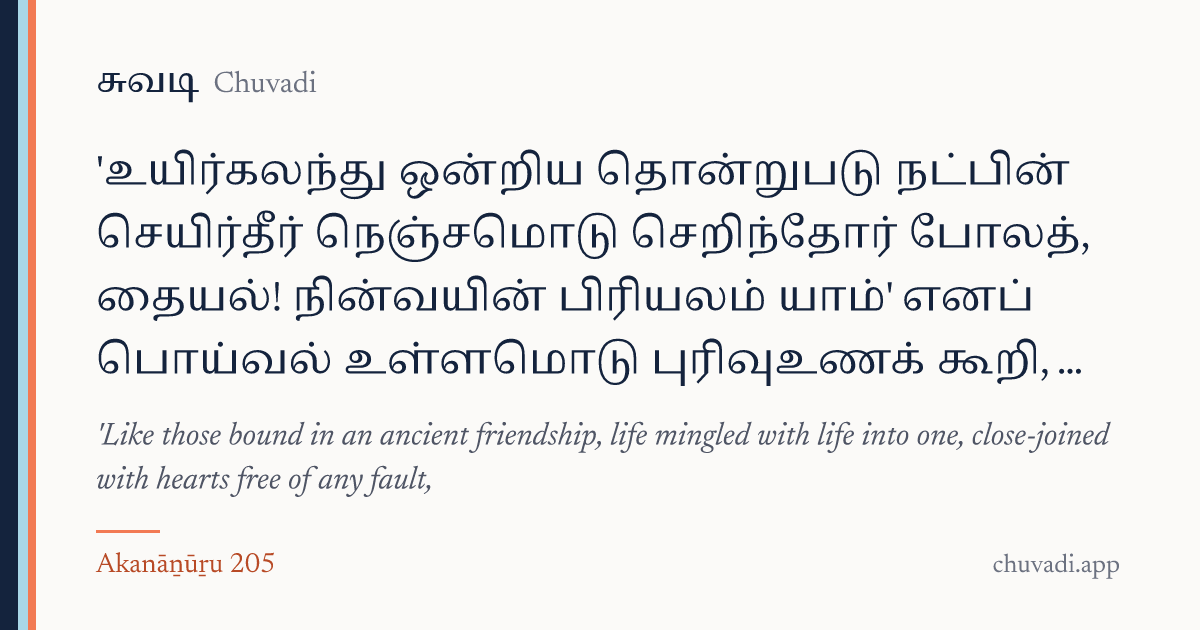
- 'Like those bound in an ancient friendship, life mingled with life into one,
- close-joined with hearts free of any fault,
- lady, we will never part from you,' so
- with a heart skilled in lies he told me, so that I would believe,
- being a man of no steady purpose; and now,
- as pallor spreads over my brow with the pain of love-sickness,
- though he has left us to weep, may he himself,
- of steadfast truthful word, of good fame shining afar,
- the wealthy Kōcar, he who crushed their shining army,
- Kiḷḷi of golden ornaments, who craved to take their land,
- in the midst of the long backwaters where flowers open, the far-famed
- Paṭṭiṉam on the Kāviri's fields: like that town,
- so that in a rich house good guests may be feasted, joyfully
- may he gain great treasure, and gain it easily!
- Where in the cold season of clouds the deep darkness is cleared,
- on the slope where tall bamboos rise and cast shade,
- so that it falls upon the cheek of the elephant in rut,
- water streams down from the lovely summit;
- like the striped skin of a tiger, amid loud din,
- as the fragrant fresh blossoms of the vēṅkai fall,
- the leader of the monkey troop, climbing a great branch that reaches upward,
- cries out and leaps; on the narrow hill path,
- on the hard rocky way that bars the road,
- he has crossed into the wasteland of the country where speech changes.
What the poem says
The heroine speaks, most likely to her friend, about the lover who swore he would never leave her and then went away after wealth. The tone is not bitter but generous: she calls his promise a lie, yet ends by wishing him success.
His vow, which she quotes, is couched in the language of perfect union: like old friends whose lives have mingled into one, hearts without fault, 'we will never part from you'. He was, she says, a man of no firm resolve. Now her brow has turned pale with love-sickness and he has left her weeping. Still, may he gain great wealth, and gain it easily, so that their house can feast guests in proper style. Hospitality to guests is the duty for which a householder needs wealth, and so she accepts his reason for going.
The wealth she wishes him is measured by a town: the Paṭṭiṉam on the Kāviri, amid backwaters full of flowers, belonging to Kiḷḷi of the golden ornaments, a Cōḻa name. The poem says Kiḷḷi crushed the army of the wealthy Kōcar, a people praised here for keeping their word, because he wanted their land. Nothing more about this war is given.
The last ten lines describe the hills he has crossed into a land of strange speech: streams falling from a summit onto a rutting elephant's cheek, a monkey leader leaping in a vēṅkai tree so that its blossoms fall and the ground looks like a tiger's striped hide. The scene is wet and wooded rather than parched. Line 15, about darkness 'cleared' in the cold season of clouds, is obscure, and I have rendered it literally.