




அகநானூறு 207
பாடல் · The poem
Tap a word to see where else it occurs.
பொருள் · Meaning in TamilAI
அச்சம் தரும் கடலின் நீர் பரந்த உப்பளங்களில், காயும் நிலையைக் கடந்த வெண்மையான கல்லாகிய அமுதம் போன்ற உப்பை, மேற்கு நாடுகளுக்குக் கொண்டு செல்வதற்காகப் பறவைகளின் நிமித்தம் பார்த்துப் படைக்கலங்களோடு புறப்பட்ட, பெரும் உழைப்புடைய வணிகர்களின் சுமை ஏற்றிய வரிசையான நரைமுதுகுக் கழுதைகளின் தேய்ந்த குளம்புகள் கற்களை உதைத்துப் புரட்டும் வழிகள் உள்ளன. வெம்மையான சுரத்தைப் பிளந்து செல்லும் அச்சம் தரும் கவர்வழிகளில், வண்டுகள் மொய்க்கும் மதநீர் மறைந்து வெளிப்படும் கன்னங்களையும் நீண்ட கொம்புகளையும் உடைய ஆண்யானை வெயில் தின்பதால் வருந்தி, சொரசொரப்பு அழிந்த தன் பெரிய துதிக்கையால் ஒரு குழியைக் கிளறியிருக்கிறது. அக்குழியில் தெளிந்த உவர்நீரை, உடைந்த குடத்தை முகவையாகக் கொண்டு அந்த அறமற்றவன் மொண்டு தர, வெப்பமாகப் பெருமூச்சு விட்டு, பிறை போன்ற நெற்றி வியர்க்க, அவள் குடித்தாளோ? தேன் கலந்து கலக்கிய இனிய பாலை நான் ஏந்திக்கொண்டு, அவள் கூந்தலைக் கோதி, இன்சொல் சொல்லி ஊட்ட முயன்றபோதும், மறுப்புச் சொல்லையே சொல்லி, வெறுத்த உள்ளத்தோடு உண்ணாமல் இருந்தவள் அல்லவா அவள்!
இது பாலைத் திணை; காதலனோடு உடன்போக்கில் சென்ற மகளை எண்ணித் தாய் அல்லது செவிலித்தாய் வருந்துவது. வீட்டில் தேன்கலந்த பாலையும் மறுத்தவள் வழியில் உவர்நீரைக் குடிக்க நேருமோ என்ற முரண் பாடலின் மையம். 'மொழிமை' என்ற சொல்லை இன்சொல் என்று கொண்டேன்; அதன் பொருள் சற்று ஐயத்திற்குரியது.
ஆங்கிலம் · English translationAI
Translation
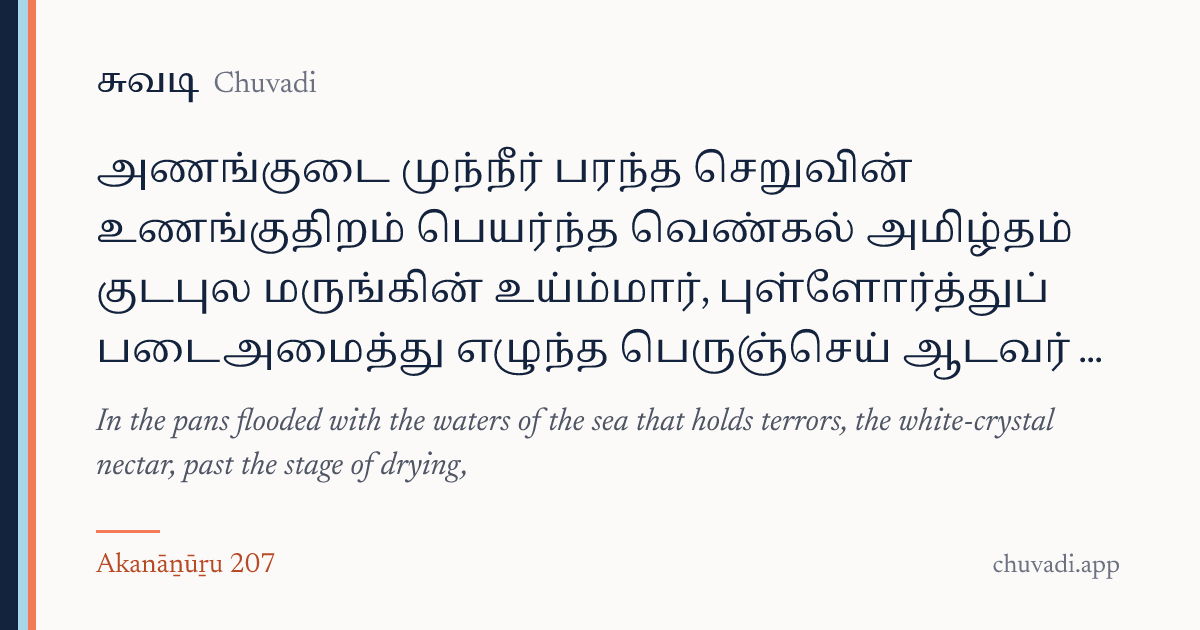
- In the pans flooded with the waters of the sea that holds terrors,
- the white-crystal nectar, past the stage of drying,
- to carry it off to the western lands, heeding the omens of birds,
- the men of great labour who set out with weapons ready,
- with their grey-backed donkeys carrying loads in a row,
- whose worn hooves kick the stones aside on the paths,
- at the fearful forking of roads that split the hot wasteland,
- the bull with long tusks, its cheeks letting out the hidden musth where bees crowd,
- suffering as the sun devours it,
- had turned up a well with its great trunk, rough skin worn away:
- its clear-eyed brackish water, in a broken pot used as a scoop,
- when that heartless man drew it, sighing hot breaths,
- her crescent brow sweating, did she drink it,
- she who, when I held out sweet milk mixed and stirred with honey,
- smoothing her hair and speaking coaxing words,
- answered only with refusals,
- and with a sullen heart would not eat?
What the poem says
The girl's mother, or her foster-mother, speaks after the daughter has gone off with her lover. The whole poem is one long question: on that terrible road, did she drink foul water?
The road is drawn through the salt trade. Salt, 'the white-crystal nectar', is dried in pans by the sea and carried inland to the west by armed salt merchants who watch bird omens before setting out, with lines of grey-backed donkeys whose worn hooves kick stones aside. Where their roads fork in the hot wasteland, a long-tusked bull elephant, tormented by the sun, has scraped out a hole with its trunk until the skin is worn raw. In that hole lies a little brackish water. The mother imagines the 'heartless man', her daughter's lover, scooping it up with a broken pot, and the girl sighing, her brow sweating, drinking it.
The last four lines turn to the past. At home the same girl would not drink sweet milk mixed with honey, though her mother held the bowl, stroked her hair and coaxed her with words. The contrast between the refused milk and the brackish water she must now accept is the heart of the poem, and the mother's anger at the lover is mixed with grief for the daughter's lost comfort.
'Moḻimai', taken as coaxing words, may mean something more like proverbs or set sayings; the general sense is clear. The poem names neither the merchants' route nor any town.