




அகநானூறு 208
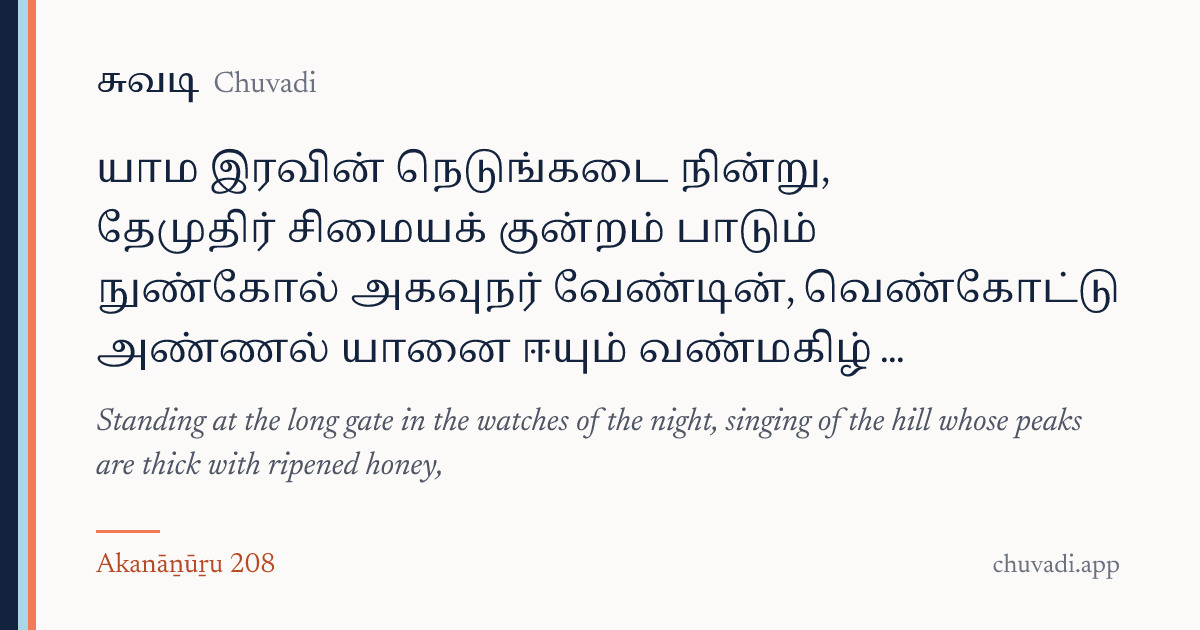
பாடல் · The poem
Tap a word to see where else it occurs.
பொருள் · Meaning in TamilAI
இரவின் யாமப் பொழுதில் நெடிய வாயிலின் முன் நின்று, தேன் முற்றிய உச்சிகளையுடைய மலையைப் புகழ்ந்து பாடும் மெல்லிய கோலையுடைய இரவலர் வேண்டினால், வெண்கொம்புடைய பெருமைமிக்க யானைகளையும் வழங்கும் வள்ளன்மையும் மகிழ்வும் உடையவன் வெளியன் வேண்மான் ஆஅய் எயினன். அருளே இயல்பாகக் கொண்ட வாழ்க்கையுடைய அவன், பாழி என்னும் போர்க்களத்தில், அணிகலன் பூண்ட யானைகளும் நல்ல தேர்களும் உடைய மிஞிலியோடு நண்பகலில் நடந்த போரில் புண்கள் மிகுந்து, ஒளிரும் வாள்கள் கலந்த போரில் வீழ்ந்தான். 'அழகிய அகன்ற வானில் பறவைகள் ஒன்றுகூடி, ஒளிரும் ஞாயிற்றின் கதிர்கள் அவனைச் சுடாதபடி சிறகுகளை விரித்து நிழல் செய்து அடிப்பதை நான் காணமாட்டேன்' என்று சொல்லி, அழகிய உருவுடைய நன்னன் அப்போர்க்களத்தைக் காணச் செல்லாமல், சினம் மிகுந்து, அருளில்லாமல் மறைத்தான். பெரிதும் நடுங்கிய பல வேளிர் மகளிர் தம் நிறமுள்ள பூமாலைகளைக் களைந்து எழுப்பிய அழுகைப் பூசலின் பழி நீங்கும்படி, வெல்லும் ஒளிரும் பெரும்படையுடைய அகுதை சுற்றத்தைச் சேர்த்தான். அதைப் போலவும், பெருமழையில் உப்பளத்தின் அணையில் நில்லாத வெள்ளத்தைப் போலவும், நாணத்தின் எல்லையில் நில்லாத காமத்தோடு அவள் தானே வந்து என்னிடம் அன்பு செய்தாள்; அவள் வாழ்க! ஓரியின், பல பழங்களையுடைய பலா மரங்கள் நிறைந்த வளமான கொல்லி மலையின் கார்கால மலர்களைப் போல மணக்கும் ஒப்பற்ற மெல்லிய கூந்தலையுடைய மாநிறத்தவள் அவள்!
இது குறிஞ்சித் திணை; தலைவி தானே வந்து தன்னோடு கூடியதை எண்ணித் தலைவன் மகிழ்ந்து கூறுவது. அணையை உடைக்கும் வெள்ளம், நாணத்தைக் கடந்த அவளுடைய காதலைக் குறிக்கிறது. நன்னன் எதை மறைத்தான், அகுதையின் செயல் மகளிரின் அழுகையோடு எப்படித் தொடர்புடையது என்பன இப்பாடலில் தெளிவாக இல்லை; இங்குக் கொண்ட பொருள் ஒரு முயற்சியே.
ஆங்கிலம் · English translationAI
Translation
- Standing at the long gate in the watches of the night,
- singing of the hill whose peaks are thick with ripened honey,
- to the bards with slender staffs, if they ask it, white-tusked
- noble elephants he gives, in his generous delight:
- Veḷiyaṉ Vēṇmāṉ Āay Eyiṉaṉ,
- on the battlefield of Pāḻi, he whose life was given to kindness,
- against Miñili of ornamented elephants and well-made chariots,
- in the fight that came at midday, covered with wounds,
- fell in the tangled battle of bright swords; and, 'The birds all together
- in the lovely wide sky, so that the shining sun's
- bright rays may not burn him, spreading their wings,
- making shade and flapping: I will not see that,' so saying,
- he would not go to see the field of the slain; blazing with anger,
- Naṉṉaṉ of fine form, without pity, kept it hidden;
- the many Vēḷ women, in great agitation,
- raised the cry of those who give up their bright fresh flower-garlands;
- to end that reproach, with his shining great army that conquers,
- Akutai gathered in the kin; like that, and like the heavy rain's
- flood that will not stay behind the bund of a salt pan,
- with desire that would not stay within the bounds of modesty, coming near,
- she was kind to me, may she live, she came! Of Ōri,
- on fruitful Kolli of jackfruit trees with many fruits,
- fragrant like the flowers of the rains,
- the dark girl with fine, matchless hair!
What the poem says
The hero speaks, probably to his companion or to himself, in joy that the heroine has come to him of her own accord. The last five lines carry the main statement: like a flood that bursts the bund of a salt pan in heavy rain, her desire broke past the bounds of modesty, and she came. Her hair smells like the monsoon flowers of Kolli, the fruitful hill of Ōri.
Everything before that is a historical comparison, and it is one of the most tangled passages in the anthology. Āay Eyiṉaṉ, called Veḷiyaṉ Vēṇmāṉ, a chief so generous he gave white-tusked elephants to bards who sang at his gate at night, fought Miñili at midday on the battlefield of Pāḻi and fell, covered with wounds. Then someone says he will not look on the birds that spread their wings to shade the fallen man from the sun, and stays away from the field; Naṉṉaṉ, angry and without pity, 'hides' something; the Vēḷ women cry out as they give up their garlands, the sign of mourning; and Akutai, with his conquering army, 'gathers the kin' to wipe out the reproach.
How these clauses connect is genuinely uncertain. I take Naṉṉaṉ as the one who would not visit the field, and I cannot say with confidence what he hid or how Akutai's act relates to the women's grief. The image of birds shading a fallen hero belongs to tradition about Eyiṉaṉ, and the poem itself states it. The comparison that matters for the love poem seems to be Akutai's restoring of kin, set beside the heroine's coming, but the line-by-line English should be read as a cautious construal, not a settled one.