



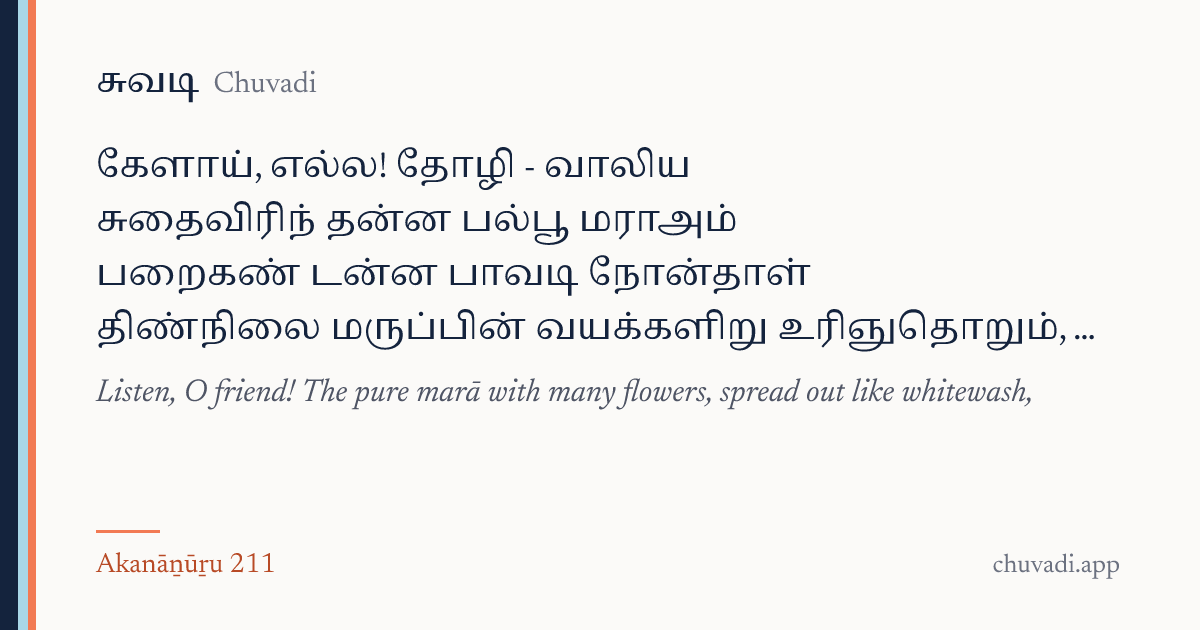

அகநானூறு 211
பாடல் · The poem
Tap a word to see where else it occurs.
பொருள் · Meaning in TamilAI
தோழி, கேள்! தூய சுண்ணாம்பைப் பூசியது போலப் பல பூக்கள் நிறைந்த மராமரத்தில், பறையின் கண்ணைப் போன்ற அகன்ற அடிகளையும் வலிய கால்களையும் உறுதியான கொம்புகளையும் உடைய வலிமையான களிறு உராயும் போதெல்லாம், அதன் மலர்கள் குளிர்ந்த ஆலங்கட்டி மழை போலச் சிதறி, உழவர்கள் காயவைத்த வெண்ணெல் விதைகளைப் போலப் பாறையின் மேல் உலர்ந்து கிடக்கின்றன. பனி படரும் சோலைகளையுடைய வேங்கட மலைக்கு அப்பால், மொழி வேறுபடும் நாட்டில் இருந்தாலும் அவர் நம்மிடம் அன்பு காட்டுவார். குழியிடத்தில் கவர்ந்த கன்றுகளோடு கூடிய பெரிய ஆநிரை பிடிபட்ட ஆரவாரத்தால் வந்து சேராமல் போக, கடுஞ்சினம் கொண்ட வேந்தனின் ஏவலால் வந்த மத்தி, நெடுந்தொலைவு நாட்டில் படையின் முன்னணியில் அகப்பட்ட கல்லா எழினியின் பற்களைப் பிடுங்கி, வெண்மணி என்னும் ஊரின் வாயிலில் உள்ள வலிய கதவில் பதித்தான்; அவன் கல் நாட்டிய குளிர்ந்த துறையில் நீர் முழங்குவது போலப் பெரிய அலரை நம்மிடம் விட்டுவிட்டு, நாம் அழும்படி பிரிந்து சென்றவர் அவர்.
இது பாலைத் திணை; பிரிந்த தலைவன் திரும்பி வருவான் என்று தலைவி தோழியிடம் உறுதியோடு கூறுவது. ஊரில் எழுந்த அலர், மத்தி கல் நாட்டிய துறையின் நீரொலிக்கு ஒப்பிடப்படுகிறது. ஒன்பது, பத்தாம் அடிகளின் பொருள் தெளிவாக இல்லை; யாருடைய ஆநிரை கவரப்பட்டது, அது எழினி பிடிபட்டதோடு எவ்வாறு தொடர்புடையது என்பது பாடலில் விளங்கவில்லை.
ஆங்கிலம் · English translationAI
Translation
- Listen, O friend! The pure
- marā with many flowers, spread out like whitewash,
- whenever the mighty tusker, with spreading feet like drum-faces and strong legs,
- and firm-set tusks, rubs itself against the tree,
- spreads its blossoms like cool hail, and like the ploughmen's
- seed of white paddy they lie drying upon the rock:
- beyond Vēṅkaṭam of dew-wet groves,
- though he is in a land of changed speech, he will be kind;
- the great herd with its calves, seized in the hollow,
- failing to arrive because of the uproar at the capture,
- coming at the bidding of the fierce-angered king,
- in a far-distant country, taken in the vanguard,
- Eḻiṉi the untaught, whose teeth were knocked out and fixed
- in the hard-faced door of the gate of Veṇmaṇi,
- at the cold ghat with the stone that Matti set up,
- like the roar of water there, the great
- gossip left to us, he who parted, leaving us to weep.
What the poem says
The heroine speaks to her friend. Her lover has gone north beyond Vēṅkaṭam into a country where another language is spoken, and the village is loud with gossip about her. She says calmly that he will still be kind to her, that is, he will come back.
The first lines picture the forest he has crossed. A huge elephant, its feet broad as drum-heads, rubs against a flowering marā tree whose blossoms are spread across it like whitewash; the flowers fall like cool hail and lie on the rock like paddy seed set out to dry by farmers. The image is gentle for a pālai poem, and suits the heroine's steady trust.
The gossip is measured by an episode the poem tells in compressed form. A great herd of cattle with calves, seized 'in the hollow', did not arrive because of the uproar at a capture; Matti, sent by a fierce king, caught Eḻiṉi in the vanguard in a distant land, knocked out his teeth and set them in the door of the gate of Veṇmaṇi; and at the cold ghat Matti raised a stone. The roar of the water at that ghat is the measure of the gossip. The poem calls Eḻiṉi 'kallā', 'untaught' or 'unruly'.
Lines 9 and 10 are obscure. It is not clear whose cattle were seized or how the raid connects with Eḻiṉi's capture; I have rendered them literally. 'Kuḻiyiṭai', 'in the hollow', may also be a place name.